
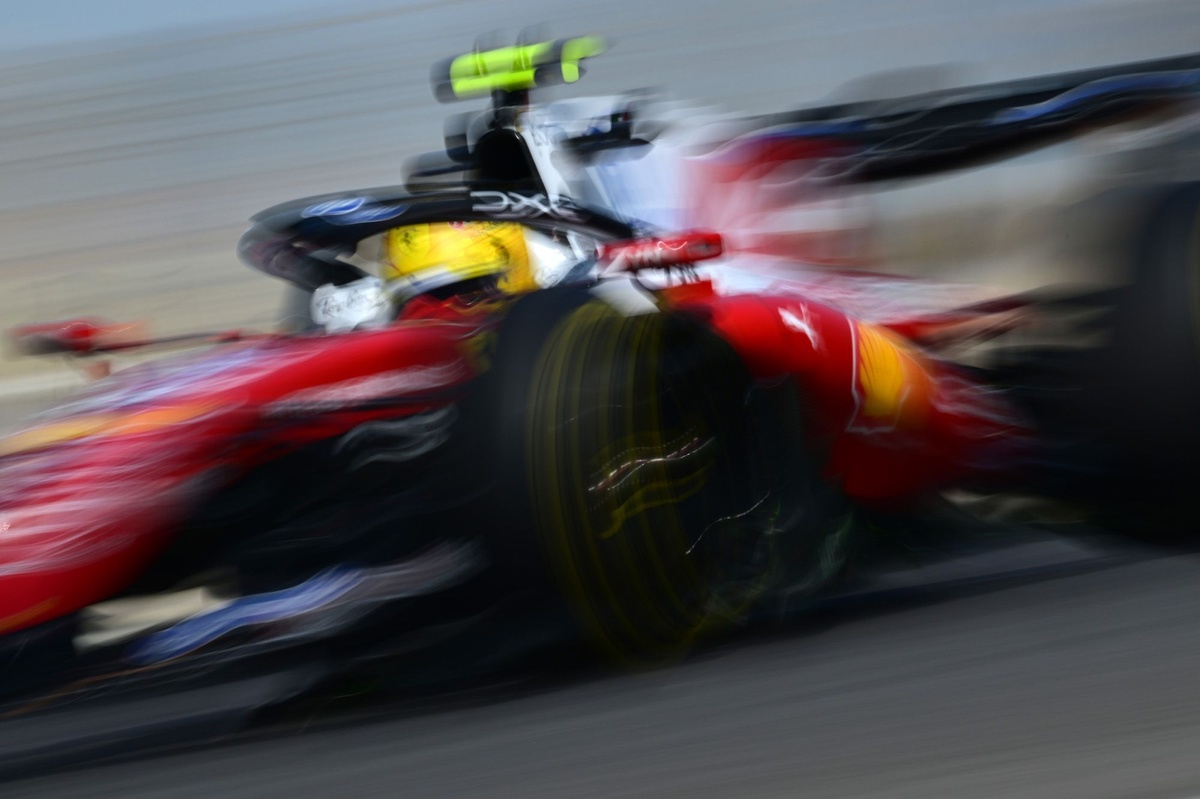
Ferrari team principal Fred Vasseur believes 2026 Formula 1 cars have “positively surprised” the paddock following early concerns about the impact of the new regulations.
F1 is undergoing one of its most significant overhauls in history, with the new breed of 2026 cars featuring active aerodynamics and a 50:50 power split between electrical energy and the internal combustion engine.

After the previous engine regulation reset in 2014 resulted in a sharp drop in lap times, there were suggestions that the next generation of cars could again prove significantly slower than their predecessors.
Much of the doubts centered on the increased reliance on electrical power, prompting fears that drivers would run out of regenerative energy midway down long straights.
However, come the end of the second Bahrain test, Ferrari driver Charles Leclerc was able set a respectable time of 1m31.992s on Pirelli’s C4 tyre. That was around 2.5s slower than the time Carlos Sainz set to top last year’s test – a gap that will almost certainly shrink as teams continue to develop their 2026 cars.
Ahead of this weekend’s season-opening Australian Grand Prix, Vasseur said the first signs from testing had dispelled many of the initial doubts about the new ruleset.
“It’s in F1’s DNA to complain about everything, but I believe that, in general, everyone has been positively surprised,” Vasseur told Motorsport Italy.
“People were saying we’d be close to F2, yet we’re only two or three seconds off the 2025 times, and last year the temperatures during the Bahrain tests were much lower. So, looking at what emerged, I think the overall scenario is much better than feared.

“There are some critical points, of course, but we are at the very beginning of this technical cycle. We will need to adapt and refine, and I believe there is always the possibility to make adjustments if necessary.
“The most important thing is to have strong competition: when there’s a tight battle between two or more teams, I don’t think being one or two seconds slower than last season matters much. What counts is being a tenth of a second faster than all the rivals."
Ferrari turned heads in Bahrain with an innovative rear wing design that flipped 180 degrees, helping the team reduce drag while maintaining overall stability.
It later debuted a new aero solution which it calls the FTM, featuring a small fin mounted in front of the exhaust pipe. The entire section had been designed to accommodate the wing, which exploits gases coming out of the exhaust and aids in energy recovery.
Vasseur was pleased to see Ferrari’s engineers “pushing boundaries” with the SF-26, while stressing that the team had remained in close dialogue with the FIA to ensure its aerodynamic package complied with the rules.
“You have to explore the technical regulations, be aggressive, and push to the limit. Only in this way can you innovate,” he said.
“But what needs attention is that innovation doesn’t only concern the visible parts of the car. I’m glad that two solutions caught the attention of the press and the paddock, but in the past, we’ve introduced other innovations in hidden areas, such as suspensions, cooling system, engine, and I believe this applies to all teams.
“As far as we’re concerned, I like to see our engineers pushing boundaries while always paying maximum attention to the legality topic.
“We’ve maintained an open dialogue with the FIA from day one to discuss the updates introduced. No one can afford to waste wind tunnel hours or budget cap resources by risking bringing solutions to the track that don’t comply with the regulations."