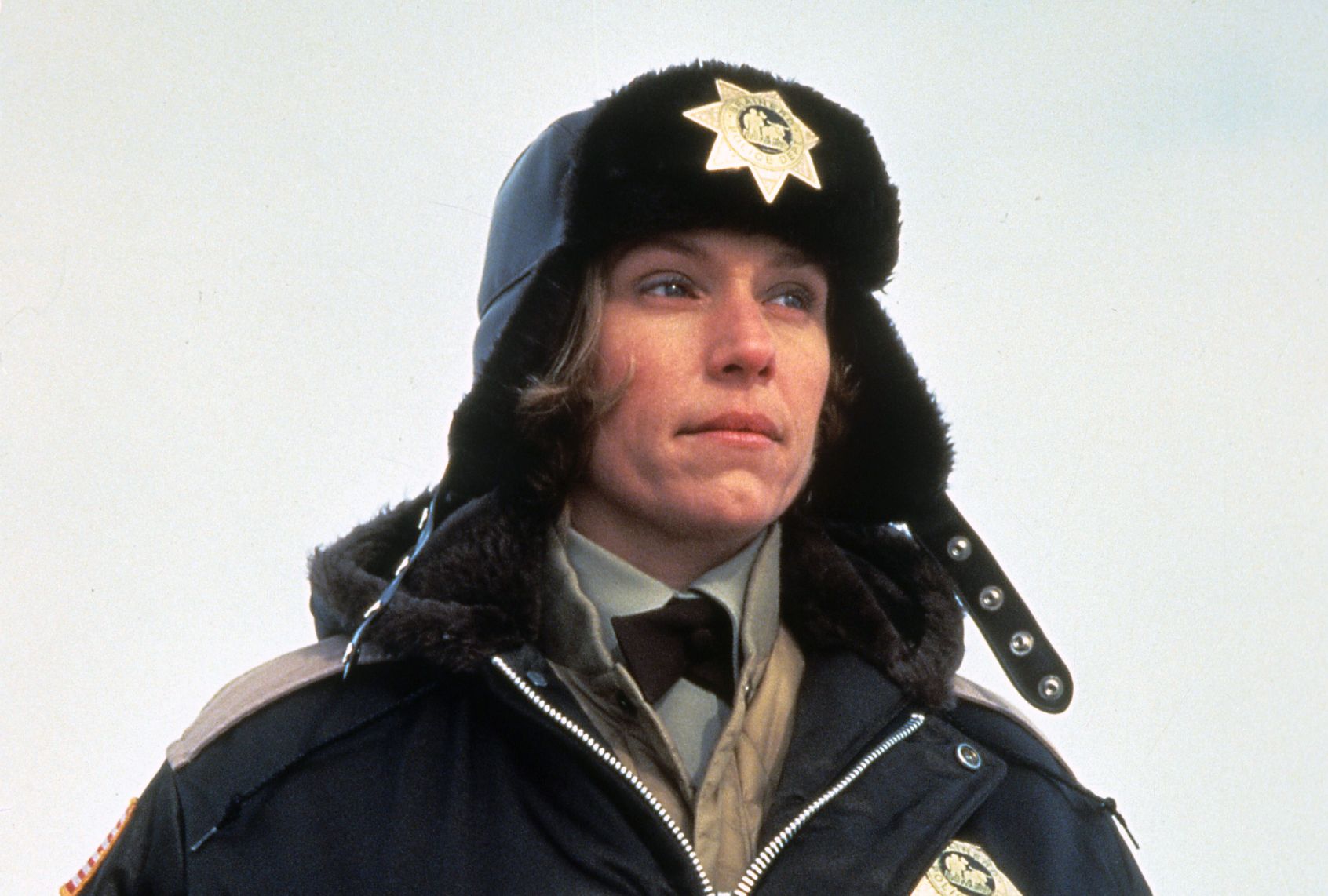
In the 30 years since its initial theatrical release, Joel and Ethan Coen’s comedic thriller, “Fargo,” has become so synonymous with Frances McDormand’s Oscar-winning lead performance that it’s startling to remember McDormand doesn’t appear until about halfway through the film. As the blunt but sweet small-town police chief, Marge Gunderson, McDormand shows up only when the audience is up to their eyeballs in snowy subterfuge. First, the Coens submerge us headfirst into the cold netherworld of a Minnesota winter, where criminals hope that a dusting of fresh, frosty powder will cover their tracks.
Car salesman Jerry Lundegaard (William H. Macy) is up to his eyeballs in bad loans. When he’s not strong-arming unsuspecting customers into hidden upcharges for their cars, he’s trying to gain some control in his meager, unsatisfied life. Jerry uses his “you-betcha” Midwestern accent to disguise his discontent, but beneath his charlatan smile lurks a rotten, greedy soul. When he bungles a small-time plot to have his own wife kidnapped so he can collect the ransom — sending the lowlife con men Carl (Steve Buscemi) and Gaear (Peter Stormare) on the lam with a hostage and two dead bodies in their wake — Jerry’s life unravels. For as much has been said about the Coens’ depiction of this seedy Minnesotan underbelly, it shouldn’t be forgotten that they’re just as quick to flip it around, reminding viewers that good coexists with evil with a narrative device as simple as a phone call. Stirred from her sleep before the sun rises, the seven-months-pregnant Marge rises from bed, eats some eggs lovingly prepared by her husband, Norm (John Carroll Lynch), and gets to work.