Get all your news in one place.
100’s of premium titles.
One app.
Start reading
The Guardian - UK
The Guardian - UK
Politics
Peter Walker Senior political correspondent

Families to be offered help to leave temporary accommodation under UK child poverty strategy

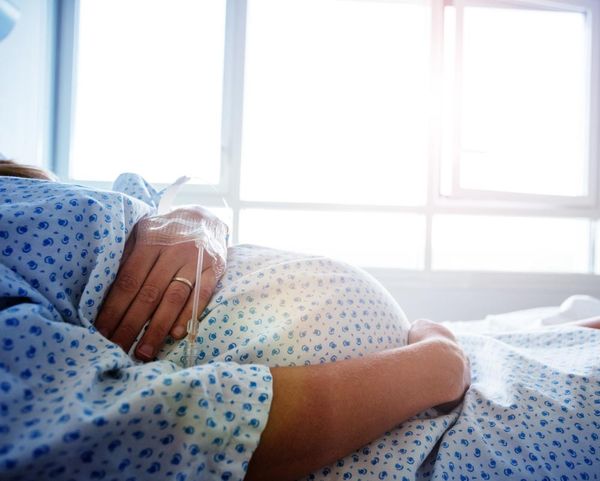
A young mother holds her baby and is silhouetted against a window
The measures will stop mothers with newborn babies being discharged to bed and breakfast hostels or other unsuitable housing. Photograph: Mike Abrahams/Alamy

Families will be offered help to get out of temporary accommodation and support with childcare as part of the government’s delayed child poverty strategy, with ministers saying the entire package will lift more than half a million children out of poverty.

The new proposals in a strategy that was originally due to come out in the spring are in addition to the abolition of the two-child limit for some benefits, which will have the greatest impact on poverty, at a cost of £3bn during this parliament.
As part of what Keir Starmer described as a “moral mission” for his government, the UK-wide strategy will include an £8m investment in a pilot scheme across 20 councils with a particular prevalence of homeless families in temporary B&B accommodation, to ensure they are all moved within six weeks.

There will also be a new legal duty for councils to inform schools, GPs and health visitors when a child is put in temporary accommodation with their family. In a parallel policy strand, ministers will work with the NHS to prevent mothers with newborn babies being discharged back to B&B hostels or other similarly unsuitable housing.

Another new element will mean that rules are changed to make it easier for working parents receiving universal credit to get help to pay upfront childcare costs.

In the budget Rachel Reeves, the chancellor, announced an end to the near decade-old Conservative policy of barring universal credit or tax credit payments for third or subsequent children, which campaigners said had pushed more than 300,000 more children into poverty.

This week, at prime minister’s questions, Starmer announced another policy: adopting the recommendations by the Competition and Markets Authority (CMA) intended to help inform parents about baby formula products that are cheaper than the best-known brands.

Other recent poverty-related policies include an expansion of free school meals in England, funding for more breakfast clubs and a project to set up a wave of new Sure Start-type family hubs.

According to a Downing Street statement about the strategy, the combined measures will lift 550,000 children out of poverty by 2030, which it described as the biggest-ever such reduction in a single parliament since comparable records began.

Poverty charities reacted positively to the plan, which was originally intended for spring but was delayed as Starmer and Reeves wrestled with the fiscal and political repercussions of removing the two-child limit.

The government “has put its money where its mouth is on the manifesto commitment to reducing child poverty”, said Katie Schmuecker of the Joseph Rowntree Foundation, saying that the removal of the two-child limit was “the single most effective policy decision” ministers could have made in tackling child poverty.

Lynn Perry, the chief executive of Barnardo’s, said she welcomed the plan, adding: “Whist this is a landmark moment, we must also remember that even with these important changes, close to four million children are still set to be living in poverty in 2029. We must work together as a society to change this.”

Alison Garnham, the chief executive of the Child Poverty Action Group, said the changes were invaluable but “only the first step”, adding: “There is much to do and we must now build on this momentum to achieve more tangible change for children.”

The end of the two-child limit had been long demanded by many Labour MPs, with Starmer facing increasing pressure from his ministers to act on a policy the prime minister was also known to dislike, but was aware carried political risks in removing.

Too many families were still “struggling without the basics – a secure home, warm meals, and the support they need to make ends meet”, Starmer said in a statement.

The prime minister went on: “I will not stand by and watch that happen, because the cost of doing nothing is too high for children, for families, and for Britain.

“This is a moral mission for me. It’s about fairness, opportunity, and unlocking potential. Our strategy isn’t just about reversing the failures of the past, it sets a new course for national renewal, with children’s life chances at its heart.”

Sign up to read this article
Read news from 100’s of titles, curated specifically for you.
Already a member? Sign in here
Related Stories
Top stories on inkl right now
One subscription that gives you access to news from hundreds of sites
Already a member? Sign in here
Our Picks
Fourteen days free
Download the app
One app. One membership.
100+ trusted global sources.