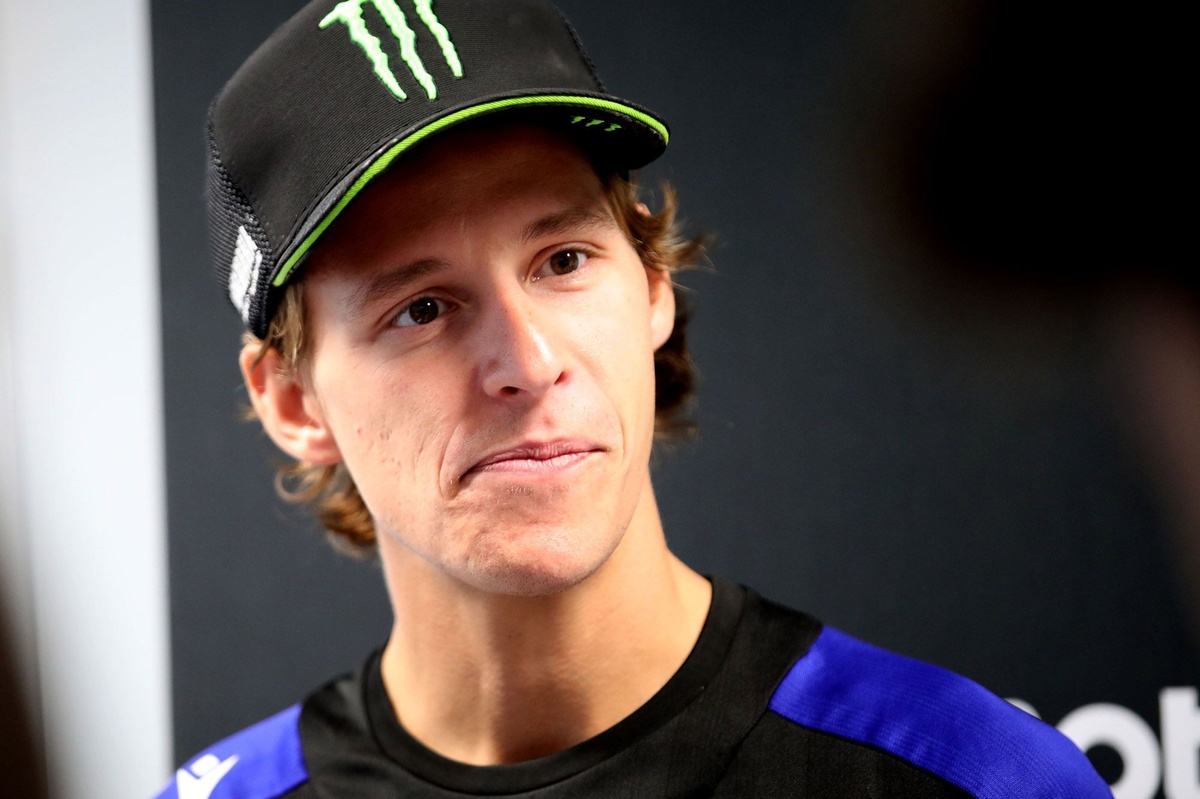
This conversation with Fabio Quartararo took place in the paddock at the Marco Simoncelli circuit, against a backdrop of some tension between the French rider and Yamaha.
After his move to Honda for next season was confirmed, the 2021 MotoGP world champion is seeing out a transitional season in which he has had to deal with the frustration of competing on a bike that, right now, is nowhere near where it needs to be.
To make matters worse, the Japanese manufacturer will prevent him from taking part in next Monday’s test in Austria, where he would have been able to try the Pirelli tyres that will come into play in 2027. That lit the fuse and further poisoned a relationship that began like a fairy tale but will end in a much less idyllic fashion.
Motorsport.com: When you look back, what do you think you will take away from your last couple of years at Yamaha?
Fabio Quartararo: The ability I’ve had to react after a 2024 that wasn’t easy at all. When we had a bike that was working better, especially over one lap, I knew how to react. Even though in some races we didn’t get the results we wanted, at least I was able to prove to myself again that I still had the speed.
MS: What has made the atmosphere between the two sides so strained?
FQ: I think it’s down to the amount of time we’ve spent fighting for positions that weren’t where we should have been. In 2021 you’re fighting for the world championship; in 2022 you’re there, fighting for it, even though you don’t win. But then you have three years in a row — 2023, 2024 and 2025 — when we really weren’t fighting for what we wanted. Difficult moments have come up, and I think everything is very much related to that.
MS: Was there no less uncomfortable way of bringing this relationship to an end?
FQ: It’s a complicated question. I think both sides have tried to do the best possible job. There have been more tense moments, but what comes out in the press gets magnified, and it makes things seem much worse than they actually are. Of course, things have been better, but you shouldn’t think this is a war either. It’s like a relationship: there are difficult moments, but that’s normal. We have three months left together and this isn’t the time for fights after spending eight years together. We’re going to finish in the best way possible, and I hope that in the future we can talk positively about everything we achieved.
MS: What is your diagnosis of the project itself? What are the weak points or problems that have prevented you from making as much progress as you expected?
FQ: This year, the first test we did in Barcelona surprised me in a good way. But then we weren’t able to take a step forward overall. When you bring out a new bike there are a lot of things to adjust, but we didn’t manage to make progress in terms of speed, getting the bike to turn, grip or power. For me, it’s difficult to give an exact diagnosis; I’m sure the people at Yamaha can answer those technical questions better than I can.
MS: Do you think it has been a question of a lack of resources or investment?
FQ: I don’t know what Yamaha’s budget is. It’s like going to the doctor and asking the patient for the diagnosis. What I want are improvements that can bring results, because that’s what I’m here for.
MS: Next year you’re moving to Honda, Pirelli tyres are coming in and you’ll have very few test days to adapt to the bike and the tyres. Does it concern you that you might arrive at the first race not fully prepared?
FQ: In testing, you get the feeling for the bike, but I can’t say that I’ll arrive at the first race and that my goal will be to win; that wouldn’t be right. Maybe I’ll do two days on the bike and feel incredibly good, but we’ll have to keep learning through the first few grands prix. If I feel ready to fight for the podium or the win, I’ll go for it; but we can’t expect to skip stages that quickly. Just because I’m going to Honda doesn’t mean the bike will suddenly be the best one; we’ll have to work, make adjustments and take it step by step. Step by step, but quickly.
MS: Yamaha won’t let you take part in next Monday’s test in Austria, which means you won’t be able to try the Pirelli tyres. To a certain extent, don’t you find the manufacturer’s position logical?
FQ: From my point of view, yes, it’s logical. From another point of view, less so. But I’d rather not go into any more detail so I don’t get myself into trouble. Maybe if I had been in Yamaha’s position, I would have done the same.
MS: Have you been thinking about what that first outing on the Honda will be like at the Valencia test? Does it make you nervous to think that it might not go the way you expect?
FQ: To be honest, every night when I go to bed, I think about how that first outing with the Honda will go. But not just that test in Valencia. It will be a bit strange, because I’ve spent my whole career at Yamaha and it’s a very big change. It’s not really nervousness; it’s excitement and nerves. But if I’ve made the decision to go there, it’s to give it everything I’ve got.
MS: What ultimately convinced you to commit to the Honda project?
FQ: It’s a complicated situation to explain in full. There came a point when I wanted to separate myself from Yamaha and look for a new project. We had meetings with several manufacturers, including Honda. I had a lot of questions in those meetings and, beyond answering them, they showed me things about the project that made me decide to go there.
MS: When you committed to them, Ducati was the benchmark bike. Why didn’t you try to get a Ducati?
FQ: Because I think Honda has been going through a period for several years now in which it wants to win again. It’s putting all its resources into making a comeback. With the change in regulations, the new bikes and the new tyres, I think Honda can spring a surprise and produce a very competitive bike.
MS: Aren’t you concerned that someone like Marc Marquez left Honda for reasons similar to those that are now leading you to leave Yamaha?
FQ: I think they understood it. Honda lost the best rider of all, and at that point they understood what Marc was asking for. They realised they had to work in a much more aggressive way. Over the last two years, Honda has made quite a big step forward.
MS: Have you spoken to Marc about this?
FQ: No, not at all.
MS: It’s been a while since you’ve been consistently fighting for wins. How do you know you haven’t lost that ‘bite’, or your hunger for victory?
FQ: Because I feel it here [puts his hand on his chest]. It’s like a dog that hasn’t eaten for three days. When it has food in front of it, you’ll see how it goes for it. Right now, I’m that dog. I know that when I get a real opportunity to win or to fight at the front, I’ll do it. We saw it at Silverstone last year. The circumstances allowed me to fight for the win, and I was there. I still have the same bite.