
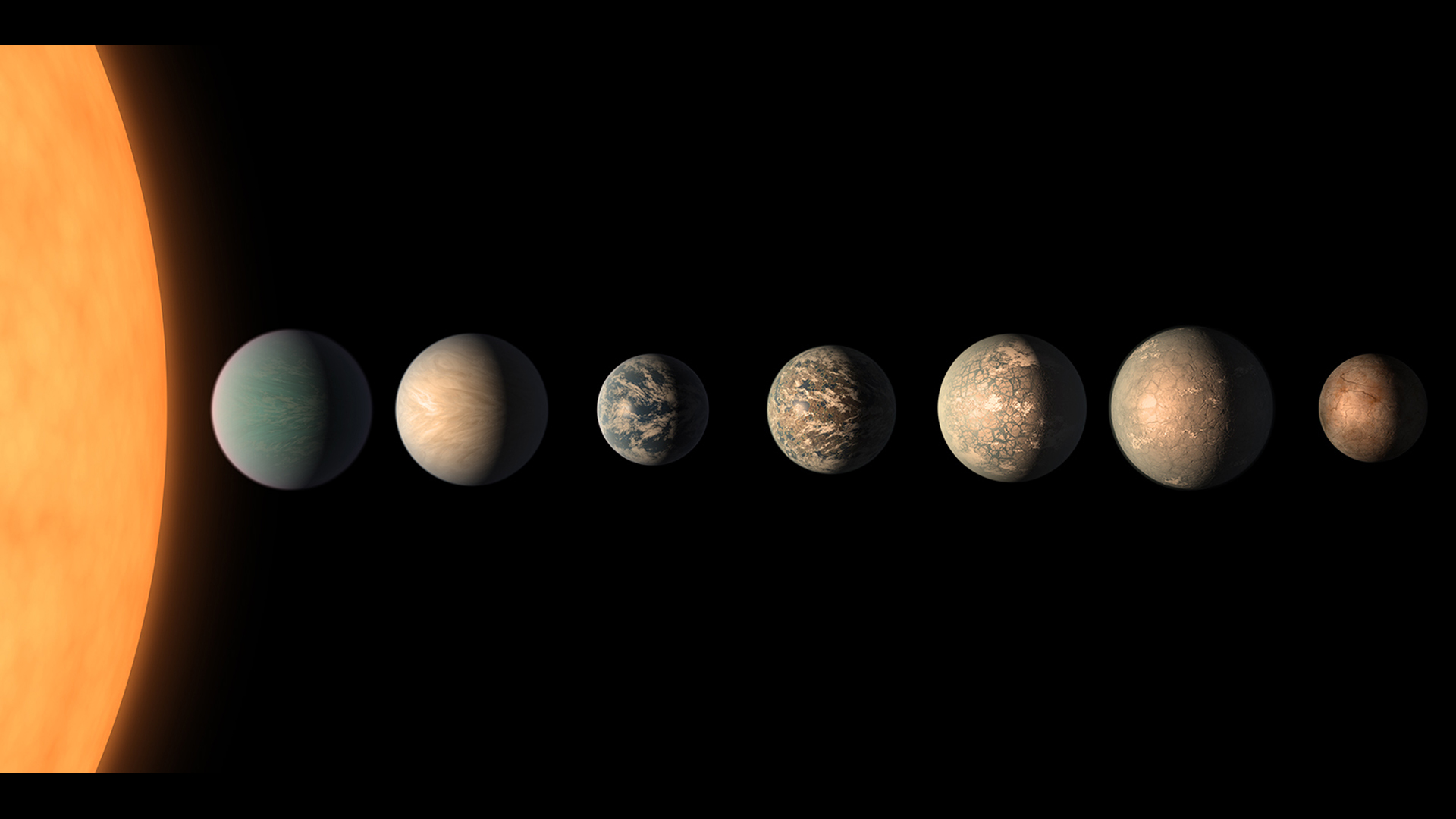
For years, scientists have been debating the odds of life existing on seven fascinating planets orbiting the Trappist-1 star, the most famous planetary system outside our own. The reason? Although several of these planets orbit in their star's habitable zone, the region around a stellar body where liquid water can exist because temperatures are just right, these worlds weren't always so comfortable.
In the past, Trappist-1 exoplanets were subject to much harsher conditions because their parent star used to be much hotter. During those hundreds of millions of scorching years, any water which may have been trapped in the rocks of these planets would have evaporated and dissipated into space, scientists previously thought. That would, of course, ruin the chance of the Trappist-1 planets to develop life as we know it.














