
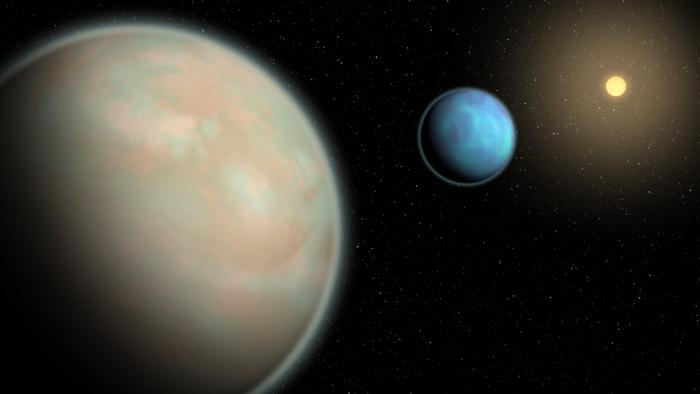
One of the primary tasks of the James Webb Space Telescope (JWST) is to scan the atmospheres of exoplanets for signs of habitability. And, as far as we know, water is necessary for life. So naturally, detecting the presence of water in and around alien worlds is a high priority for planetary scientists. There is, however, one problem.
Getting a clear, unfiltered view of what might be present in exoplanet atmospheres can be difficult due to the presence of something seemingly trivial — haze. It's likely that organic hazes of various chemical compositions lurking in the skies of exoplanets might affect our ability to detect water and other tell-tale signs of habitability. Luckily, researchers have been simulating these hazy conditions in Earth-based laboratories, which will hopefully help scientists identify and model how water in the atmospheres of exoplanets may form and evolve.















