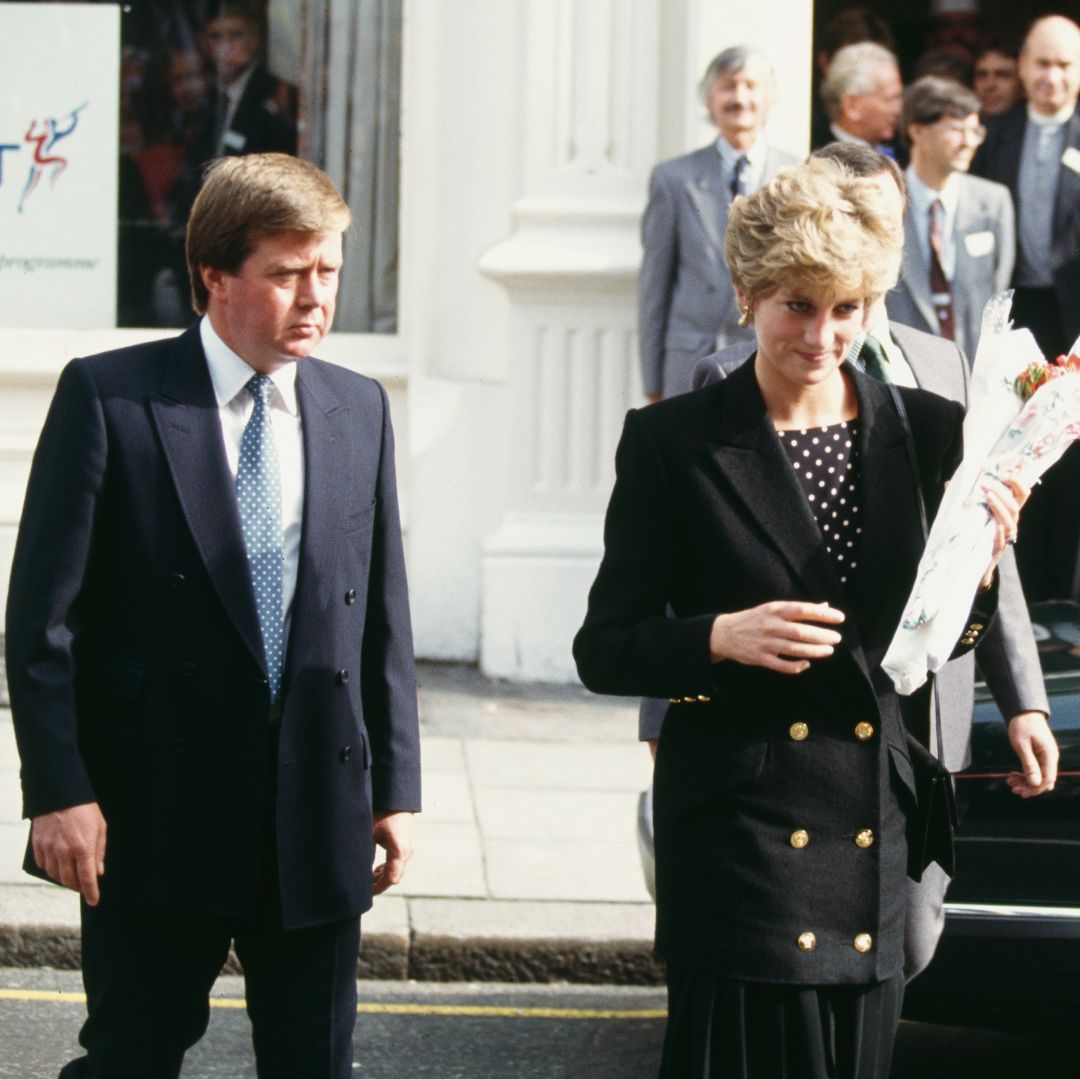
Ken Wharfe was responsible for guarding Princess Diana’s life from 1988 to 1993, and he says that one of the toughest parts of being a royal protection officer was that the late royal “didn’t always welcome” his presence.
Speaking to Marie Claire on behalf of Casino.org, Wharfe—who is now retired from the Metropolitan Police—admits that it’s “impossible to provide 100 percent security for anybody.” However, he stresses that as a bodyguard, “You can only protect someone if they're prepared to accept that protection.”

“That wasn't always easy because, like all of us, Diana was an individual who didn't always welcome it,” he shares. “I could clearly see there were times when she became frustrated with the protection because, in part, it was an invasion of her privacy.”

Wharfe, who also served as a personal protection officer to the Duke of Kent before his retirement from the police force, shares that Diana isn’t the first person to struggle with the invasiveness of having a bodyguard.
“People do occasionally push back against that, and you learn to live with it,” he says. “Whenever there was an opportunity to discuss those frustrations, she understood the necessity of protection in her particular case and accepted it throughout her very short life.”
He shares that part of the way he provided an effective protection program was that Princess Diana would give him “a detailed program of what she was doing, both publicly and privately.”

“With that information, she allowed me and my team to maintain regular contact with the friends she was seeing so we could make sure the protection we provided was the very best it could be,” he says. “I think that approach proved itself time and time again.”
Wharfe—who was made a Member of the Victorian Order by Queen Elizabeth after Diana's 1997 death—shares that he believes a breakdown in security eventually led to her tragic demise.
“The one occasion where that continuity disappeared was when she gave up her security in December 1993, which ultimately led to the appalling accident in Paris in 1997,” Wharfe shares. “She was then relying on security which, in my view, was unprofessional and lacked the level of planning, coordination and communication that would have provided the best possible protection. Sadly, it simply wasn't there.”