Get all your news in one place.
100's of premium titles.
One app.
Start reading
Euronews
Euronews
Eleonora Vasques

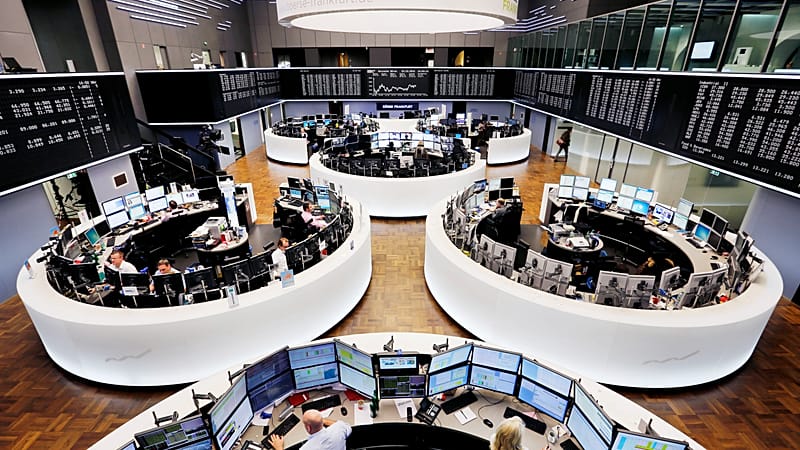
Exclusive: Germany shields parts of Deutsche Börse from EU oversight

Some of Deutsche Börse’s trading venues would remain under regional supervision following Germany’s lobbying efforts in Brussels to retain those supervisory powers, two people familiar with the negotiations told Euronews.

The Irish government, currently chairing the discussions among the member states, has inserted the carve-out within the latest compromise text, the sources said.

The move could weaken the proposed reform or delay an agreement in Brussels on capital markets integration, a flagship legislative package that the bloc has placed at the centre of its mandate to enhance Europe’s global economic competitiveness.

Overcoming fragmentation is one of the goals of the supervision reform, which would cede supervisory power to the European Securities and Markets Authority (ESMA).

Some trading venues with limited cross-border operations would remain under national supervision. However, the proposed exclusion of some trading venues belonging to Deutsche Börse — widely considered a player of major importance — from direct ESMA supervision is facing opposition among other member states and risks undermining the goal of reaching an agreement on the law by the end of the year.

EU economic and finance ministers are set to meet on 9 October, and according to the sources, the aim is to discuss the reform and reach an agreement on that occasion.

In response to Euronews’ request for comment, the German government specified that the proposed exemption would apply only to trading venues with a primary domestic focus; those would remain outside centralised supervision, rather than the whole Deutsche Börse Group.

"The compromise is not a carve-out for Deutsche Börse Group. Irrespective of the discussion about trading venues, Deutsche Börse Group will come under direct ESMA supervision from day one with its financial market infrastructure entities (CCPs and CSDs)," a German Ministry of Finance spokesperson told Euronews, referring to Deutsche Börse’s clearing houses (CCPs) and central securities depositories (CSDs).

Central counterparties (CCPs) manage risks between buyers and sellers in financial transactions. Central securities depositories (CSDs) hold securities and help settle trades.

What are capital markets?

Capital markets are marketplaces where individuals, institutions and governments buy and sell long-term financial instruments, such as equities or debt.

They offer businesses a way to raise funds and support their growth. However, scaling up in Europe remains challenging. Cross-border operations can be costly, time-consuming and involve significant administrative burdens. This is because rules differ between member states, and even where they are the same, their implementation may differ.

The reform is part of the EU’s Savings and Investments Union (SIU) strategy, which aims to reduce fragmentation of capital markets while incentivising European citizens to invest part of their savings in the capital market.

A weak European capital market is among the reasons why firms in Europe obtain most of their financing through bank credit.

Without enough diversification, businesses look for other markets where funding is more readily available, such as the US.

That was, for example, the case for Klarna, which chose New York over Europe for its stock market listing: Europe's fastest-growing companies often look across the Atlantic for deeper pools of capital.

According to the European Commission’s 2026 European Macroeconomic Report, every year, around €300 billion of savings flow out of the EU in net terms, funding investment abroad, mainly in the United States.

The integration of capital markets has been called for on several occasions by European Central Bank President Christine Lagarde as a main priority.

The reform of capital markets was also mentioned by former Italian Prime Minister Mario Draghi in his 2024 report on European competitiveness as a major step.

The question now is whether other member states will seek similar exemptions, and how much authority the EU’s supervisor would have if they succeed.

Sign up to read this article
Read news from 100's of titles, curated specifically for you.
Already a member? Sign in here
Related Stories
Top stories on inkl right now
One subscription that gives you access to news from hundreds of sites
Already a member? Sign in here
Our Picks
Fourteen days free
Download the app
One app. One membership.
100+ trusted global sources.