Get all your news in one place.
100’s of premium titles.
One app.
Start reading
Tom’s Guide
Tom’s Guide
Technology
Ruth Jones

Everything you need to know before buying a mattress for the first time, from someone who tests mattresses for a living

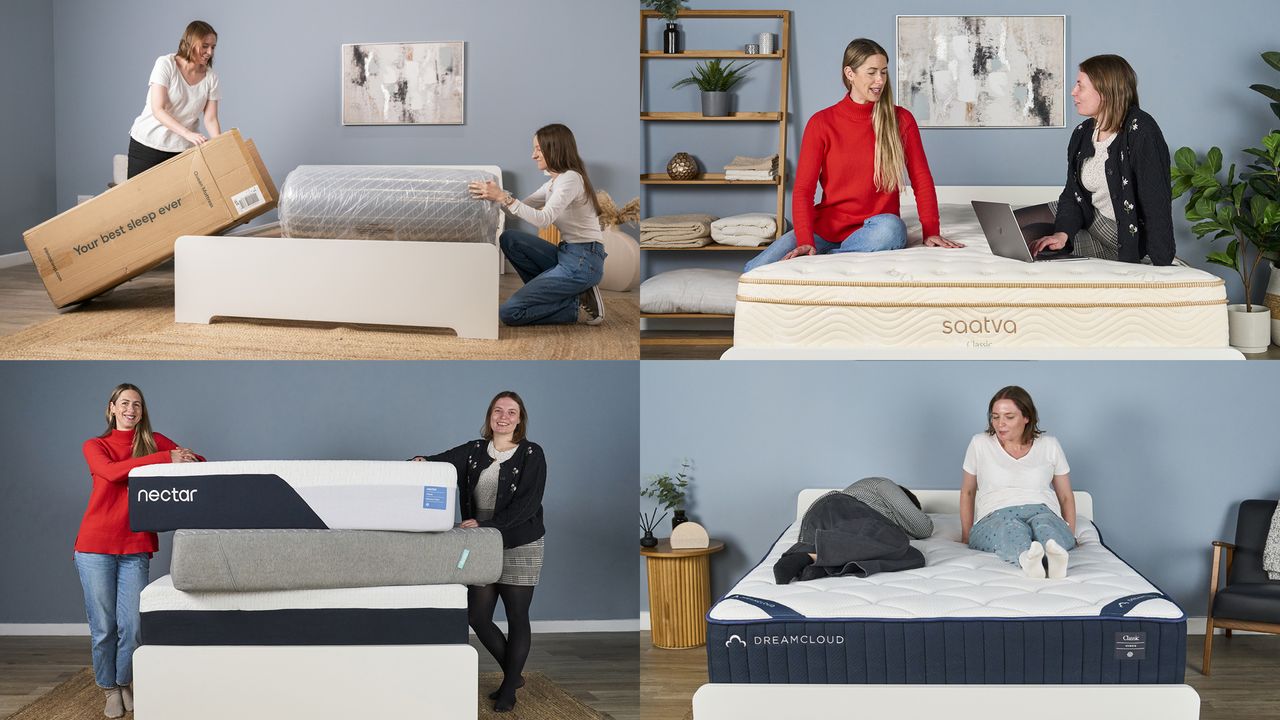
In the top left hand corner, mattress testers Ruth Jones and Frances Daniels unbox a Siena Memory Foam Mattress, still rolled in its packaging. Top right, Ruth and Nicola Appleton sit on the Saatva Classic mattress, Ruth using her laptop to research. Bottom right. Ruth sits on the Nectar Premier mattress while Lauren Jeffries lies next to her. Bottom left, Ruth and Nicola stand either side of a stack of mattresses on a bedframe.

Buying a mattress is a hassle and if it's the first time you've had the pleasure you might find yourself wondering just when beds got so complicated.

First, the bad news. Mattress shopping is overwhelming. Now, the good news: I've spent the past three years testing beds to find the best mattresses for all sleep styles and I'm here to help.

With the Presidents' Day mattress deals underway (and we're tracking all the best savings in our Presidents' Day mattress sales live hub) now is a great time to buy.

And with my top tips, I can make the mattress shopping process that much smoother.

Today's top mattress deals

9 things you need to know when buying a mattress for the first time

1. Your sleep position is key

(Image credit: Future)

I'm a stomach sleeper and I didn't realize how bad my old, soft bed was for me until I switched to a mattress that matched my sleep position.

What is mattress firmness?

Mattress firmness is typically measured on a scale from one (softer than a cloud) to 10 (rock hard.) Most beds fall somewhere in the middle, with medium-firm considered something of a universal pleaser.

Your sleep position is the position you spend most of the night lying in. This is the first thing you need to ask yourself: how do I sleep?

If you sleep on your side, you’ll need cushioning to prevent your shoulders and hips from hurting. Back sleepers benefit from a medium-firm feel to hold the spine straight, while stomach sleepers need something firm to keep the lumbar from sinking.

2. Learn your mattress types

Admittedly I spend more time than most ruminating on the differences between hybrid and foam beds but if you’re shopping for a new mattress, it’s important you understand what you’re getting.

The best hybrid mattresses are typically made with springs and foams. They’re known for their versatile support and great air flow, but the bouncy feel can be annoying for co-sleepers.

The best memory foam mattresses are made of multiple foam layers which results in less bounce than hybrids but also less airflow. Memory foam has lots of cushioning but you can still get firm foam beds.

(Image credit: Future)

Latex mattresses are usually hybrids made with latex instead of synthetic foams. Latex beds tend to be organic and eco-friendly, which makes them durable but expensive.

And then there are smart mattresses. These come with inflatable air pockets that go up and down to create different feels.

3. Familiarize yourself with the jargon — especially this bit

There's a lot of mattress jargon you'll learn and promptly forget but if there's one term to know about all else, it's sleep trials.

The terms to know

Our mattress jargon buster helps you navigate the nonsense, from comfort layers to lumbar support

Sleep trials or mattress trials are at-home testing periods and, in my opinion, a must if you’re buying a mattress for the first time. Luckily, most online mattress brands offer at least a 100-night trial.

4. Size matters — but so does depth

Your mattress needs to fit your bed frame which needs to fit your bedroom, so measure the space before you pick a size. Although an Alaskan King sounds tempting, you might find there's no room left for any other furniture.

(Image credit: Future)

The next important measurement is height. We recommend a mattress depth of at least 10 inches for an adult body. Any less than that and you might find you’re missing out on support.

5. Consider your priorities

I evaluate every mattress on three key performance aspects.

Edge support is how sturdy a mattress is at the sides — that's useful if you stretch out, share a bed, or push against the edge when getting into bed.

Quick tip

The very best mattresses will perform well at all three performance tests. As a general rule, foam beds have better motion isolation and hybrids better edge support and temperature regulation.

Temperature regulation is how quickly a mattress stops heat build-up. Some beds trap warmth which can disrupt sleep (and lead to sweaty mornings.)

Motion isolation is a big one for bed sharers as it refers to how much movement travels across the bed. If your partner wakes you with their tossing and turning, you’ll need motion isolation.

So what matters most to you? Are you a sweaty sleeper, a stretcher or endlessly bothering your partner with your restless nights.

6. It pays to invest

The best mattress in a box we’ve tested is the DreamCloud Classic Hybrid, which costs around $699 for a queen. That excellent value for money.

A budget of around $700 to $1,200 will open you up to a variety of high quality beds to suit most sleep styles. If you’re willing to pay upwards of $1,500 for a queen, you can start considering luxury and latex models.

(Image credit: Future)

There are some good beds under $500 for a queen — our best cheap mattress is just $294 and I’m sleeping on it right now — but you’ll find your choices limited.

7. A good bed lasts 6+ years, so plan ahead

We recommend replacing your mattress roughly every six to 10 years (and these are the signs that indicate your bed needs replacing.) That time period can encompass some pretty significant life changes.

It’s worth remembering that although right now you can pull an all-nighter and still feel fresh the next day, in a few year’s time you might find the wrong pillow ruins your whole week.

Longevity also impacts budget. You can typically expect a pricier bed to last longer than a cheap alternative (although it's not a guarantee.) Sometimes investing in quality can save you more in the long run.

8. You might not get it right first time...

You can read all the reviews, do all the research and still not be happy with your mattress.

(Image credit: Future)

That’s because subjectivity is unavoidable — Mama Bear loved her bed but Goldilocks thought it was awful.

It does take some time to adjust to a new mattress and a 30 day break-in period can change everything. But don’t kick yourself if you’ve got it wrong.

9. ...But there are things you can do about it

First, check your mattress trial. If your bed is in good condition and within the trial period, you can arrange an exchange or return.

If that’s not possible, or your bed is good but not perfect, consider a mattress topper. The best mattress toppers sit on the surface of your bed and can be used to adjust the feel.

5 best mattress deals to shop today

Sign up to read this article
Read news from 100’s of titles, curated specifically for you.

Already a member? Sign in here
Related Stories
Top stories on inkl right now
One subscription that gives you access to news from hundreds of sites
Already a member? Sign in here
Our Picks
Fourteen days free
Download the app
One app. One membership.
100+ trusted global sources.