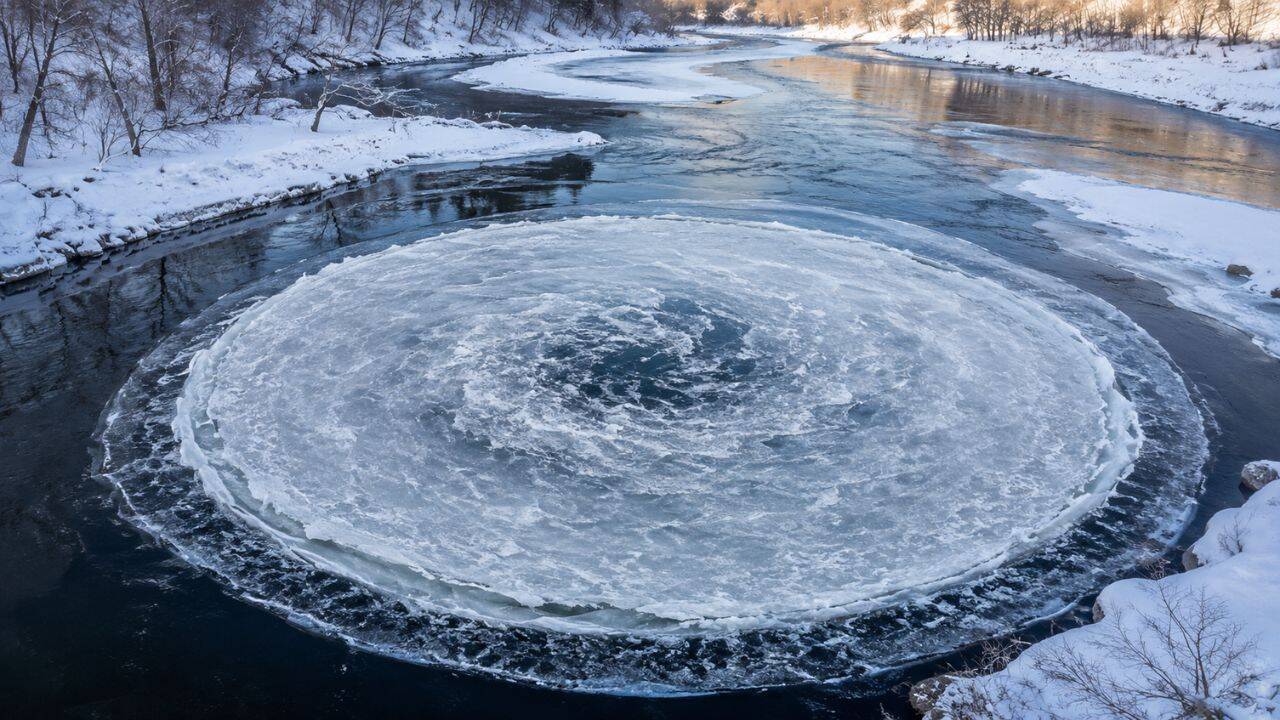
In the colder parts of Canada, winter occasionally produces a sight that seems more suited to a drawing than a river. A large disc of ice appears on the water, almost perfectly round, turning so slowly that its movement is easy to miss. These formations have been reported in places such as Quebec, Alberta and British Columbia, where long winters and steady waterways create the right conditions for unusual ice behaviour. To anyone seeing one for the first time, the obvious question is how nature manages to produce something so symmetrical. The answer lies in a combination of flowing water, changing temperatures and a few quirks of physics that only become visible when rivers begin to freeze.
Get breaking news anytime, anywhere. Download the TOI app now!