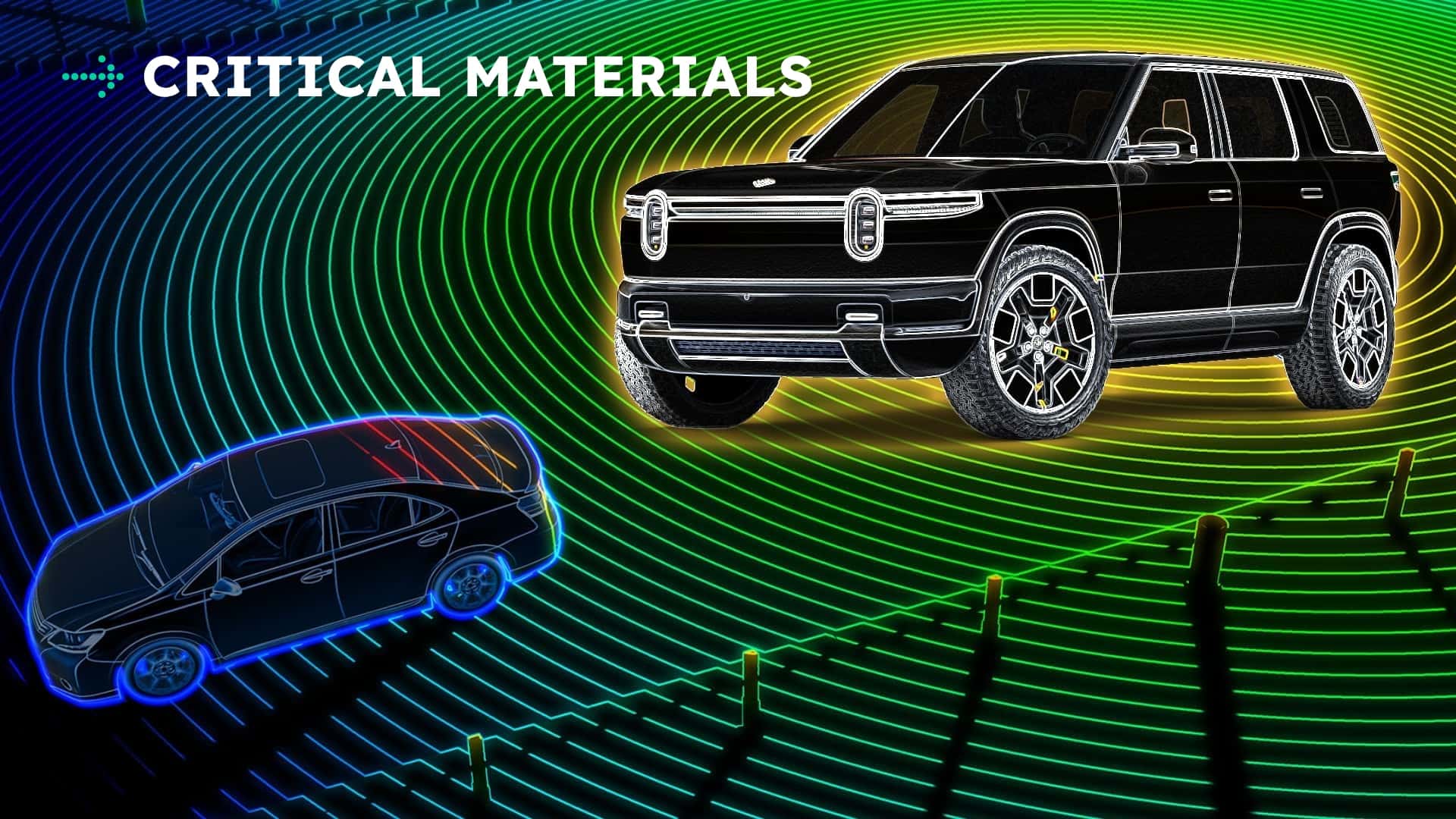
If you've noticed that the EV hype cycle hasn't exactly been front-and-center lately, you're not alone. Brands have dialed their plans down a notch as the EV tax credit fades out and investments in battery plants look less fruitful than originally expected. Instead, they're dusting off an old playbook.
Once again, automakers are expecting big strides in autonomous capability by the end of the decade. But will they deliver?
GET CRITICAL MATERIALS IN YOUR INBOX.
Sign up here for our must-read briefing on the future of mobility.
Welcome back to Critical Materials, your daily roundup for all things electric and tech in the automotive space. Also on deck: The fuel economy rollback doesn't mean consumers will save money overall, and Volvo is still betting that the U.S. is rich for electrification. Let's jump in.
25%: Automakers Are Going Full-Tilt On Autonomy

After years of false starts and face plants, the mobility industry is gung-ho on self-driving cars again. Some automakers, like Tesla, never gave up on the dream. Others took a step back in the last few years, as driverless technology started looking too costly and time consuming. Ford and VW shut down Argo AI, and General Motors folded up Cruise.
Now vehicle autonomy is front and center once more—and moving faster than ever. This list of developments from about the last week, via TechCrunch, illustrates that pace nicely:
Waymo started testing its autonomous vehicles (with a safety monitor) in Philadelphia and will start manual driving to collect data in Baltimore, St. Louis, and Pittsburgh; Uber and Avride launched a robotaxi service in Dallas that will initially include a human safety operator behind the wheel; and the California Department of Motor Vehicles released revised rules that would allow companies to test and eventually deploy self-driving trucks on public highways in the state.
It's not just about robotaxis and driverless trucks, though. Car companies are diving into the space more aggressively too. This week, Rivian plans to lay out its own high-tech roadmap at its Autonomy and AI Day, which we'll be attending. Rivian CEO RJ Scaringe hyped up the company's vision in a recent interview on the Automotive News "Shift" podcast.
While robotaxis get the most attention, he said, personally-owned autonomous vehicles will be "very powerful" in the car business. Ninety-nine percent of all miles driven on U.S. roads are done in personal vehicles, he noted.
"The next few years will look entirely different than the last few years," said Scaringe. "Not just for Rivian, but for the automotive industry in general."
General Motors, Ford, Lucid and pretty much every brand in between have their own flavors of autonomous systems brewing. It's clear that there's a push for this tech to become mainstream and happen at a very rapid pace.
The key question is whether or not brands can roll out these features quickly enough while still doing so safely. Autonomous vehicle accidents are still very high-profile, meaning that they garner the attention of media and regulators easily. That leaves very little room for error and the need to avoid the old software development mantra of "move fast and break things."
50%: 100 Billion Extra Gallons Of Gas
The Trump administration is touting its fuel economy rollback as a gift to car buyers. Consumers are chasing cheaper cars, after all, especially as the average transaction price of a new vehicle teeters around $50,000.
While lowering vehicle standards could make upfront vehicle costs cheaper, it won't necessarily save Americans money in the long run. That's according to analysts as well as the government's own analysis of the rule change.
Reuters explains:
As a result, automakers would save $35 billion through 2031 and average upfront vehicle costs would decline by about $930, assuming the automakers pass along the savings, according to [the National Highway Traffic Safety Administration's] economic analysis in support of the proposal.
But NHTSA’s same economic analysis also said the proposal would raise fuel consumption by around 100 billion gallons through 2050 relative to the Biden standard, costing Americans up to $185 billion.
Critics also argue that the increased demand for gasoline could drive up the cost of fuel. This—completely ignoring the potential of less efficient powertrains—could easily trump the cost savings applied by rolling back fuel economy standards.
More from Reuters:
"The Department of Transportation is now estimating larger upfront savings on technology costs, but they are also estimating even larger losses in fuel savings," said Jason Schwartz, legal director at New York University's Institute for Policy Integrity.
"As for just how quickly any upfront savings will evaporate in the face of more money spent at the gas pump, very quickly indeed," he said.
Moreover, the reduced MPG standards would also raise carbon emissions by around 5%, according to data from NHTSA.
So, yes, the move could easily save automakers millions or even billions of dollars in the long run. But consumers? They'll likely be left holding the bag.
75%: Volvo Believes America Still Wants EVs
Volvo has had quite a year. Not the fun kind, either. From software problems to tariff shenanigans, the Swedish automaker has been plagued with a combination of bad luck and the "find out" phase hitting it all at once.
Despite the hardships, its returning CEO, Håkan Samuelsson, still believes in electrification. Not only that, but he believes that America—which no longer has federal incentives for EVs—still wants to break up with gas.
Here's what Samuelsson said during an interview with Automotive News:
"It will be difficult without the incentives, but on the other hand, you should be careful believing that the market will go back to combustion cars. Why? Because people have underestimated a big advantage of an having all-electric cars and long-range plug-in hybrids, which is that you can leave the garage filled up every morning.
With a long-range PHEV you can drive in electric mode for up to 200 km, which is about 125 miles. You very seldom need more range than that in a day, which means the driving experience would be much like an all-electric car. The backup engine would very seldom kick in.
Also, I think electrification is a valid solution in the U.S. because a lot of people have the possibility to charge at their homes. Therefore, I think in many respects, America is the ideal market for electrification."
Now, you might have picked up on something that Samuelsson said: plug-in hybrids.
Specifically, he seems to be betting the farm that America might not be all-in on battery-electric, but it will at least meet the industry half-way by buying loads of plug-in hybrids. That's something that Volvo thinks that it can deliver on with no problem.
100%: PHEV or EREV: Which Are You Choosing?
Plug-in hybrids and extended-range EVs are getting a lot of attention right now. If conventional EVs were gone tomorrow, would you find yourself more interested in purchasing a PHEV or EREV?