Get all your news in one place.
100's of premium titles.
One app.
Start reading
The Times of India
The Times of India
World
TOI World Desk

Egyptian village builds classroom from 9,000 plastic bottles

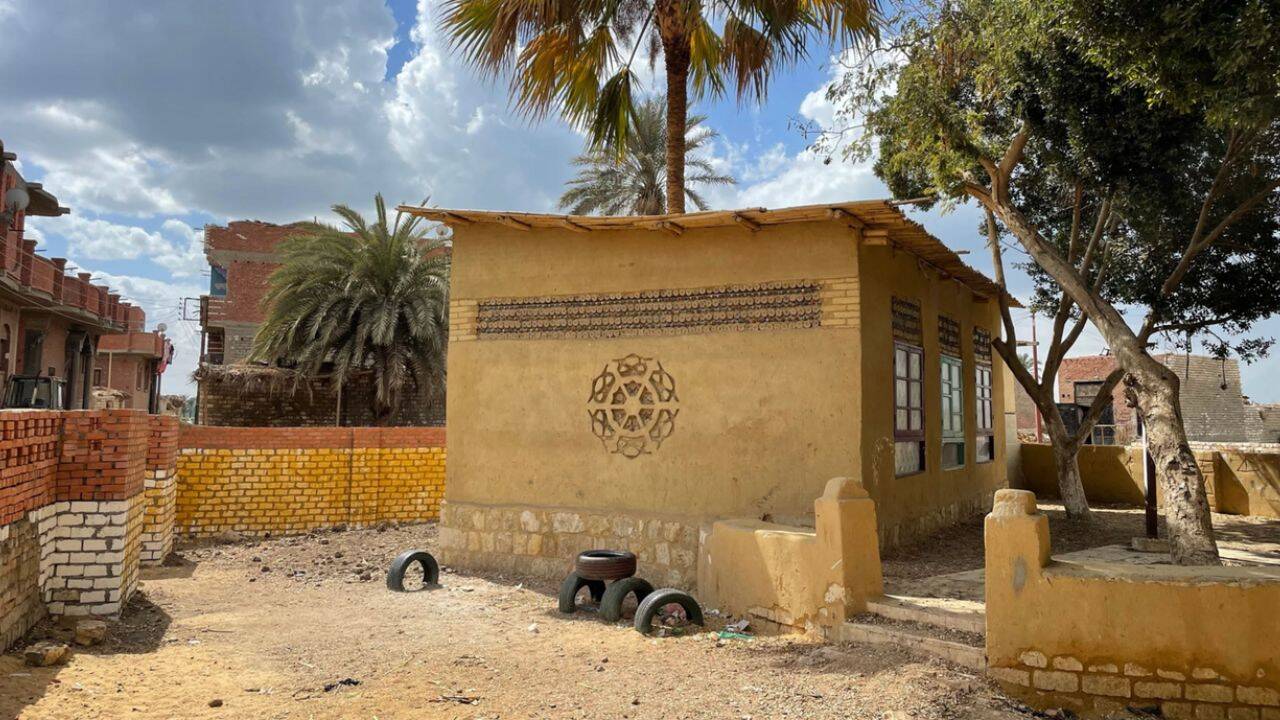
Children in Ezbet Eshaq, an agricultural village in Fayoum, Egypt, once had to walk more than 2 km each day along a busy road in poor condition to reach the nearest school. A new classroom has changed that situation while also tackling another local problem of growing amounts of solid waste. Built with more than 9,000 reused plastic bottles filled with sand, along with earth, bamboo, clay and other reclaimed materials, the Eco Classroom was created with help from the people who would use it.

Get breaking news anytime, anywhere. Download the TOI app now!

The Eco Classroom helped children who walked 2 km to school

According to the Holcim Foundation , Ezbet Eshaq is a rural agricultural village that was home to around 1,000 people when the Eco Classroom project was developed. The lack of educational facilities meant that village children had to make a daily journey of more than 2 km to attend the nearest school. Much of the route followed a busy road that was in poor condition.

The project was designed as a practical response to that problem. Instead of bringing in a conventional building solution, the team behind the project looked at materials and skills already available in the community. The result was a learning space that also addressed the accumulation of solid waste in the village. The Holcim Foundation describes the building as an affordable and context-aware approach to providing safer education for rural children.

What materials were used to build the classroom

The classroom uses more than 9,000 plastic bottles that were filled with sand and incorporated into the walls. Other parts of the building were made from locally sourced compressed earth blocks, bamboo and natural clay. Broken concrete from a nearby demolished clinic and reused sandstone were incorporated into the foundations.

The approach extended beyond the main structure. Old doors and windows were refurbished for the classroom, while discarded wooden pallets were turned into desks and benches. Natural clay was used for plastering the floor, and bamboo formed the roof structure. The Holcim Foundation also reports that an anaerobic baffled reactor was installed to recycle wastewater for use in landscaping.

The combination meant that waste was not simply removed from the village and replaced with newly manufactured construction materials. Items that might otherwise have been discarded were given another purpose within a building intended for everyday community use.

Local people were majorly involved in its construction

The classroom was not designed and built entirely from outside the village. The Holcim Foundation says the project began with design workshops involving parents and children, before extending to training for local young people in suitable construction techniques. Children and young people from the village, together with students from universities in Cairo, took part in weekly workshops where the plastic bottles were filled with sand.

Ecogradia also highlights the strong community involvement behind the project. In its July 2024 discussion with Aya Helmy, co-founder and managing director of the BENAA Foundation for Sustainable Development, the publication described the classroom as a project shaped by children, parents and local youth from the beginning. Local young people were trained to assist with construction, helping develop practical skills within the community.

That involvement also influenced what the finished space included. According to Ecogradia, conversations with children revealed a need for outdoor, play-based learning areas. These discussions helped shape the project around the needs of the people who would actually use it.

What changed beyond the classroom itself

The Eco Classroom became more than a place for lessons. According to the Holcim Foundation, introducing alternative materials and construction techniques increased awareness within the community about how buildings can affect both human health and the planet. Some residents subsequently requested that similar techniques be considered for their own homes.

The building was constructed between January and June 2022 and is now a completed community learning space. The project later received an Acknowledgement in the 2023 Holcim Awards for the Middle East and Africa region. The Holcim Foundation's jury recognised its combination of recycled materials, low-cost construction, environmental responsibility and community participation.

Sign up to read this article
Read news from 100's of titles, curated specifically for you.
Already a member? Sign in here
Related Stories
Top stories on inkl right now
One subscription that gives you access to news from hundreds of sites
Already a member? Sign in here
Our Picks
Fourteen days free
Download the app
One app. One membership.
100+ trusted global sources.