Get all your news in one place.
100's of premium titles.
One app.
Start reading
Tom’s Guide
Tom’s Guide
Technology
Nicola Appleton

Early mornings left me feeling tired all the time but now I spring out of bed at 6 a.m. — here's how I did it

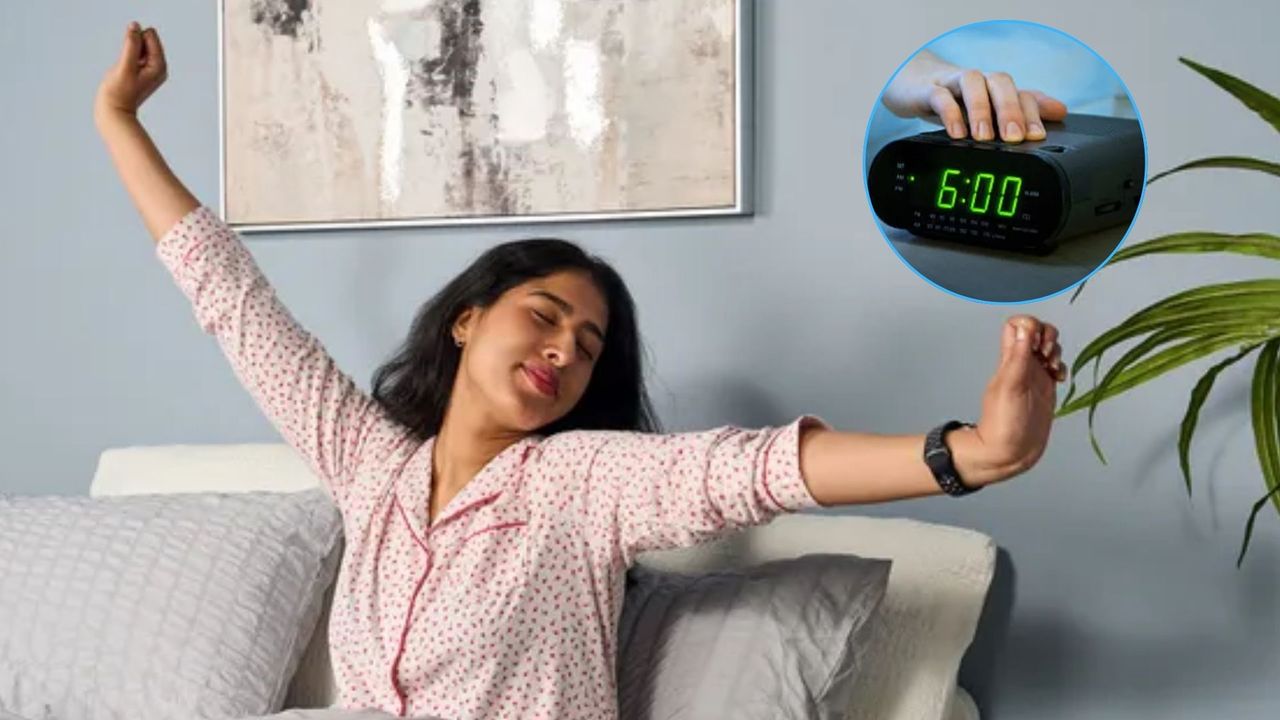
The image shows a dark haired woman wearing pink pyjamas sitting up in bed smiling with her arms stretched out. Inset to the right, an alarm clock shows the time is 6 am.

In a world that celebrates morning people, I’m almost ashamed to admit that I'm a chronic night owl. While the rest of my household is asleep, I’m still skulking around in the darkness, tackling the tasks that I suddenly feel I have the time and energy for.

Provided that I’m getting enough quality rest, being a night owl isn’t necessarily a problem. However, the rhythm and demands of my daily life mean I have to get up with the early birds; my children have school and my job has a prompt start time. When you’re someone who favors the natural rhythm of going to bed late and waking up late, life becomes a daily battle with the snooze button and flagging morning energy levels.

While I know I’ll never change my hardwired sleep-wake cycle (I’ll go over why in more detail below), I have found a way to ‘hack’ being an early riser. And Dr. Joshua Roland, a board-certified sleep medicine physician and medical director at Dreem Health, explains why it works.

Key takeaways: At a glance

  • Your sleep chronotype dictates the natural rhythm of your sleep schedule, influencing when you're likely to feel tired and alert
  • My chronotype indicates that I'm a night owl, someone who naturally has more energy later at night than in the morning
  • You can't change your chronotype, but you can alter your sleep schedule in order to wake up earlier through lifestyle tweaks
  • Sleep experts maintain that a consistent sleep schedule is an effective way to stave off sleep inertia (morning grogginess)
  • Waking up at the same time every day helps strengthen your circadian rhythm , helping you to fall asleep faster and wake with energy
  • Waking at 6 a.m. every day (even on the weekends) helps me wake with more energy and less brain fog

What is a chronotype and what does it have to do with the time I feel tired?

Before we go into how I’m finally waking up earlier and with more energy, let’s touch on why some people find early mornings hard.

You’ve likely heard of the term 'night owl' and 'morning lark'. These are two examples of chronotypes; the classification of the natural timing of your circadian rhythms (your body's internal 24 hour clock).

(Image credit: Getty Images)

Your chronotype is why you're hardwired to feel tired earlier or later in the evening, and why some wake up raring to go while others get an energy burst at night.

This framework was first developed by Dr. Michael Breus, a double board-certified clinical psychologist and sleep specialist. In his book, The Power of When, Dr. Breus identified four different chronotypes:

  • Lions: Early risers who are most productive in the morning but start to flag in the evening.
  • Bears: People who thrive on a traditional 9-to-5 schedule and align their days with the sun.
  • Wolves: True night owls who feel most energized in the evening and struggle with early mornings.
  • Dolphins: Light or irregular sleepers who find it difficult to stick to a regular schedule.

Going on the above framework, my biological predisposition most resembles a wolf; I'm naturally alert later at night but sleep right through my snooze button every morning.

Your chronotype is something you're born with, so while I'd like to become a lion overnight, I know I can't. However, there are steps I can take to adjust my body clock so I wake with more energy (and get the kids to school on time).

The 'hack' that's helping me wake up early and with more energy

I'm hardwired to go to bed later and wake later. However, with young children and a job to hold down, there's no way I can spend all morning catching up on sleep. And going to bed late and waking early is a one-way ticket to sleep deprivation.

Instead, I need to adjust my sleep and wake time earlier to ensure that, when my alarm goes off at 6 a.m., I've clocked up enough rest to feel energized and able to tackle the day.

(Image credit: Future)

However, it's not as simple as just moving my bedtime earlier, as due to my chronotype I'd just lie awake until my usual sleep time hit. In order to feel tired earlier and wake with something resembling energy, I need to be consistent with my new timings. That means setting my alarm for 6 a.m. every morning — yes, even on the weekends.

"Waking up early with consistent energy is less about willpower and more about supporting the body’s natural rhythms," explains Dr. Rowland. "One of the most important factors is consistency. Try to keep your bed and wake time stable, even on weekends, since your body’s internal clock responds best to routine."

So rather than one routine for the weekday and another for the weekend, my consistent sleep schedule is helping me wake early and feel refreshed. Having stuck to this routine for a couple of weeks, waking up early is getting much easier (there are even occasions when I get up before my alarm).

3 crucial things I'm doing to support my new morning routine

Waking up every day at 6 a.m. only works because I'm going to bed earlier. In order to feel tired earlier and to ensure that I'm getting the sleep I need, here's three more things I'm doing to support my new routine:

1. Eating evening meals earlier to adjust my sleep schedule

Your circadian rhythm is your body's internal clock, controlling when you feel tired and when you feel alert. It also dictates the time of day you're most likely to feel hungry. In order to shift my sleep schedule earlier, I've shifted my mealtimes earlier, too.

Instead of going to bed at midnight (or later), my adjusted sleep schedule is 10 p.m. — 6 a.m, seven days a week. So, shifting my evening meal to 7 p.m. gives me two-three hours of time to digest my food before attempting sleep.

(Image credit: Getty Images)

2. Starting my wind-down routine earlier

As a natural night owl, fighting the urge to stay up late has been the biggest barrier to becoming a morning person. But while my heart thinks 11 p.m. is the perfect time to start cleaning the baseboards, my head knows I should be in bed so I can wake the following morning feeling refreshed.

So, instead of 'one more episode' or 'just a quick tidy up', at 9 p.m. I begin my wind down routine. That means I turn my screens off — whether it's my phone, work laptop or TV — lower the lights and start getting ready for bed.

Following roughly the same sequence of tasks, be it taking off your make-up, folding laundry, or reading a book for twenty minutes, helps signal to the brain and body that sleep is coming. In time, this nighttime routine consistency helps you fall asleep faster.

3. Using morning sunlight to beat sleep inertia

(Image credit: Getty Images)

Harnessing the power of natural sunlight can immediately boost your morning energy levels and anchor your wake-time. That's why spring and summer are the ideal seasons to fix a broken sleep schedule, thanks to the abundance of natural morning light.

"To improve morning energy, get bright light exposure soon after waking, ideally natural sunlight, which helps reinforce your circadian rhythm and promote alertness," explains Dr. Roland.

Morning sunlight helps kickstart two specific get-up-and-go hormones; cortisol and serotonin. So, opening up the curtains first thing or having your morning cup of coffee outside helps stave off grogginess (also known as sleep inertia.) And it means I feel ready to take on the day, even if wolf inside me thinks I should still be in bed.

Sign up to read this article
Read news from 100's of titles, curated specifically for you.
Already a member? Sign in here
Related Stories
Top stories on inkl right now
One subscription that gives you access to news from hundreds of sites
Already a member? Sign in here
Our Picks
Fourteen days free
Download the app
One app. One membership.
100+ trusted global sources.