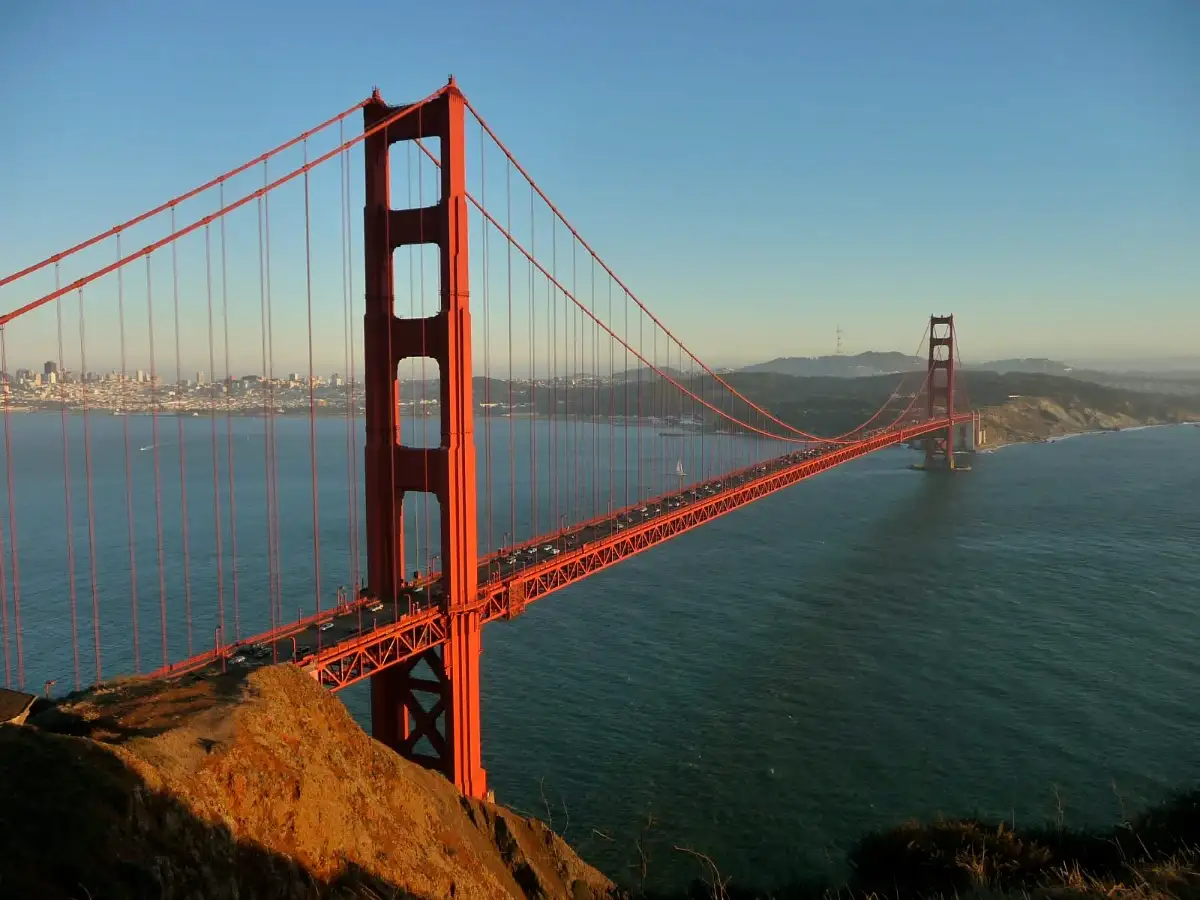
Visualize the Golden Gate Strait in 1935, with a mile-wide gap of churning, cold waters and currents so powerful that they could capsize a ship. Then, imagine several hundred men standing on nothing but two steel wires suspended in the air at five hundred feet above the ground while they weave pencil-thin strands back and forth across the span manually, one by one, until they had created two cables that were sturdy enough to support the whole structure.
That’s the real history behind the construction of the Golden Gate Bridge’s main cables. According to the Golden Gate Bridge Highway and Transportation District’s official page, cable spinning began in October 1935 and wrapped up on May 20, 1936; a total of six months and nine days to spin all 27,572 separate wires per cable. The bridge itself opened nearly a year later, on May 27, 1937, once the roadway deck, paint, and remaining work were finished. This is one of those facts that just sounds insignificant at first, until you begin to realize what it really implies: the team of engineers in the depths of the Great Depression managed to build the largest bridge cables the world had ever seen.