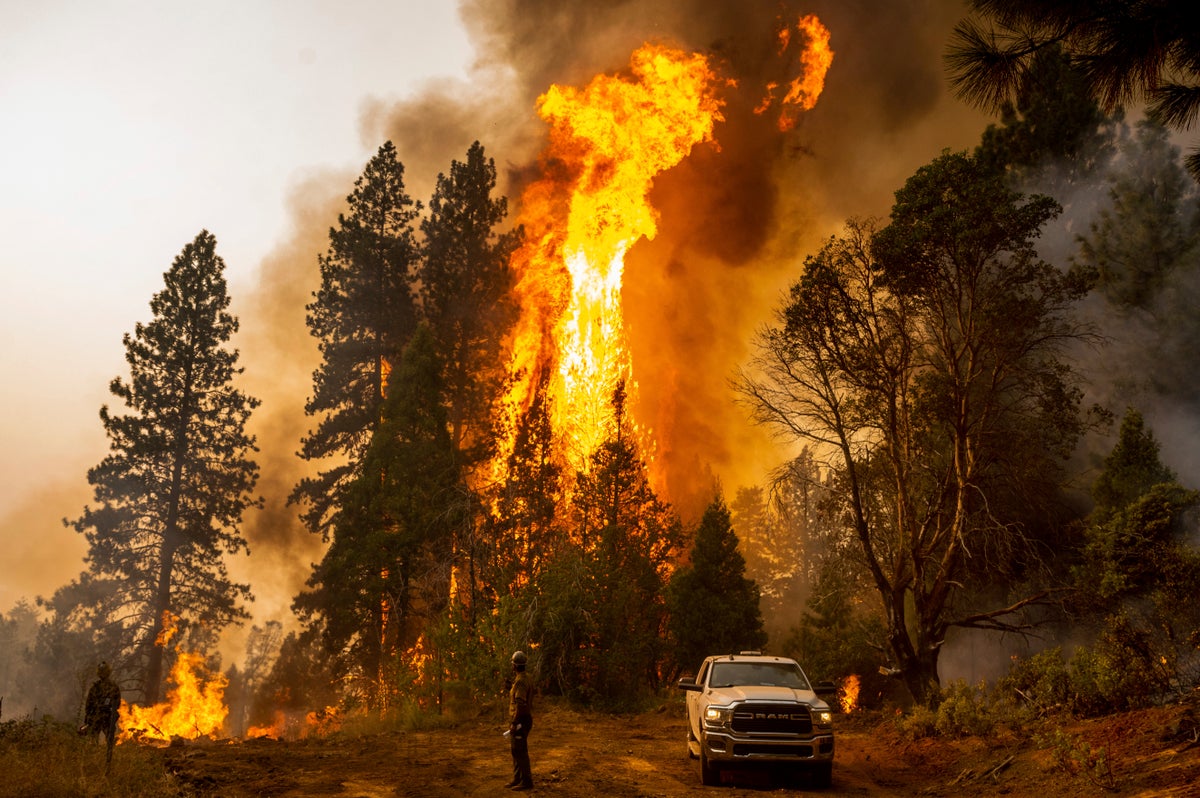
Drought and wildfire risks will remain elevated in the western states while warmer than average temperatures will greet the Southwest, Gulf Coast and East Coast this winter, federal weather officials said Thursday.
La Niña, a weather pattern characterized by cold ocean temperatures in the equatorial Pacific Ocean, is returning for a rare third winter, officials with the National Oceanic and Atmospheric Administration said. That means December, January and February are likely to bring drier than average conditions across the southern states and wetter than average weather for areas including the Great Lakes and Pacific Northwest.