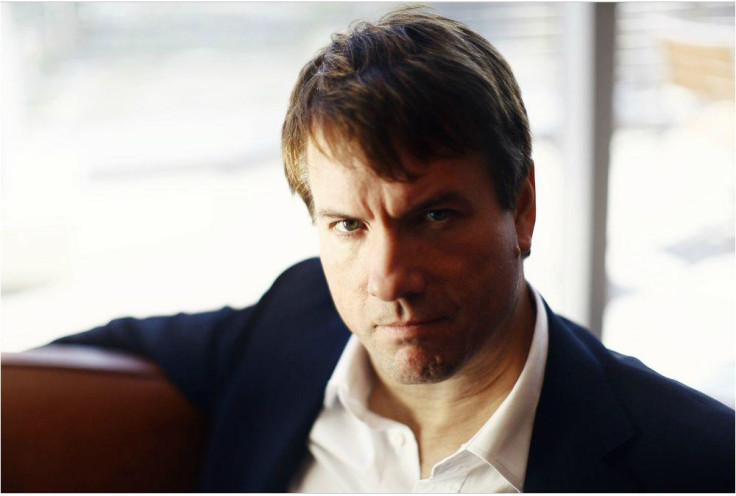
MicroStrategy founder and Executive Chairman Michael Saylor claims his company generated $15 billion in value last year by leveraging artificial intelligence to design novel financial structures. Speaking on a recent podcast, the MIT-educated aerospace engineer urged listeners to reconsider traditional wealth-building strategies, arguing that systemic inflation and emerging automation are changing the fundamentals of real estate and personal savings.
Saylor, whose firm holds 847,000 Bitcoin, argued that holding fiat currency or taking on long-term property mortgages can erode personal wealth over time.
How ChatGPT Helped Create $15 Billion
Rather than using artificial intelligence solely to automate routine tasks, Saylor stated that his team used generative models like ChatGPT as an architectural tool to tackle unprecedented capital market challenges. 'I used AI to make 15 billion dollars last year,' Saylor said during the interview. 'I did because the AI gave us a solution to the problem that no one had ever encountered before in the history of the world. And so my advice is don't try to outwork the robots. What you want to do is ask the AI to do something that's never been done before.'
Saylor emphasized that while AI models will handle an increasing share of routine intellectual labor, economic rewards will accrue to those who use the technology to design new financial models.
The Annual Erosion of the Dollar
At the core of Saylor's thesis is the assertion that fiat currencies are subject to ongoing loss of purchasing power. To illustrate his point, Saylor cited historical land values in Florida, noting that an acre of waterfront property in Miami Beach priced at $10,000 a century ago commands between $10 million and $20 million today.
'When land goes from $10,000 to $10 million, that means that the currency, the dollar, the money, lost about 7% of its economic value every year for 100 years running,' Saylor said. He added that while the US dollar remains relatively stable compared to weaker international currencies, holding uninvested cash carries long-term opportunity costs.
The Recurring Costs of Homeownership
While purchasing residential property is widely considered a foundational step toward financial security, Saylor warned that ongoing taxes and maintenance overhead reduce its effectiveness as a store of value. 'Let me tell you why you shouldn't buy a house,' Saylor said. 'There's a 2% property tax on houses in Florida, which means that if you buy a house, you pay 2% of the value every year. 2% means that every 36 years, you actually pay the cost of the house in tax to the government.'
Saylor noted that high mortgage interest rates, maintenance, and insurance further diminish net returns. While commercial real estate allows owners to offset expenses through tenant rents, Saylor argued that individual savers need simpler, liquid capital assets that do not require property management.
Differing Views on the Future of Money
Addressing Elon Musk's prediction that robotics and AI will create an 'age of abundance' where traditional currency becomes unnecessary, Saylor drew a distinction between consumable goods and scarce assets.
'He's half right,' Saylor said of Musk's assessment. 'Consumer goods, consumables, utilitarian goods will become abundant, but there are always going to be scarce desirable goods that will not become abundant... Everybody doesn't get a Hamptons house. Everybody doesn't get their own private jet.'
Saylor concluded that while technology will significantly lower the cost of basic goods and services, fixed-supply assets—including prime land, corporate equities, and digital assets like Bitcoin—will continue to serve as essential stores of value.
Disclaimer: Our digital media content is for informational purposes only and does not constitute investment advice. Please conduct your own analysis or seek professional advice before investing. Remember, investments are subject to market risks, and past performance does not guarantee future returns.