Get all your news in one place.
100's of premium titles.
One app.
Start reading
The Economic Times
The Economic Times
ET Science Desk

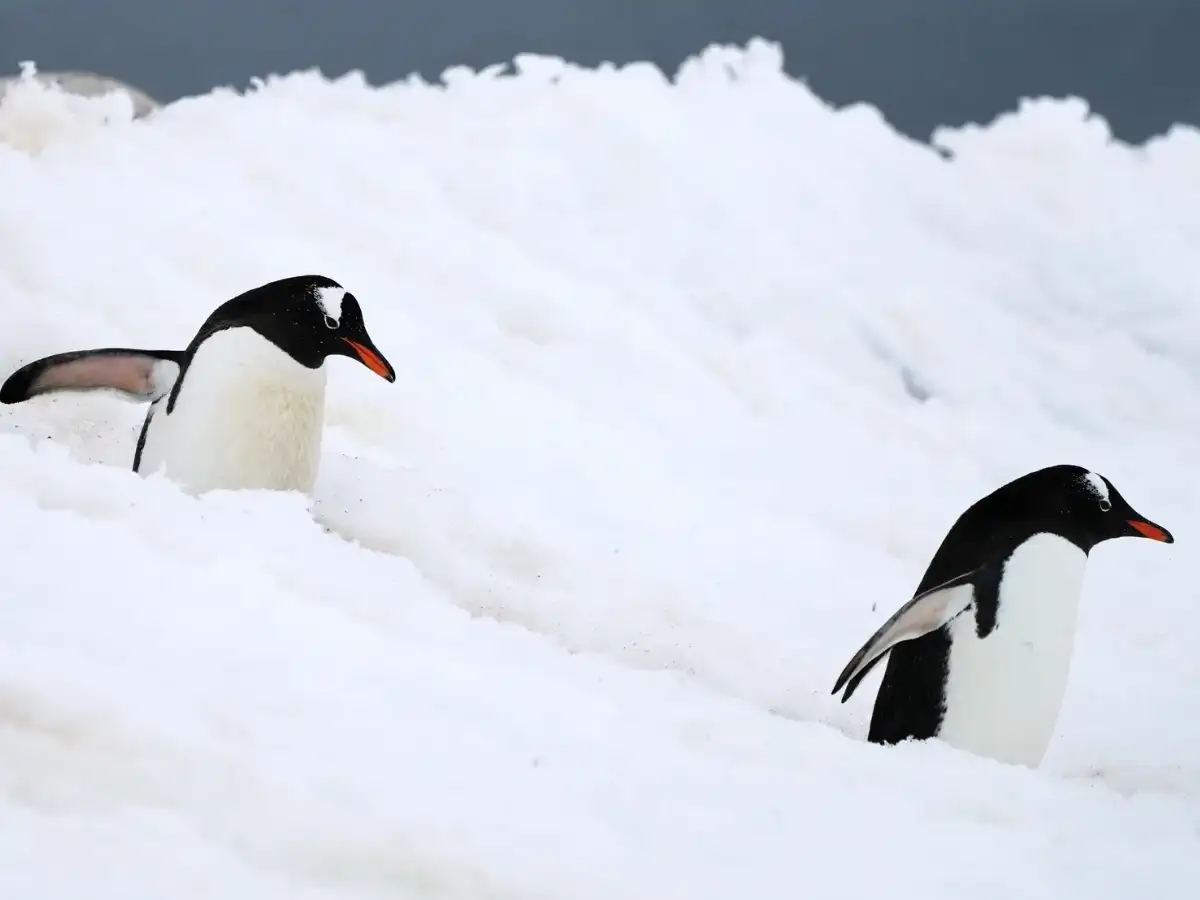
DNA reveals four gentoo penguin species instead of one after more than 100 years. Scientists now fear some island populations could lose their homes to global warming

Scientists have debated the number of species of gentoo penguin for over 100 years. Recently, geneticists have revealed that there are four different gentoo species, not just one species with various subspecies.

The University of California, Berkeley, the University of Chile, and some other organisations have been conducting a study, which showed that gentoo penguins consist of four species, while before it was considered that there is only one species of gentoo penguins with many subspecies.

Also Read | Scientists know what nature needs. Why does it take years for environmental policy to catch up when research can take years to become global action?

One of the species of gentoo penguin lives in the Kerguelen Islands in the Southern Indian Ocean and was unknown until now. It is the discovery of a new penguin species after more than 100 years.

However, according to the scientists, Kerguelen gentoo and two other sub-Antarctic gentoo species can suffer from loss of habitat because of the rise in temperatures across the globe.

Also Read | A planet 63 light-years away is sending repeating radio bursts, and scientists can read them for the first time. Here’s what it reveals about the alien world

In the journal Communications Biology, scientists used whole-genome sequencing and physical characteristics of penguins, such as looks, behaviour, vocalisations, mating and feeding habits, to resolve a controversial taxonomic question.

The findings will change our perception of gentoo penguins and may affect the conservation of penguins inhabiting remote islands.

Four penguins hiding behind one name

It may appear quite surprising that gentoo penguins are so much alike despite being very different in terms of their evolutionary history. This problem posed serious challenges for scientists who depended on morphological characters.

In the recent study, whole-genome sequences of 64 penguins from 10 breeding colonies were considered, making this study one of the most extensive genetic studies of gentoo penguins.

It was found that genetically isolated populations that were thought to be of the same species must actually be treated as four separate species.

The newly discovered southeastern gentoo penguin has been scientifically named Pygoscelis kerguelensis and lives in the Kerguelen Archipelago islands, located some 3,000 kilometres away from the nearest inhabited area.

The other three species include P. taeniata (Crozet, Marion and Macquarie islands), P. papua (Falkland/Malvinas and Martillo islands) and P. ellsworthi (Antarctica, Antarctic Peninsula and South Georgia islands).

It is believed that the separation happened between 300,000 and 500,000 years ago.

It seems that geographical isolation played an important role in the process of evolution of these four groups.

How isolated islands created different penguins

This story is a tale of gentoos but also of geography.

Isolation has occurred through hundreds of thousands of years due to huge distances across oceans and environmental barriers like the Antarctic Polar Front. This strong geographical barrier divides different environments according to temperature and salinity levels, which can be a restriction for the migration of many marine species.

Separated from each other, gentoo populations started to adapt to the environmental conditions surrounding each breeding colony.

Geographic isolation has been confirmed in the genomic analysis of gentoos.

Specifically, the Antarctic gentoo has genes associated with adapting to very low temperatures, including genes linked to heat production and fat storage. Some mutations were also found associated with changes in light perception, useful for living in environments where there is a great seasonal change in daylight hours.

On the other hand, eastern gentoos have genes that relate to diving, oxygen uptake and energy metabolism. In addition, the northern gentoos have genes related to digestion, cardiac and muscular activities.

Their diet has helped these birds to take their evolutionary path. Gentoos are flexible feeders, and they eat a variety of foods like fish, krill, squid, and more.

Global warming could leave some island gentoos with nowhere to go

This discovery of the species is important, although according to the research team, classification is not everything.

Using climate projections, scientists determined what the suitable habitat area would be for each of the two gentoo species by 2050.

And these projections were quite disheartening for the sub-Antarctic populations. According to moderate climate change scenarios, the areas of their suitable habitat could decline due to changing conditions.

The point is that insular species do not have many chances to adapt to changes in the environment.

A colony of penguins inhabiting an isolated island cannot just relocate hundreds or even thousands of kilometres to another location. There might be no suitable conditions, breeding locations, or other colonies on other islands.

Isolated island colonies of birds are more vulnerable to climate change than other species.

The situation is different for the Antarctic gentoo population. Its suitable range might expand in Antarctica with the climate warming.

But not all penguins in Antarctica will benefit from it. Species such as Emperor and Adélie penguins depend on sea ice, and thus, their habitat might face alterations with warming and affect the food supply in ecosystems.

Thus, these species might not have enough options either.

A new species discovery changes conservation priorities

The findings emphasise the potential importance of correct species identification.

If there are multiple populations classified together as one species that in fact turn out to be multiple distinct species, then the conservation requirements might also be distinct. One population cannot compensate for another through its abundance.

The issue becomes even more relevant for animals living on remote islands when populations may be small and geographically restricted.

Scientists mention dangers other than climate change. Penguins may be threatened by the introduction of predators, changes in availability of food, commercial fishing, accidental catches and avian influenza.

The data about genetics obtained in this study may help scientists identify populations with certain advantageous features or vulnerability to those threats.

Scientists are already investigating penguin genomes for certain genetic differences linked to survival from avian influenza.

The general conclusion from the paper is that genomics can be useful not only to solve classification issues.

FAQ

1. How many species of gentoo penguins are there?

Based on recent genomic studies, there are four species of gentoo penguins, and there is no one species with multiple subspecies.

2. Which gentoo penguin species has recently been discovered?

The name of the recently discovered species is Pygoscelis kerguelensis, which is the name for the southeastern species of gentoo penguins. The newly discovered species lives in the Kerguelen Islands.

3. Why are island-dwelling penguins highly threatened by climate change?

Island penguins have a limited range, and if the climate makes their habitat uninhabitable, there won’t be anywhere else that they could migrate to.

4. How far back do the four gentoo penguin species diverge from each other?

According to scientists’ estimations, the four gentoo penguin lineages diverged from each other around 300,000 to 500,000 years ago due to geographical separation and differences in local climate.

Sign up to read this article
Read news from 100's of titles, curated specifically for you.
Already a member? Sign in here
Related Stories
Top stories on inkl right now
One subscription that gives you access to news from hundreds of sites
Already a member? Sign in here
Our Picks
Fourteen days free
Download the app
One app. One membership.
100+ trusted global sources.