
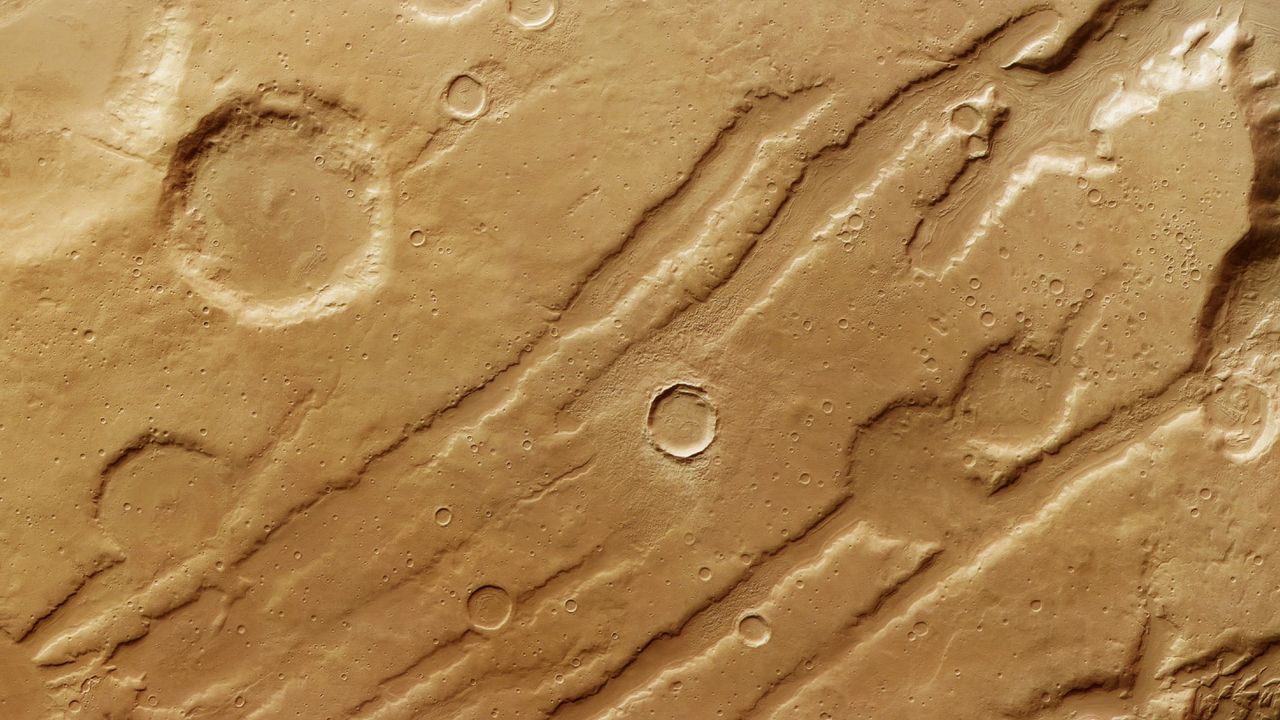
Mars may have had its own version of an Ice Age that reshaped parts of the Red Planet and carved deep "scratches" in its surface that remain visible today.
New high-resolution images from the European Space Agency's (ESA) Mars Express orbiter show ridges, troughs and swirl-like textures that bear a remarkable resemblance to glacial formations on Earth. Spotted in a rugged mid-latitude region called Coloe Fossae, these features likely formed as ice mixed with rock and dust crept through valleys and pooled inside impact craters, suggesting glaciers once flowed far from the planet's poles, reshaping valleys and craters in their path, according to a statement from ESA.