
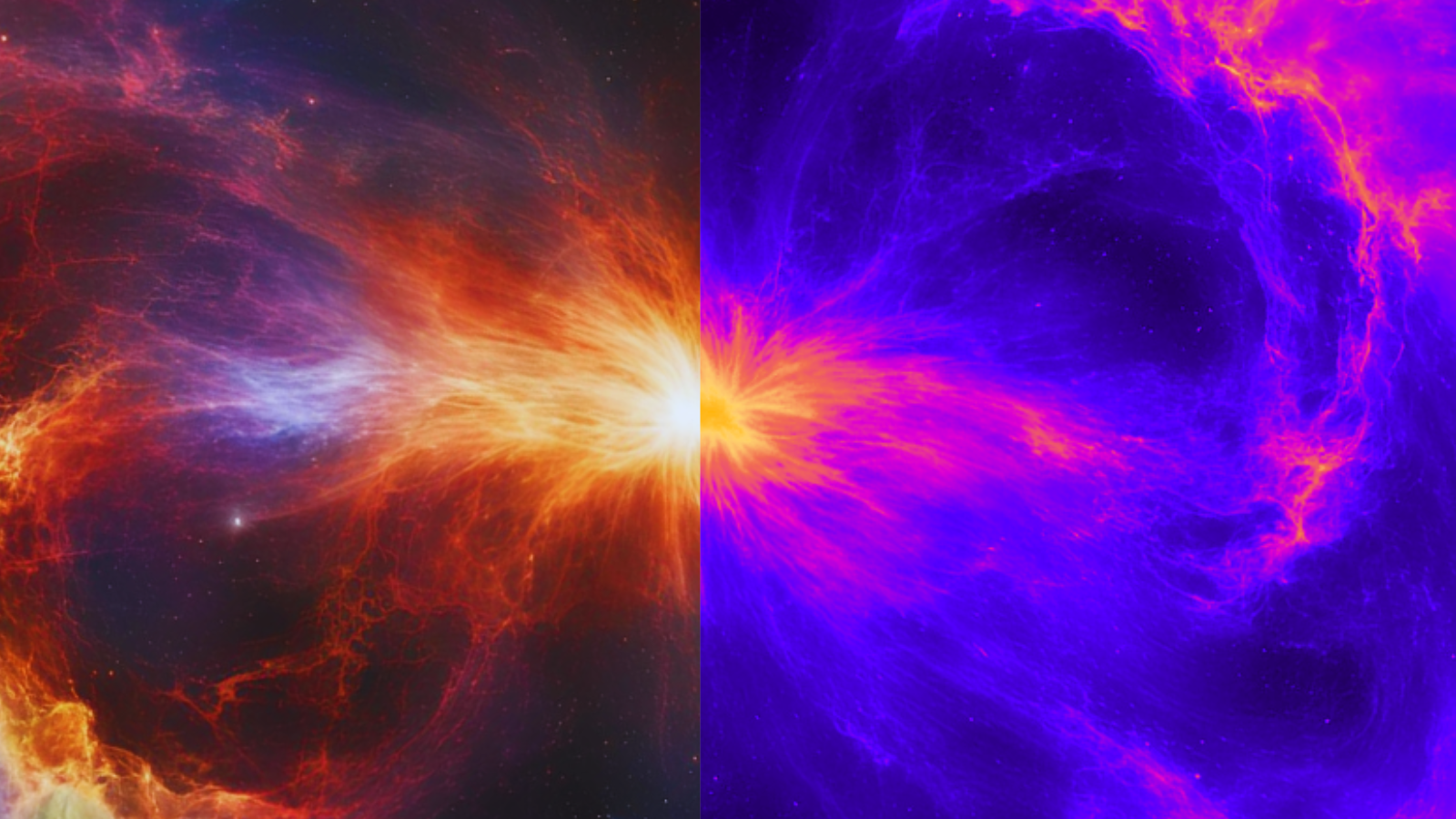
Observing the interactions between dark matter and so-called "dark photons" during a period after the Big Bang called the "cosmic dawn" could help shed light on the universe's most mysterious and troubling form of matter.
Dark matter particles outnumber ordinary, everyday matter, which comprises objects like stars, planets, moons, asteroids, cosmic clouds of gas and dust, and all living things, by about five to one. That means all those things listed — and everything else we see in the universe and here on Earth — account for around 15% of stuff in the cosmos, and we have little idea what the other 85% actually is.