Get all your news in one place.
100’s of premium titles.
One app.
Start reading
The Times of India
The Times of India
World
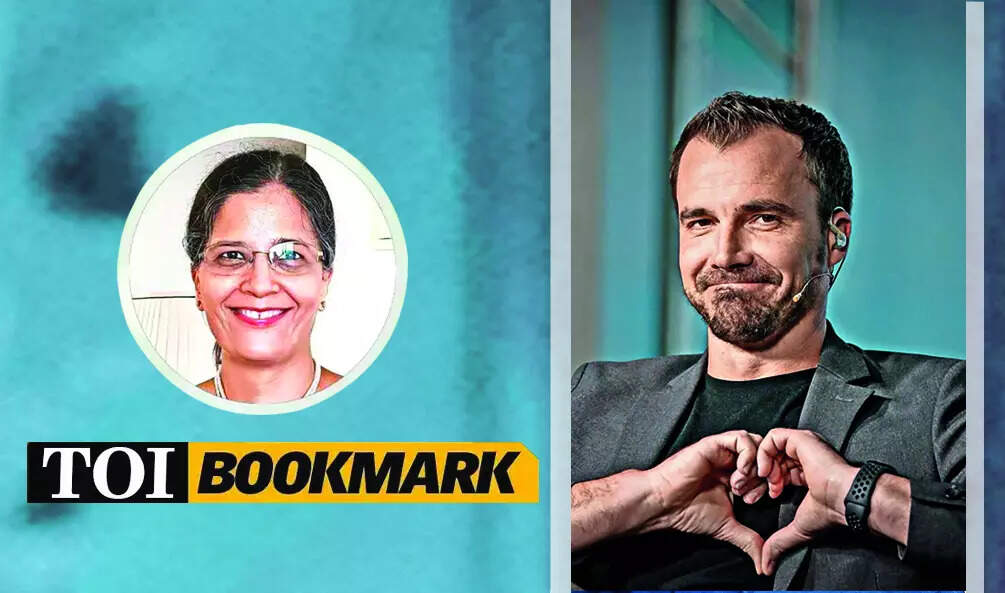
Jaya Bhattacharji Rose

Danny Rensch on Purpose, Pain, and the Power of Chess

129466642

Q: Thank you for writing this gripping and, I'm sure at times, very painful memoir.

A: It definitely was an ordeal at times... Anyone who reads it will find out very quickly this is not a chess book... It's a book about my journey being raised in a spiritual collective that, with time and processing, I have come to realise and name as a cult — which, if anyone has a relationship with a cult, they maybe will understand why I say it that way, because coming to terms with your own upbringing and your relationship with those who guided you and supported you is its own very interesting process. When you start to realise that maybe some of those guides and some of that support was also harmful and traumatic and, at times, even abusive...

I have a very unique story in that the leader was very obsessed with chess. And so through the experience of him realising that I had talent, he coerced and organised a cooperative abduction, taking me away from my family... which obviously has a very weird twist when I end up being someone who's a co-founder of chess.com...

There’s a story here that is not just about being angry or hurt about something that I went through. It's about recognising that every complicated path has the potential to deliver you to a journey that maybe you don't see the end game all the time, but perhaps the end game ends up being even better than you think. And that we are not what happens to us. We are what we choose to become. And that phrase has become a bit of a North Star for me.

Q: You're selective about commenting upon your opening moves whichanyone who is a specialist will realise the significance of your saying in that pivotal moment of your life.

A: It definitely was intentional. The thought behind it was to describe what happens to a person when they get told at a very young age, which I was at the age of 11, that chess was my purpose, by a spirit who was speaking through a woman who was a trans medium... When you believe that your entire life’s embodiment is around whatever your purpose is, it kind of reshapes everything that you do... One of the lessons I describe is that there are potentially benign and even sometimes helpful spiritual belief systems that can also be weaponised... And I think that along with the nuance of the chess I do describe, I was consistently trying to give people a choice about how to frame the lessons that I experienced... There are times where something can be just a game and there are times where it can have much more significance for someone's life depending on what level of self-worth and purpose they have wrapped up in it.

Q: What was the purpose of this book?

A: It was cathartic. It was therapeutic. It was also difficult. And I will probably continue to process and review and reflect on not just writing the book, but my life forever... I had never really been given an opportunity to connect who the world knew me as, which was Danny Wrench, a co-founder of chess.com... And even before that, I was a child chess prodigy... And while it wasn't that I had been keeping this other part of my life secret, I had just never had felt so called to finally kind of connect my entire life... I've been in therapy for many years and probably will be for the rest of my life. I share very openly in the book about my marriage and how difficult it was to come to terms with my own demons and my own trauma. I think one of the things that I really set out to do with this book was to share a story that gave insight into what it is to really work on yourself. Because I think that so many times people tell the Hollywood version of a story — I snapped my fingers, and now I'm better... I wanted to review the past in order to make me better for the future, which is also very much a chess player’s mindset... And chess.com’s success story is now big enough that I've been asked by people to start opening up more.

Q: I did wonder whether chess had any influence upon this book because of the degree of brutal honesty that it displays about yourself.

A: Chess is an intimate experience. If you lose, there is no one else to point the finger at and nothing but a choice to be honest with yourself about areas that you need to improve, places where you went wrong. I would say ultimately you never really lose if you take the time to learn, because the only time the game ends is if you give up, which is perhaps an analogy for life... I guess one of the things I try to share is that your losses are the reason that you become better. The losses are the thing that transform you.

Q: What did you, as a co-founder, bring into the DNA of this website?

A: I think the one thing I probably brought was a level of passion, a level of belief that at times probably had my other co-founders look at me like I was crazy and delusional. I think I had embodied — at a level that maybe no one else had at the time of my generation of chess players — that chess not only has the power to change lives, I think chess has the power to save lives. Because for me, chess is education. Chess is a language and a connection point for human beings across the entire world. And it literally transcends and breaks down barriers of gender, age, race, religion, of all other types of discrimination. You can have a 7-year-old girl beat a 70-year-old man. It connects cultures and bridges the divide...

Education is any type of exposure that we get to someone else's way of being, someone else's viewpoint on life. And I think when we start to understand how other people view the world, we become more understanding ourselves. And I think the world needs a lot more understanding... Ignorance is the first and required step to discriminate against another human being. And I think chess saved my life because growing up in an environment where I didn't even realise I was being exposed to different ways of thinking ultimately helped me gain perspective inside of the cult... I think that chess makes people smarter and smarter people make the world a better place would be an understatement.

Q: Chess.com enables players from acrosscultures to exercise skills.

A: You can see it all over the world now. The absolute revolution in superstars that are coming from India is in no small part due to Viswanathan Anand. One of the great things that Vishy brought with him already was a world champion who was embracing technology. And he was doing this even in the early stages of the internet and of computers. And I think compounding Vishy's presence with chess.com and just any opportunity to connect online with great chess players has been a big part of how and why you've seen so many great chess players come from previously what would be called nowhere. India is, in many ways, the birthplace of chess. And now the fact that it has become the top country for grand masters and of course the world champion, Gukesh Dommaraju, to me is good karma. Good things come back around...

Sign up to read this article
Read news from 100’s of titles, curated specifically for you.
Already a member? Sign in here
Related Stories
Top stories on inkl right now
One subscription that gives you access to news from hundreds of sites
Already a member? Sign in here
Our Picks
Fourteen days free
Download the app
One app. One membership.
100+ trusted global sources.