
A cozy reading nook starts with a place to sit, enough light, and a clear way into the corner. An AI image generator can help you explore how those elements might look together. Before describing colors or cushions, consider the room itself: does it have a recess, an open corner, or simply a flat wall beside a window?
Match the Reading Spot to the Room's Shape
A window seat uses the shape of an existing recess to define the space. A chair corner makes a reading area within a larger room, while a freestanding bench can sit beside a flat wall. Choose the starting point from your room's features rather than asking for a style that ignores them.
A window seat for a recessed nook
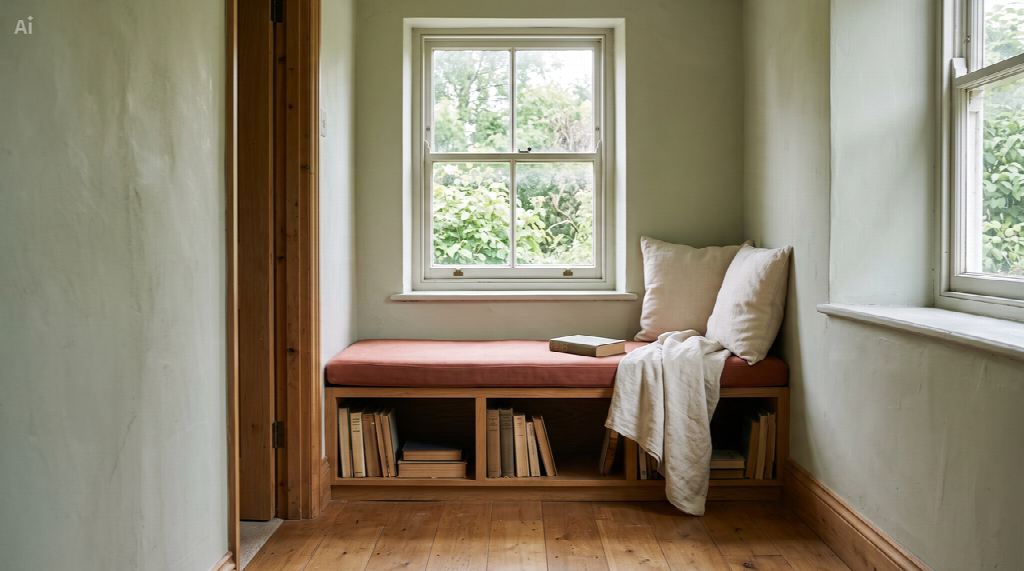
In this imagined alcove, the seat runs beneath the window while book storage fits into the base. The sage walls and terracotta cushion distinguish the recess without filling it with decoration. A few soft textiles make the seat look inviting, and the open floor in front gives the nook a clear entrance.
Describe the seating surface as well as the window. A prompt that asks only for “a cozy window nook” may leave you with a beautiful view and little indication of where someone would settle. Include a cushion, a solid surface for back cushions, and space on the seat that is not occupied by books or throws.
This is a useful direction when the recess itself is the feature you want to explore. If your room has only a flat wall with a window, keep that distinction in the prompt. You can visualize a bench nearby without inventing a deep architectural opening that the room does not have.
A chair corner with books close by
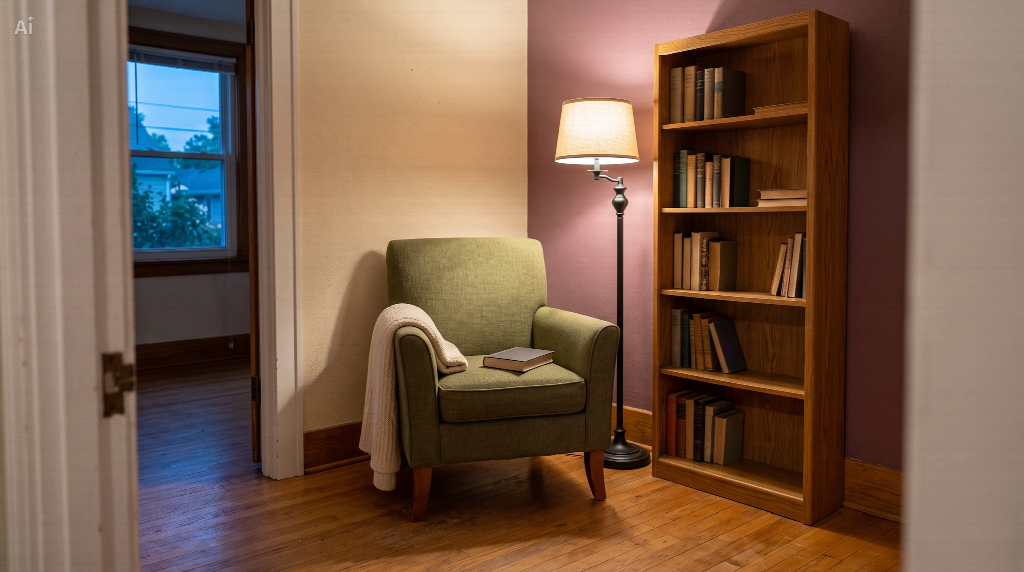
A freestanding chair gives a different sense of enclosure. Place it at a slight angle beside a narrow bookcase, with the open side facing the room. The books form a backdrop rather than a barrier. Leave enough visible floor around the chair for the composition to feel approachable instead of wedged into the corner.
For an evening scene, describe a lamp beside the chair and the area its light reaches. A warm pool of light across the seat can make the corner feel separate from the rest of the room. Keep some detail in the surrounding walls so that the atmosphere does not depend on turning everything else black.
You do not need to fill every shelf. Alternate small groups of books with a little empty space, and let the chair remain the obvious place to settle. A folded blanket and one book can suggest use without turning the corner into a display of possessions.
A flat wall does not need an invented alcove
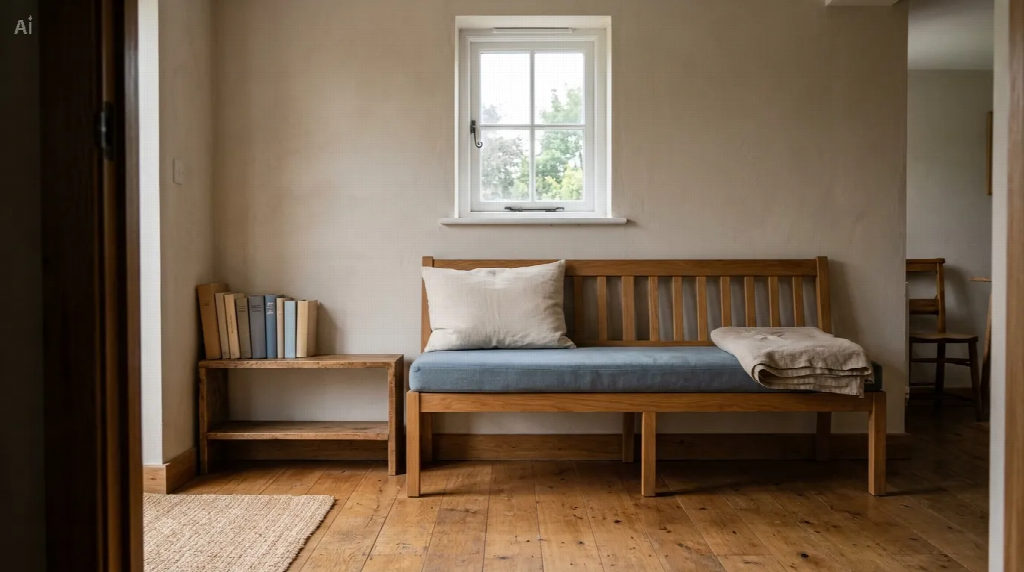
A freestanding bench offers a way to explore window-side seating when the wall has no recess. Its own back supports the cushion, and visible legs distinguish it from a built-in seat. Books sit on a separate low shelf beside it, leaving the area beneath the bench open.
In the prompt, keep the wall flat and show the window sill above the seat back. Include some surrounding wall and floor so the picture shows how the arrangement occupies the room, not just what the bench looks like. This preserves the spatial constraint that makes the alternative useful.
Try specifying “a freestanding reading bench below a window on a flat wall, with its own back, visible legs, a low book shelf nearby, and clear floor in front.” Compare that arrangement with the recessed seat before changing the colors. The key difference is whether the room encloses the seat or the seat stands independently within it.
A Reading Nook Prompt Starts With the Room
Write down the features you want to preserve before generating an image. The window position, wall shape, and route through the room matter more to the layout than the exact shade of a cushion. A wider view is helpful because it shows how the reading area connects to the space around it.
Open CapCut's AI image generator and describe those fixed features in your prompt. CapCut supports text-based image creation and reference images. If you have a room photo you are comfortable uploading, it can provide a starting reference for the composition; otherwise, describe an imagined room from text.
Use this room-first brief for a window-seat concept:
Create a horizontal, photorealistic view of a small reading alcove in an ordinary home. Show the corner from the room entrance, with straight walls and a clear area of floor in front. Place a low oak window seat beneath a white sash window overlooking leafy branches. Include open book cubbies below the seat, a solid terracotta cushion, two cream back cushions against the side wall, and a loosely folded linen throw. Use pale sage walls and soft cloudy daylight. Keep the seat mostly clear and the books unlettered. Show natural fabric creases and wood texture, without excessive glow, decorative clutter, people, or signs.
To explore the chair layout, replace the built-in seat with a moss-green armchair and a narrow oak bookcase on the adjacent wall. Keep the entrance visible. Change the lighting instruction to a warm shaded lamp beside the chair, with a little cool evening light from a nearby window. Those changes describe a different way to use the corner, not just a new color scheme.
When comparing results from an AI image maker, separate layout decisions from atmosphere. First decide whether the seat, books, and entrance work together visually. Then compare sage with cream walls or daylight with lamplight. Changing everything at once makes it harder to tell which choice improved the room.
Small Details That Make the Space Feel Used
A reading nook should suggest that someone could return to a book there. Slightly uneven book groupings, a relaxed fold in the blanket, and a cushion that is not perfectly centered can help. Keep those details subordinate to the seating area; every added item takes up visible space.
Look at where the light falls, too. In the window-seat scene, the daylight should reveal the cushion and nearby books. In the chair scene, the lamp should illuminate the place where a reader would sit, not only the wall behind it. Describe the area you want lit rather than simply adding “warm lighting” to every prompt.
Use a focused follow-up request in CapCut when an arrangement needs adjustment: “Keep the chair and bookcase, but clear the floor between the chair and the doorway.” For the alcove, try “Leave more of the seat uncovered while keeping the same colors.” Once the arrangement matches your idea, use Download to save it.
If you plan to bring the concept into your home, check the actual space separately. The image helps you compare appearances; your room measurements determine what fits. Keep the features you already have in mind as you move from an imagined corner to a practical arrangement.
Summary
The best reading nook is one that feels like a natural part of the room. Start with an alcove seat, a quiet corner, or a bench against a blank wall, then plan the lighting and book storage around it. If you’re unsure which arrangement will work best, CapCut’s AI image generator can help you visualize different layouts before moving any furniture, making it easier to fine-tune the space until it feels warm and inviting.















