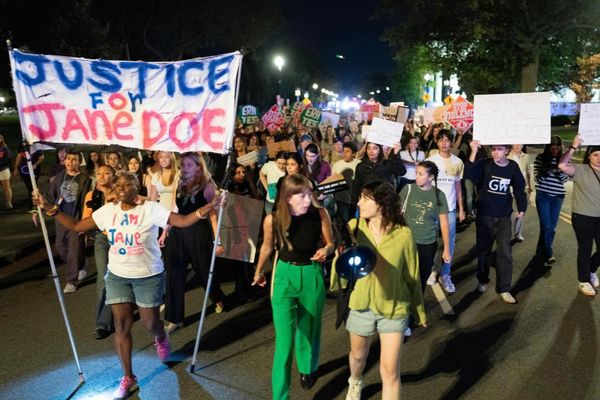
So many political issues, from debates over abortion and school curriculum materials to budget cuts, are framed as attacks on “women” as a group, and polls and statistics showing that women’s votes lean left are usually cited as evidence on behalf of the idea that the Republican Party is anti-woman. But these gender gap statistics are misleading — an attempt to pit the sexes against each other in a contest of identity politics that doesn’t reflect the interdependent reality of millions of women (and men).
While men’s votes skewing Republican and women’s skewing Democratic may seem like an obvious and immovable feature of the political landscape today, the so-called “gender gap” in voting preferences is a relatively modern phenomenon.
Until the 1980s, to the extent that a gap in the female and male vote existed, it went the other way, with Republican candidates like Dwight D. Eisenhower and the unsuccessful Thomas Dewey finding disproportionate popularity among women. A clear Democratic preference for America’s women emerged in the 1980s and hardened into the 11-point gap we’ve seen in the last several elections.