
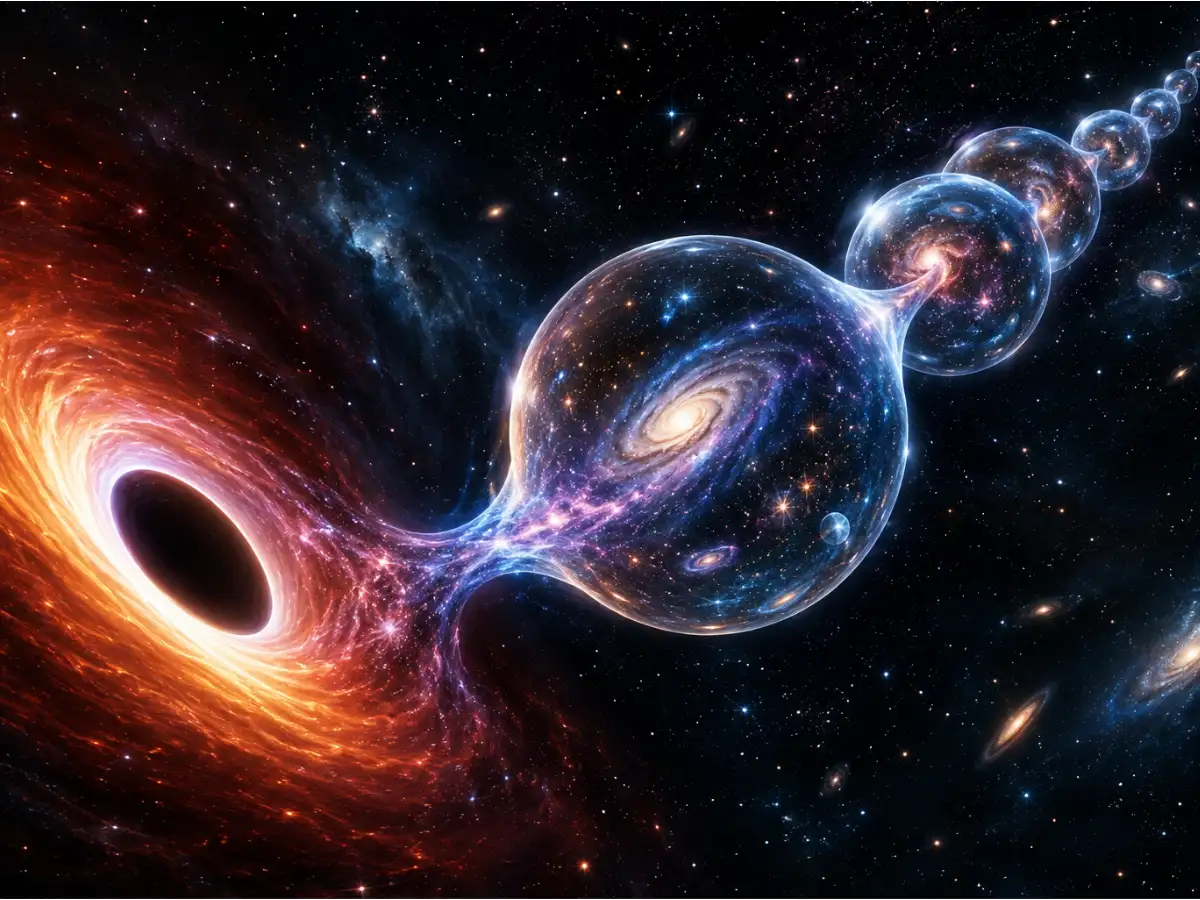
What if the universe is not a one-time event, but part of a much larger cycle of cosmic reproduction?
A fringe idea known as cosmological evolution proposes that universes could reproduce by creating black holes, with each black hole potentially giving birth to a new universe. The idea, first developed by physicist Lee Smolin in the 1990s, has attracted renewed attention after observations from the James Webb Space Telescope (JWST) revealed surprisingly mature galaxies and massive black holes in the early universe.













