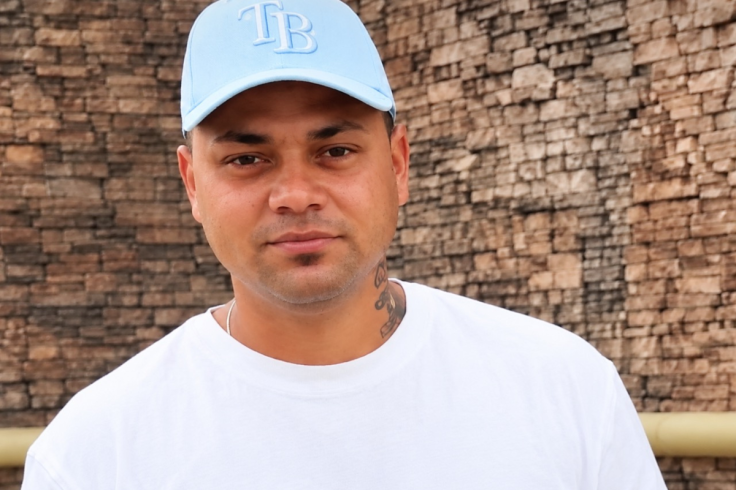
A Costa Rican detainee, Carlos Josue Marchena Marchena, was found unresponsive at Winn Correctional Center in Louisiana on 18 September and later pronounced dead at a nearby hospital after his family and a fellow detainee alleged he had repeatedly complained about missed insulin injections, inadequate meals and limited water.
Marchena, 36, was taken by ambulance to Winn Parish Medical Center after staff began life-saving measures, according to US Immigration and Customs Enforcement.
An onsite physician pronounced him dead at about 8am. The official cause of death remains pending further medical examination.
Costa Rican Detainee Reportedly Raised Diabetes Concerns
The account emerged after Marchena's sister, girlfriend and a fellow detainee told The Associated Press that he had raised concerns about his treatment while being moved between detention facilities in multiple states.
Franciny Marchena said her brother told her that staff were not monitoring his blood sugar properly. She said his condition began deteriorating about two weeks before his death while he was held at an immigration detention facility in Michigan. According to his sister, he was placed in a security cell after an argument with another detainee.
After arriving at Winn, Marchena told relatives that he was experiencing chest pain and was not receiving enough food or water. His family also alleged that some meals were spoiled.
Luis Herrera Andy, a Honduran detainee held in an adjacent cell, told AP that Marchena received insulin only sporadically. The allegations have not been established as the cause of death.
ICE said Marchena received appropriate medical care and was seen by medical professionals.
'Marchena received proper medical care and was seen by medical professionals,' the agency said in a statement.
LaSalle Corrections, the contractor managing the facility with the Winn Parish Sheriff's Office, said the death was under review. Company spokesperson Scott Sutterfield declined to answer further questions but said LaSalle was committed to maintaining 'the highest standards of care.'
The Winn Parish Sheriff's Office and the Winn Parish Coroner's Office did not respond to requests for comment.
People who spoke to AP described a deterioration in Marchena's condition in the days before his death. Herrera said Marchena experienced stomach pain, headaches, chills and vomiting the day before he was found unresponsive. Herrera said Marchena appeared pale and purple and was drenched in sweat.
Hours before his death, Marchena called his girlfriend, Ana Leon Castro, around midnight and told her that pills prescribed for his chest pain were not helping, according to Castro.
'All they gave him was a pill, that was it for the treatment,' she said.
Winn Inspection Found Standards Were Not Met
For context, Winn Correctional Center had already faced scrutiny before Marchena's death. An unannounced inspection by the Department of Homeland Security's Office of Inspector General, issued on 3 June 2026, found that the facility did not fully comply with reviewed standards covering medical care, food service, use of force and several other areas.
The report said medical staff had failed to maintain current treatment documentation and laboratory testing records. The OIG warned that the deficiencies could 'negatively impact detainee health care and safety.'
Inspectors also found that frozen food was not being stored correctly. ICE agreed to nine recommendations aimed at improving conditions at Winn and had implemented several of them, according to AP's report on the inspection.
Two other ICE detainees have died at the complex since April, AP reported. Marchena was at least the 58th person to die in ICE custody since Donald Trump returned to the White House in January 2025, according to AP's tracking.
Medical examiners and coroners have identified diabetes as a contributing factor in at least six detainee deaths during the same period. That figure does not establish diabetes as a contributing factor in Marchena's death.
Dr Rajesh Garg, head of the Diabetes Section at Harbor-UCLA Medical Center, said people with type 1 diabetes need consistent access to insulin, food and water. Stress can make regular monitoring more important, he said.
'If they are under any stress, then they need even more care and then they need to test their blood sugar at regular times,' Garg said. 'If there isn't proper food and water, that is going to stress his system.'
Garg said symptoms including vomiting, headaches, nausea and stomach pain can signal a potentially dangerous insulin deficiency, although they can also have other causes, including infection. He said cardiac arrest can occur from excessively low or high insulin levels in a person with diabetes.
Marchena's family and a fellow detainee have described what they allege were lapses in his medical care, but no official finding has linked those allegations to his death. The cause remains unresolved.
ICE said Border Patrol arrested Marchena for entering the United States without inspection on or about 9 February 2021. The agency also said he had convictions for retail fraud and property destruction and was arrested by the Ottawa County Sheriff's Department in Michigan on an assault charge before being taken into ICE custody in January.
An immigration judge ordered his removal on 29 July, according to ICE. His sister said Marchena had requested bail and voluntary deportation to Costa Rica, but that request was denied. ICE did not respond to questions about the alleged denial.
Marchena worked as a ride-service driver and had four children, his sister said. AP reported that he was the first Costa Rican detainee to die in an ICE facility during Trump's second presidency.
The circumstances surrounding Marchena's death remain under investigation. His family and a fellow detainee have alleged that he did not consistently receive insulin, food or water, while ICE has said he received proper medical care.
The official cause of death remains pending further medical examination.