
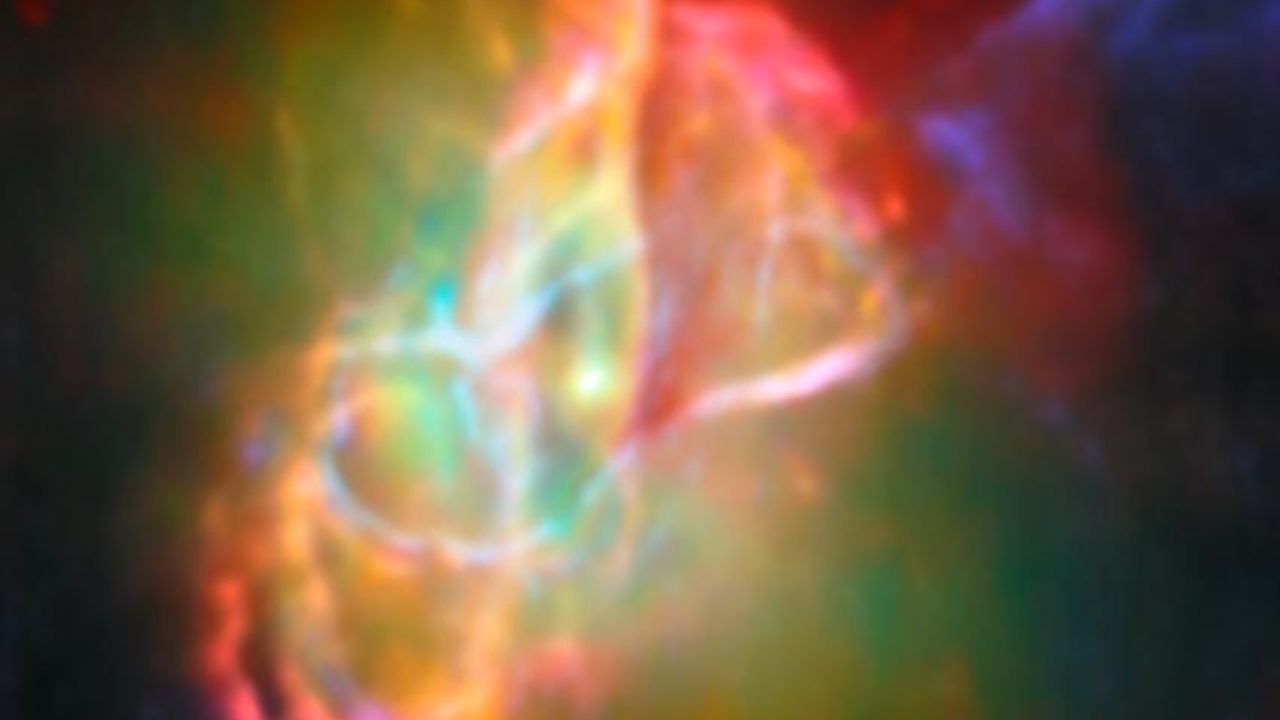
Apologies, birds of the cosmos — the James Webb Space Telescope has set aside ornithology and officially entered its entomology era, a stunning new image of the Butterfly Nebula shows.
Glittering some 3,400 light-years from Earth in the constellation Scorpius, the Butterfly Nebula (officially designated NGC 6302) is the swan song of a dying star. At its center sits one of the hottest known stars in the Milky Way: a white dwarf (the collapsed husk of a once-sunlike star) smoldering at temperatures of more than 220,000 kelvins (nearly 400,000 degrees Fahrenheit). As it slowly dies, the star sheds its outer layers as twin lobes of hot, irradiated gas, which form the brilliant "wings" of the butterfly.