Get all your news in one place.
100's of premium titles.
One app.
Start reading
Medical Daily
Medical Daily
Dorothy Brooks

Congo Tests Existing Ebola Vaccine Against the Rare Bundibugyo Virus as Cases Pass 7,600 and Deaths Near 3,700

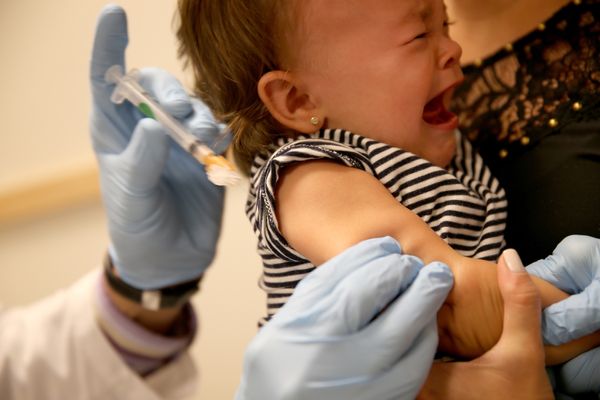
Frontline workers in Bunia, the city at the center of Congo's Ebola epidemic, began receiving the Ervebo vaccine on Sept. 19 in a study built to answer the outbreak's most pressing medical question: whether a vaccine designed against one Ebola species can protect against another. The virus spreading in eastern Congo is Bundibugyo, a rare relative of the better-known Zaire ebolavirus, and no vaccine or treatment has been approved for it.

Congo reported 7,672 confirmed cases and 3,699 deaths through Sept. 19, with infections recorded in seven provinces, according to the European Centre for Disease Prevention and Control. That makes it the largest Bundibugyo outbreak on record and Congo's largest Ebola outbreak, second in size only to West Africa's 2014 to 2016 epidemic. The figures count confirmed cases only.

For most Americans, the direct risk remains low. The stakes fall on aid workers, health workers, and travelers with ties to the region, and on a response fighting without its most effective tool.


A Vaccine Built for a Different Ebola Species

Bundibugyo and Zaire ebolavirus cause the same severe illness but are distinct species. Major recent responses, including the 2018 to 2020 outbreak in eastern Congo, fought Zaire ebolavirus, and the licensed vaccine and antibody treatments target it. Before this year, Bundibugyo had caused only two known outbreaks, in Uganda in 2007 and Congo in 2012, which killed roughly 30% and 50% of those infected.

Merck's Ervebo has been highly effective against Zaire ebolavirus. Earlier this month, a WHO-backed vaccine advisory panel said it is not yet known whether Ervebo provides meaningful protection against Bundibugyo and recommended using it initially only for research, UN News reported.

The new study does that. Of 70,000 doses made available to Congo, 20,000 are allocated to the research program in Ituri, UN News reported. Doctors Without Borders and its research arm, Epicentre, said the BRAVO vaccination study will follow 20,000 frontline workers in Ituri and North Kivu for nine to 12 months, including three months of vaccination and at least six months of follow-up. Health and frontline workers come first because they face the heaviest exposure.

There is still no proven Bundibugyo treatment. A clinical trial of a candidate treatment is underway, and children are eligible with parental consent, UN News reported. That matters because more than 60% of infected children under 5 have died, compared with fewer than 30% of adults.

MedicalDaily previously reported that Congo began giving Ervebo to frontline workers on Aug. 27, when the outbreak had passed 6,000 cases. The change now is a formal study designed to produce evidence.


Competing Signals on Whether the Outbreak Has Peaked

Ituri, the epicenter, has recorded 5,913 cases and 2,703 deaths. North Kivu has 1,402 cases and 850 deaths, a fatality rate above 60%. Smaller numbers of cases have been reported in Haut-Uélé, Tshopo, Bas-Uélé, South Kivu, and Sud-Ubangi.

Congo's health minister, Roger Kamba, said in mid-September that daily cases had fallen from about 120 at the peak to near 80, and daily deaths from about 50 to near 30, CIDRAP reported. UN and WHO officials urged caution, noting that cases were still growing in some areas and that most new cases in North Kivu were occurring outside known chains of transmission. "It's too early to confidently say we have passed a peak," said Dr. Olivier Le Polain of WHO.

The pace so far is unmatched. A CDC report counted 5,458 confirmed cases in the outbreak's first 100 days, about seven times the number reported at the same point in West Africa's 2014 outbreak.

Official figures may not capture every infection. Early Ebola symptoms can resemble malaria, conflict limits access to parts of eastern Congo, and ECDC data show that 79.9% of identified contacts were under follow-up as of Sept. 19.


Risk for Americans Stays Low as Travel Rules Continue

No cases linked to this outbreak have been reported in the United States. Three people infected in Congo, including two U.S. citizens, were treated in Europe, two in Germany and one in France, and all have recovered, according to ECDC, which rates the risk of importation into Europe as very low.

Travel rules remain strict. Under CDC guidance, U.S. citizens and nationals who have been in Congo within 21 days before departure are not permitted to board commercial flights to the United States. A separate CDC order barring entry for most foreign nationals recently in Congo, Uganda, or South Sudan was extended on Sept. 11 for 30 days.

Aid and health workers deployed to the region, their families, and U.S. clinicians who may see returning travelers should pay closest attention. Ebola is not contagious before symptoms begin. The incubation period ranges from two to 21 days, and early symptoms include fever, fatigue, muscle pain, headache, and sore throat, sometimes followed by vomiting, diarrhea, and bleeding.

Anyone who develops a fever within 21 days of being in an affected area should call a clinician or health department before arriving for care. Everyone else needs no change in daily routine. If the vaccine study shows protection, it could change how future Bundibugyo outbreaks are fought, though results will take months.


Outbreak Timeline

Sept. 20, 2026: Congo reports 7,672 confirmed cases and 3,699 deaths, with data through Sept. 19, according to ECDC.

Sept. 19, 2026: The BRAVO vaccine study launches with frontline workers in Bunia, Ituri province.

Sept. 15, 2026: A CDC report finds the outbreak grew faster in its first 100 days than any previously documented Ebola outbreak, and WHO says it is too early to call a peak.

May 15, 2026: The outbreak officially begins after the Bundibugyo virus is confirmed in Ituri province.


Key Questions Answered

How large is Congo's Ebola outbreak now?

Congo reported 7,672 confirmed cases and 3,699 deaths through Sept. 19, across seven provinces. Official figures may not capture every infection.

What is Bundibugyo virus?

It is a rare species of Ebola, distinct from the more common Zaire ebolavirus. Before 2026, it had caused only two known outbreaks.

Is there a vaccine or treatment?

None is approved for Bundibugyo. Ervebo, licensed against Zaire ebolavirus, is being tested in a study of 20,000 frontline workers, and a separate trial is testing a candidate treatment.

Is the outbreak slowing?

Congo's health minister reported fewer daily cases and deaths, but WHO says it is too early to say the outbreak has peaked.

Is this the largest Ebola outbreak ever?

No. It is the largest Bundibugyo outbreak and Congo's largest, but West Africa's 2014 to 2016 epidemic remains larger.

What is the risk in the United States?

The direct risk to most Americans is low, and no U.S. cases have been reported. U.S. citizens who were in Congo within 21 days cannot board commercial flights to the United States.

What should returning travelers watch for?

Fever, fatigue, muscle pain, headache, or sore throat within 21 days. They should call a clinician or health department before arriving for care.

Sign up to read this article
Read news from 100's of titles, curated specifically for you.
Already a member? Sign in here
Related Stories
Top stories on inkl right now
One subscription that gives you access to news from hundreds of sites
Already a member? Sign in here
Our Picks
Fourteen days free
Download the app
One app. One membership.
100+ trusted global sources.