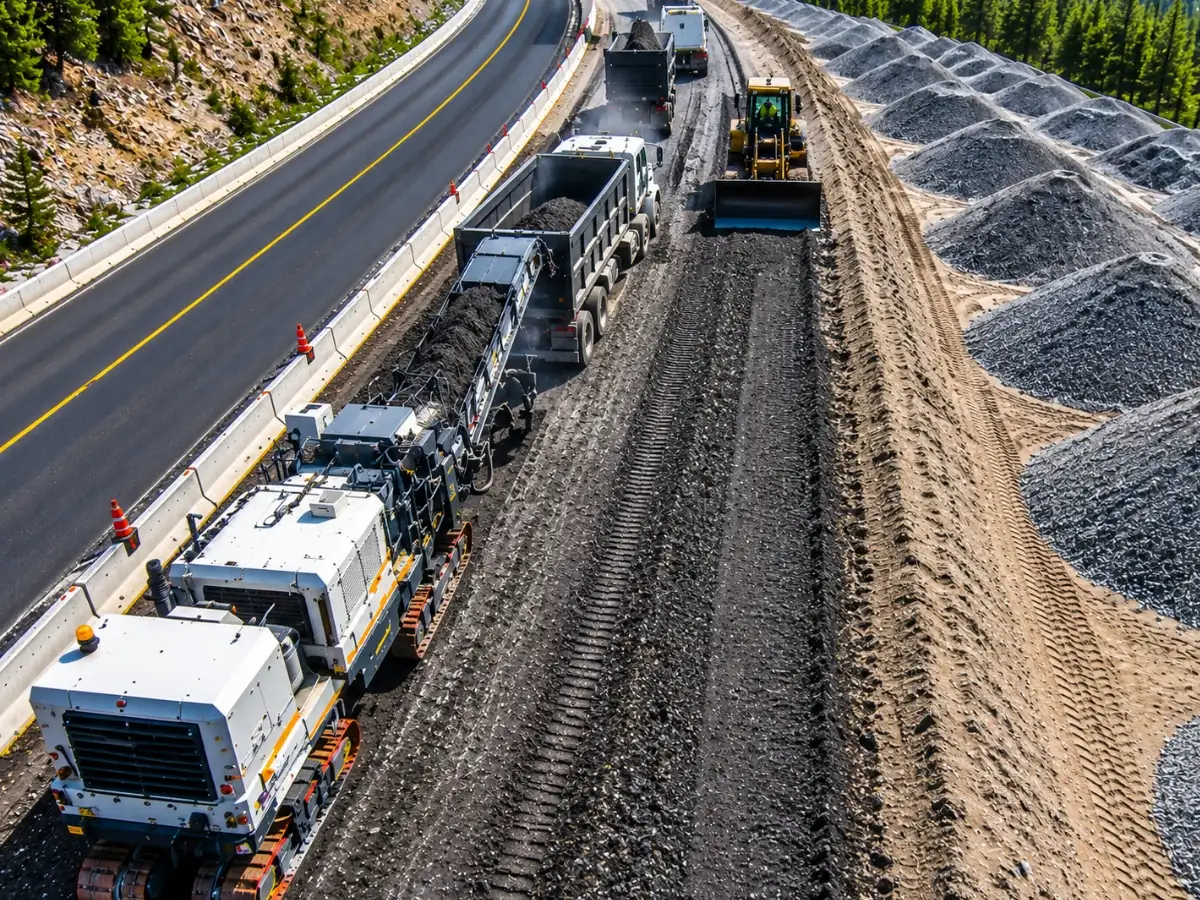
Every road crew faces the same challenge when tearing up an old highway: tons of cracked, weathered asphalt with nowhere to go. On US Highway 24 in Colorado Springs, crews found a clever way to reuse the old pavement and save time and money by grinding it up and using the material in place, rather than hauling it away and bringing in new material. (cuts the redundant "to replace it") The Colorado Department of Transportation reported that crews reopened all lanes of US 24 between Constitution Avenue and Garrett Road on the evening of Saturday, Aug. 19, 2017, marking the end of a huge project in the works for a $5.7 million reconstruction job led by contractor Flatiron Constructors. The project shows how in-place asphalt recycling can work on a real-world, high-traffic highway project.
What in-place asphalt recycling means for a highway contract

Usually, a major highway reconstruction takes the form of a loop: break up the old road, haul the debris to a landfill or recycling center, then bring in new base material from a quarry by the truckload. Each step adds cost, emissions from transport vehicles, and traffic congestion in the construction area. On westbound US 24, CDOT milled the old asphalt pavement and reconditioned the roadway base before paving over it with new concrete pavement. This combination, a recycled asphalt base topped with a new concrete surface, is a recognized approach in highway engineering; a stabilized base built through full-depth reclamation can support either an asphalt or concrete top layer. The agency also used an on-site concrete batch plant during construction, which reduced the need for ready-mix trucks from an outside supplier.
US 24 rebuild by the numbers: material savings and speed
According to CDOT's own project release, by reprocessing the pavement on-site, the project saved over 40,000 tons of new base course material, which the agency estimates is roughly 1,600 loads that would not have had to make the trip. The work also moved quickly, with crews laying more than 14,800 cubic yards of concrete in under two weeks, all of it made at the on-site batch plant. Both directions of US 24 had been narrowed to one lane since late June while the westbound side was being reconstructed, so a quick turnaround was critical to traffic flowing over that corridor every day.