Coles disguised price increases on at least 245 products by offering discounts that were “literally true” but also “utterly misleading”, the competition regulator has argued at the beginning of a high-profile court case.
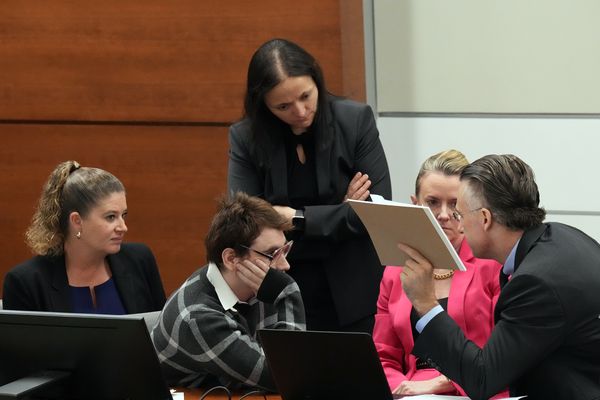
A federal court battle between the Australian Competition and Consumer Commission (ACCC) and Coles began on Monday, testing allegations the supermarket breached the law by offering “illusory” discounts on many everyday products.

The ACCC alleges Coles misled shoppers because the products were sold at one regular price for at least six months before being temporarily inflated and then dropped slightly as part of a “Down Down” promotion.
The strategy is known as “was/is” comparative pricing.
The consumer watchdog will argue the promoted prices were actually higher, or the same as, the previous regular price. In many cases, Coles effected the temporary price spike to establish a higher “was” price, according to the legal claim.
Sign up: AU Breaking News email
On Monday, Justice Michael O’Bryan heard the ACCC’s opening submissions on the first day of the 10-day hearing in Melbourne, which will scrutinise Coles pricing practices between February 2022 and May 2023.
Barrister Garry Rich SC, acting for the ACCC, gave the court the example of Coles’ pricing of 1.2kg cans of Nature’s Gift wet dog food.
Coles had sold the dog food for $4 for 296 days between April 2022 and February 2023, Rich told the court.
The supermarket then increased the price of that product by a “whopping 50%” to $6 and sold it at the higher retail price for just seven days.
After a week, Coles changed the price of the dog food to $4.50 and told customers it was on sale as part of the “Down Down” promotion, claiming that price “was” $6.
Rich said while Coles’ claim $4.50 was a discounted price for the dog food was “literally true”, it was also “utterly misleading”.
“A consumer who knew the real facts would not think the price of the dog food had gone down,” he told the court.
“Nor would they think the price of $4.50 was a genuine reduction or discount.”
The case will put pricing practices across the supermarket industry under a microscope and have ramifications for a very similar case the ACCC is running against Woolworths, which is expected to be heard at a later date.
The ACCC is seeking large penalties and community service orders against Coles, which, along with Woolworths, controls two-thirds of the Australian grocery market.
Coles will defend the ACCC’s allegations by arguing the changes in pricing were a response to increased costs from suppliers.
Rich told the court on Monday that Coles disguised wholesale price increases as discounts by temporarily spiking the retail price much higher than it needed to, then reducing the price to the “new regular price”.
“In our submission Coles misled its customers into thinking it had reduced its regular prices when in the space of about a month Coles had implemented a price increase for those products,” he said.
The case will focus on a sample of about a dozen products, including Rexona deodorant, Arnott’s Shapes and 2L bottles of Coca-Cola, from a list of 245 which the ACCC has submitted to the court.
Rich told the court that Coles had reduced the minimum length of time it had to wait after changing the retail price of an item before putting it on “Down Down” from 12 weeks to four, then failed to comply with the “revised guardrails” for almost half of the products the court will examine.
The first price was on offer for a median period of a year, before being increased to its second price, for a median of 28 days, before being reduced to a third “Down Down” price which was actually more expensive or equal to the first price.
Rich presented the example of Karicare baby formula to the court to explain how he said Coles “planned” the price changes with suppliers.
Coles had sold Karicare baby formula for $18 for 794 days, the ACCC submitted to the court. It increased the price to $24 for 23 days then dropped the price to $21.
“The $24 price was always going to be temporary,” Rich said. “Price two is a step along the way to what was [always] planned to be the regular price of this product.”
Rich said the strategy allowed Coles to introduce higher retail prices without risking a fall in sales, and to benefit from the fact the supermarket could sell more products when they were on promotion.
Coles’ weekly sales revenue of the baby formula was $67,800 when advertised as being on sale, compared to $49,680 without the discount, the court was told.
The case has started during a period of reigniting inflation, with groceries and other household costs rising strongly again.
The consumer price index, the government’s official inflation metric, rose 3.8% in the 12 months to December 2025, up from a 3.4% increase in the 12 months to November 2025. Spending on food and non-alcoholic beverages contributed 3.4% to annual inflation in the 12 months to December, according to the Australian Bureau of Statistics, second only to housing.