Get all your news in one place.
100's of premium titles.
One app.
Start reading
The Conversation
The Conversation
Environment
Beatrix Beisner, Professor, Aquatic ecology, Université du Québec à Montréal (UQAM)

Climate change may cause lake phytoplankton to become predatory, putting more CO2 into the atmosphere

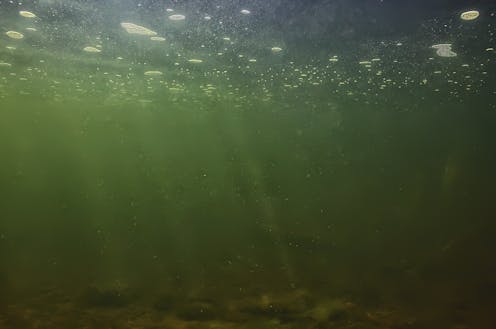
(Shutterstock)

Plankton — tiny organisms that are present in salt and freshwater — account for about half of the photosynthesis on the planet. But what scientists have assumed for many years to be plant plankton (phytoplankton) may actually be voracious predators.

In lakes, plankton prey on single-celled bacteria that are in turn responsible for recycling nutrients that keep lake food webs functioning.

Sign up to read this article
Read news from 100's of titles, curated specifically for you.
Already a member? Sign in here
Related Stories
Top stories on inkl right now
One subscription that gives you access to news from hundreds of sites
Already a member? Sign in here
Our Picks
Fourteen days free
Download the app
One app. One membership.
100+ trusted global sources.