Get all your news in one place.
100’s of premium titles.
One app.
Start reading
Budget and the Bees
Budget and the Bees
Latrice Perez

Cities Are Changing How ‘Right on Red’ Works — And Drivers Are Feeling It

Right on Red
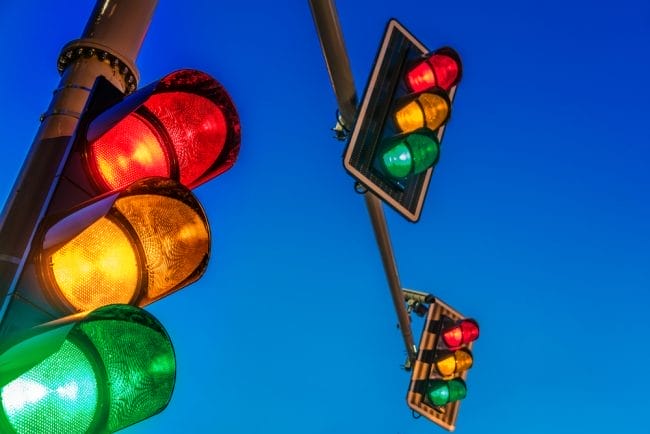
Image source: shutterstock.com

Navigating your daily commute used to feel like second nature, especially when making a simple right turn on red. That familiar habit is becoming a frequent source of frustration for many drivers lately. You might find a surprise ticket in your mailbox even if you feel your driving hasn’t changed at all. Cities across the country, like Atlanta, are rapidly transforming intersections with new technology and stricter signage. These updates aim to increase pedestrian safety but often leave motorists feeling caught in a financial trap.

The Rise of Automated Intersection Monitoring

Modern technology is changing how traffic laws are applied to every driver on the road. Many municipalities now rely heavily on automated red-light cameras to monitor busy intersections, with New York City recently expanding its program to reach 600 intersections by the end of 2026. These systems do not use human judgment to decide if a turn was safe. They are programmed to detect whether a vehicle comes to a complete mathematical stop behind the white line. Even a slow rolling turn that feels safe can trigger a violation and a significant fine.

Typical fines for these automated infractions often range from $50 to $100 depending on local regulations. For instance, camera citations in Georgia are civil violations that carry a maximum fine of $70 and do not add points to your license. The rollout of these cameras frequently happens alongside new signage that prohibits turns entirely at specific times. Drivers who rely on muscle memory may miss a newly installed sign at an intersection they have used for years. This shift creates a driving environment where old habits can suddenly become very expensive.

Why Urban Planning is Shifting Focus

City planners are redesigning streets to prioritize the safety of people walking and biking. Research indicates that right-hand turns are common conflict points where vehicles and pedestrians often collide. Drivers frequently focus on finding a gap in oncoming traffic instead of checking the crosswalk directly in front of them. To combat this, many cities are now implementing Leading Pedestrian Intervals (LPIs).

This timing adjustment gives pedestrians a head start to enter the crosswalk before the light turns green for cars. While this change saves lives—with 2025 studies in New York City showing a 33% reduction in pedestrian injuries—it also alters the traditional rhythm of the intersection for every motorist. A driver attempting to turn quickly might find the timing no longer supports their usual pace. Combined with constant camera surveillance, these small adjustments explain why so many people are seeing an increase in citations.

Practical Ways to Avoid Unexpected Fines

Adapting to these modern traffic patterns requires a more deliberate approach to every red light. You should always bring your vehicle to a dead stop behind the painted limit line before looking to turn. Taking a full three-second pause ensures that automated cameras register your vehicle as stopped. It is also vital to scan specifically for new signs that might restrict turns during school hours or peak periods.

Watching the pavement markings is just as important as watching the lights overhead. Creeping forward into the crosswalk area can sometimes trigger a sensor even before you complete your turn. Expecting these timing changes will help you stay patient when the light sequence feels slower than usual. Taking those extra few seconds at an intersection is the most effective way to protect your wallet from a surprise.

Your daily drive is evolving because cities are using new tools to enforce rules with zero margin for error. The safest strategy is to assume every intersection has updated monitoring or adjusted signal timing.

Have you noticed more of these cameras or new signs appearing on your route recently? I would love to hear which areas you think are changing the most, so please leave a comment with your thoughts.

What to read next….

The post Cities Are Changing How ‘Right on Red’ Works — And Drivers Are Feeling It appeared first on Budget and the Bees.

Sign up to read this article
Read news from 100’s of titles, curated specifically for you.
Already a member? Sign in here
Related Stories
Top stories on inkl right now
One subscription that gives you access to news from hundreds of sites
Already a member? Sign in here
Our Picks
Fourteen days free
Download the app
One app. One membership.
100+ trusted global sources.