High in the mountains of Sichuan, China is building a dam so tall that it could become the world's highest completed dam. But one of the most unusual tools being used to finish it is not a massive crane or a new type of concrete. It is sunlight.
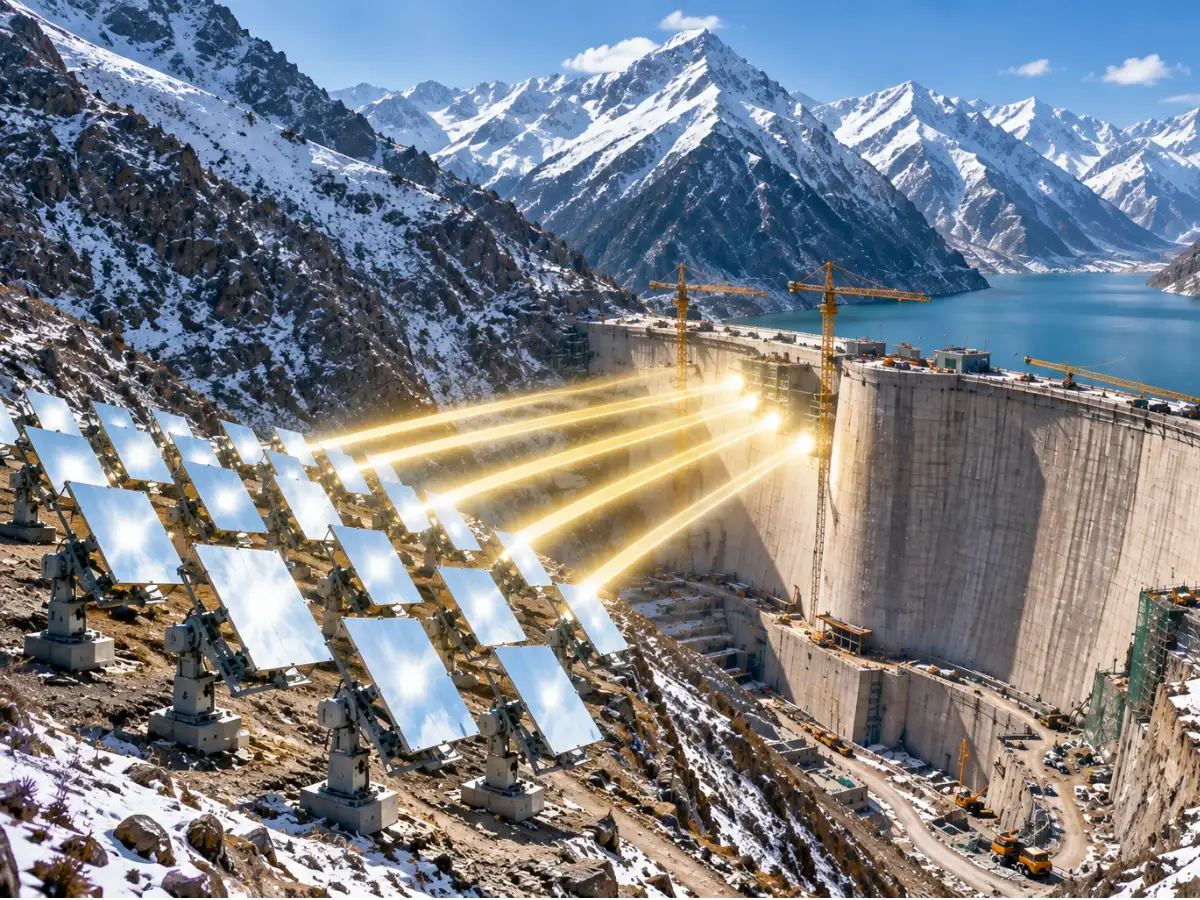
Engineers working on the Shuangjiangkou Hydropower Station have installed 27 heliostats — large mirrors that track the sun and direct its rays toward the dam's construction area. The idea is surprisingly simple: use concentrated sunlight to keep part of the dam warm enough for construction to continue during the freezing winter months.

Why does a dam need to be heated?
The Shuangjiangkou project is being built in a narrow mountain valley at an elevation of roughly 2,200 metres. During winter, temperatures can fall to around -20°C. That creates a problem for the dam's clay core.
The material used in the core needs to be placed and compacted under controlled conditions. When it freezes, achieving the required density becomes difficult. According to reports, some construction work can otherwise be carried out for less than six months of the year. The heliostats are designed to extend that working window.
The 27 mirrors follow the position of the sun and direct concentrated sunlight onto the clay core. Project information cited by Xinhua says the system can raise temperatures there by about 3°C, providing roughly three additional working hours on suitable days.
Three degrees might not sound like much. But on a construction site where material has to be placed, spread and compacted layer by layer, several extra working hours can add up.
The dam itself is enormous
The Shuangjiangkou dam is designed to reach 315 metres in height. According to reports, it is the tallest dam currently under construction, while Guinness World Records still lists the completed 305-metre Jinping-I Dam as the world's highest completed dam. If Shuangjiangkou reaches its planned height, it would stand about 10 metres above Jinping-I. The dam is a rockfill structure with a clay core and requires more than 45 million cubic metres of fill material, according to CHN Energy.
Shuangjiangkou has four planned generating units, each rated at 500 megawatts, giving the station a total planned capacity of 2,000 MW. The first unit was connected to the grid in June 2026.
Once all four units are operating, the station is expected to generate about 7.7 billion kilowatt-hours of electricity a year. Its reservoir is designed to hold about 2.9 billion cubic metres of water. So workers are essentially doing two things at once: generating electricity from the completed sections of the project while continuing to raise the enormous dam above them.