
Get all your news in one place.
100's of premium titles.
One app.
Start reading
The Conversation
The Conversation
Lee Cronin, Regius Chair of Chemistry, University of Glasgow

Chemistry is stuck in the dark ages – ‘chemputation’ can bring it into the digital world

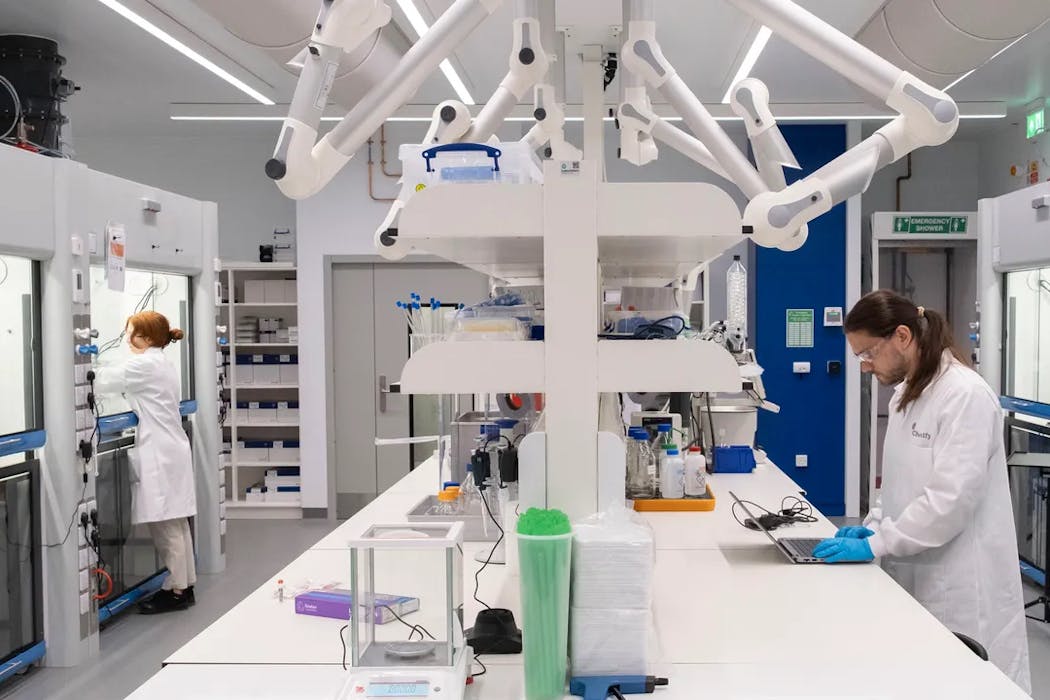
In Chemify's laboratories, AI-proposed molecules are compiled into chemical code which robots execute and test in real time. Chris James/Chemify, CC BY-NC-SA

Chemistry deals with that most fundamental subject: matter. New drugs, materials and batteries all depend on our ability to make new molecules. But discovery of new substances is slow, expensive and fragile. Each molecule is treated as a bespoke craft project. If a synthesis works in one lab, it often fails in another.

The problem is that any single molecule could have an almost infinite number of routes to creation. These routes are published as static text, stripped of the context, timing and error correction that made them work in the first place. So while chemistry is often presented as one of the most advanced sciences, its day-to-day practice remains surprisingly manual.

Sign up to read this article
Read news from 100's of titles, curated specifically for you.
Already a member? Sign in here
Related Stories
Top stories on inkl right now
One subscription that gives you access to news from hundreds of sites
Already a member? Sign in here
Our Picks
Fourteen days free
Download the app
One app. One membership.
100+ trusted global sources.







