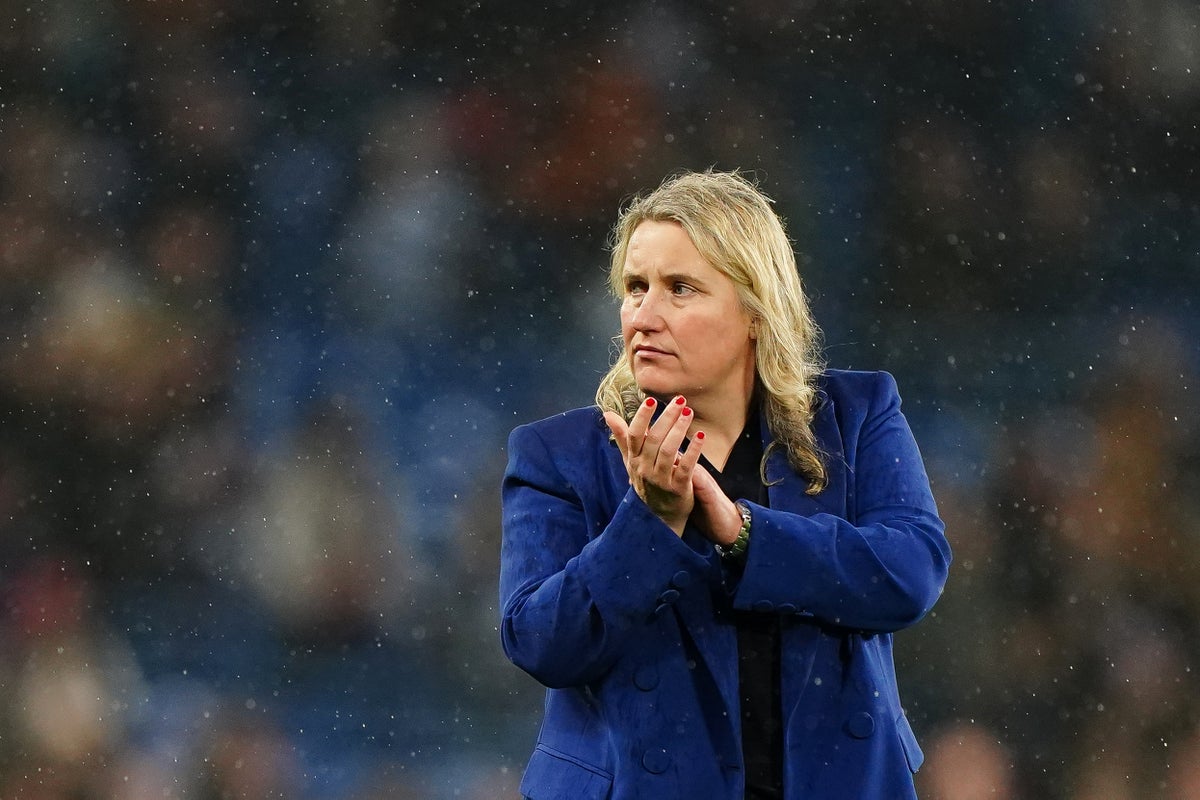
Emma Hayes managed to find a way to reflect on her achievements while seeing the bigger picture. At Wembley last year, as Hayes sat with another winner’s medal around her neck – this time after Chelsea defeated Manchester United to win their third FA Cup in a row – there was a moment where she paused from the relentless of football management and its daily demands to focus on a wider journey. “When I sit at home alone and think about the work we do every day, and the sacrifices we all make, I know I’ve given my life to it,” she reflected.
There can be no arguing with that, not after 12 hugely successful seasons at Chelsea, the years working her way up the coaching ladder in the United States in her mid-twenties, the countless hours before then, trying to find the bottom rung in England, volunteering in community projects in her native Camden, doing anything she could to earn the coaching badges and certificates. At that stage, there was no identifiable end point, no professional game to aspire to reach. There was only a goal, or even a calling, to make an impact in women’s football, perhaps winning a trophy or two.