Get all your news in one place.
100's of premium titles.
One app.
Start reading
The Economic Times
The Economic Times
Trending Desk

Chandra Grahan to coincide with Raksha Bandhan this year: Check date, time, India visibility and all you need to know

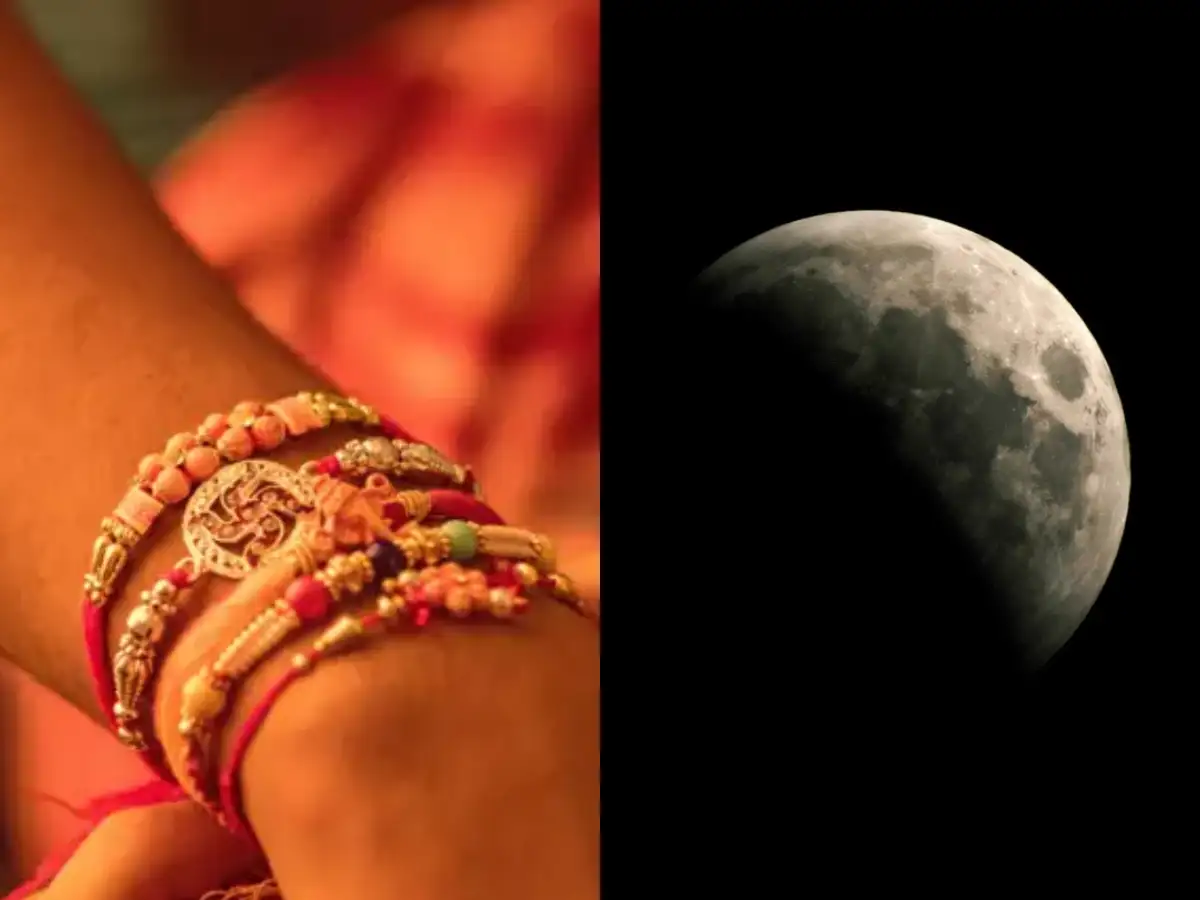
A lunar eclipse is set to occur on August 28, 2026, with nearly 96% of the Moon's surface expected to be covered by Earth's shadow at its peak, giving the celestial body a deep red hue. The eclipse will be visible across North and South America, while parts of Europe, Africa and West Asia will see a partial eclipse.

The event has also drawn attention in India as it coincides with Raksha Bandhan, prompting interest in the eclipse's timing and visibility.
What is a lunar eclipse?

A lunar eclipse occurs when Earth passes between the Sun and the Moon, causing Earth's shadow to fall on the lunar surface. The alignment can only take place during a full Moon.

Types of lunar eclipses

Total lunar eclipse: The entire Moon enters Earth's darkest shadow, or umbra. The Moon can appear reddish-orange during the event because sunlight passing through Earth's atmosphere is refracted towards the lunar surface. This is commonly known as a "Blood Moon".

Partial lunar eclipse: Only part of the Moon enters Earth's umbra, creating the appearance of a dark shadow covering a section of the lunar disc.

Penumbral lunar eclipse: The Moon passes through Earth's faint outer shadow, or penumbra. The resulting change in brightness is subtle and can be difficult to notice with the naked eye.

Lunar eclipse 2026: Date and time

The lunar eclipse will take place on Friday, August 28, 2026. According to the timings provided, the eclipse will begin at 6:53 am IST and end at 12:32 pm IST.

The maximum phase, when the greatest portion of the Moon will be covered by Earth's shadow, will occur at 9:43 am IST.

Phase Time (IST), August 28, 2026
Penumbral eclipse begins 6:53 am
Partial eclipse begins 8:04 am
Maximum eclipse 9:43 am
Partial eclipse ends 11:22 am
Penumbral eclipse ends 12:32 pm

Will the lunar eclipse be visible in India?

No. The August 28 lunar eclipse will not be visible from India because the event will occur during daytime hours in the country.

The eclipse will also not be visible from Australia, Antarctica and parts of the Pacific region because of daylight conditions.

The event will be visible across North and South America, with partial views extending to parts of Europe, Africa and West Asia.

Why is the eclipse attracting attention in India?

The August 28 lunar eclipse coincides with Raksha Bandhan, a major Hindu festival. The overlap has led to increased interest in the eclipse's timing, duration and visibility, particularly in India.

Is the August 2026 eclipse really a Blood Moon?

"Blood Moon" is the popular term generally used for a total lunar eclipse, when the entire lunar disc moves into the Earth's umbra. The August 2026 event will not be total, making it more accurately described as a deep partial lunar eclipse.

However, because a large portion of the Moon will enter the Earth's darker shadow, the eclipsed section could still appear noticeably red or copper-coloured.

While "Blood Moon" is widely used to describe the dramatic appearance, the more precise astronomical term for the August event is a deep partial lunar eclipse.

Religious meaning of Chandra Grahan

Chandra Grahan holds spiritual significance in Hindu tradition. The Moon is traditionally associated with the mind, emotions, peace, memory and maternal energy. As a result, many believers consider an eclipse a period when emotional and mental energies may become unsettled.

In traditional astrology, eclipses are associated with the lunar nodes Rahu and Ketu. According to Hindu mythology, Rahu attempts to consume the Sun or Moon, resulting in the temporary darkness associated with an eclipse.

For many devotees, Chandra Grahan is therefore viewed as a period for introspection, spiritual practices and reflection rather than celebration or material pursuits.

Where will the red-tinted Moon be visible?

The partial lunar eclipse will be visible across large parts of the Americas, Europe, Africa and western Asia. Much of North and South America will have favourable views of the event.

The eclipse will not be normally visible from India. Therefore, traditional religious restrictions associated with an eclipse, including Sutak, should not automatically be applied in the same way as they would be in regions where the Chandra Grahan is visible.

Sign up to read this article
Read news from 100's of titles, curated specifically for you.
Already a member? Sign in here
Related Stories
Top stories on inkl right now
One subscription that gives you access to news from hundreds of sites
Already a member? Sign in here
Our Picks
Fourteen days free
Download the app
One app. One membership.
100+ trusted global sources.