
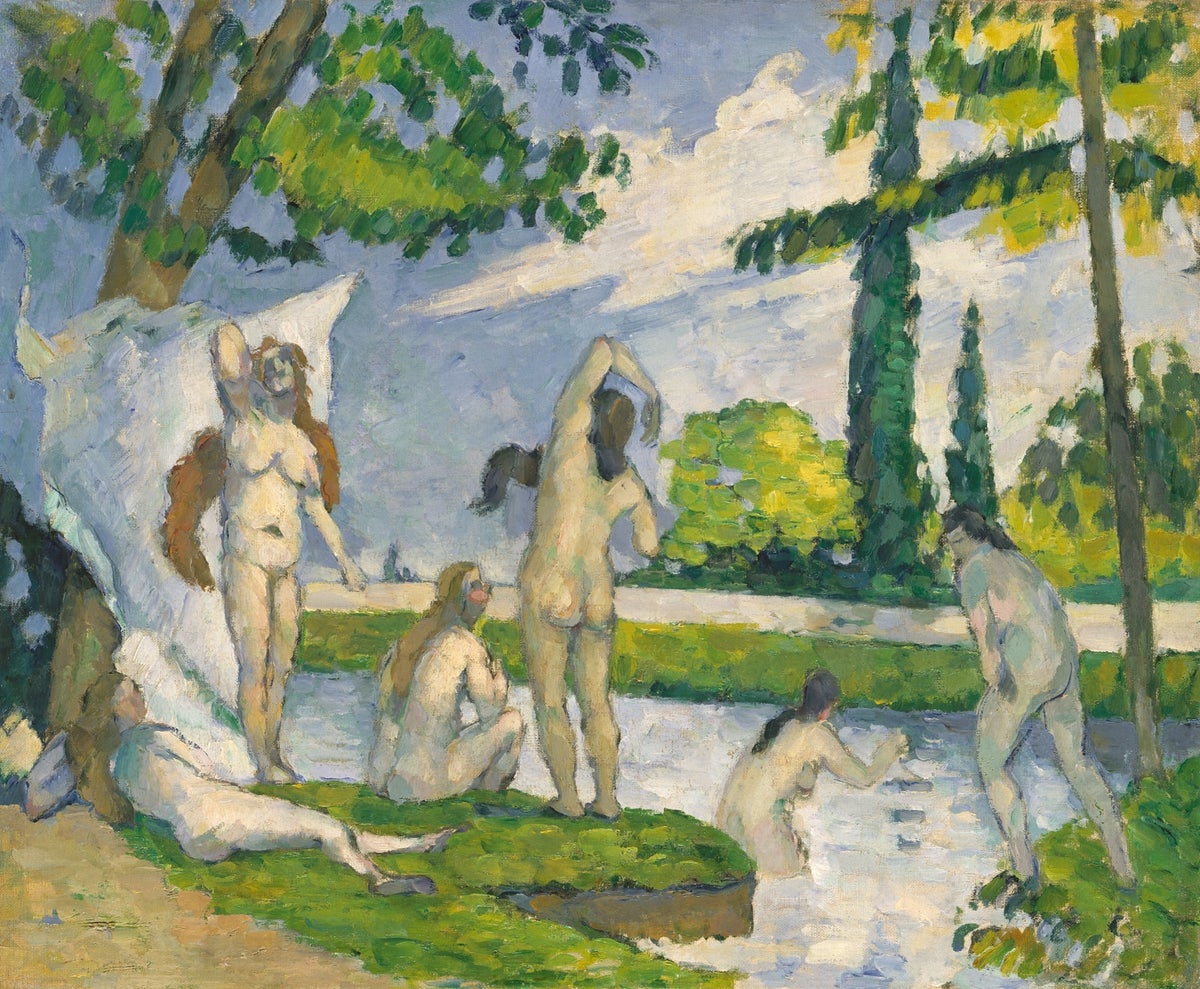
People either get Cezanne, or they don’t. This grumpy Provencal workaholic was dubbed “the greatest of us all” by no less a figure than Claude Monet. Both Picasso and Matisse are said to have claimed him as “the father of us all”. Even today, artists of whatever stamp tend to doff their hats at the mere mention of Cezanne. His peerlessly incisive landscapes, still lifes and portraits offer us not only the roots of everything radical that has come since, from Cubism to conceptual art, but an uncompromising rigour that has set the gold standard for what the artist can and should be.
To the casual viewer, though, it can be hard to see what singles Cezanne out from the many other major and minor Post-Impressionist painters crowding the café tables of late 19th-century Paris. This eagerly awaited major survey opens with a trophy loan, The Basket of Apples, from the Art Institute of Chicago. Showing, well, a basket of apples, with some more apples spilt over a white cloth and an empty wine bottle, it’s a lovely painting. But it’s hard to imagine it as the starting point for the blasting apart of everything art had stood for over the previous 500 years.













