Get all your news in one place.
100's of premium titles.
One app.
Start reading
Times Life
Times Life
Aishwarya Kapoor

Cellular Jail in Port Blair Is the Dark Tourism Site Every Indian Should Visit Once

The building does not let you be a tourist

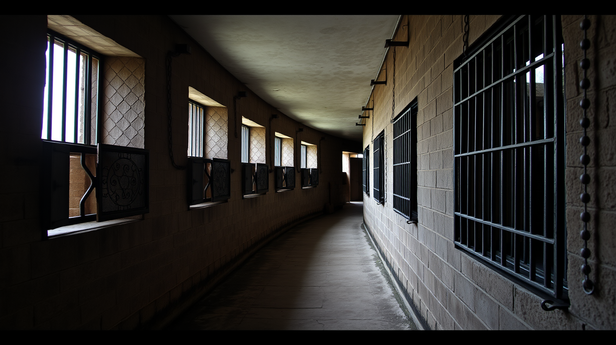
The first thing you notice at Cellular Jail is that the corridors are narrow. Not dramatically narrow, not narrow in a way that photographs convey, narrow in the way that makes your shoulders tighten, that makes you aware of your own body taking up space in a place designed to remind its occupants they had no space left. Port Blair's most visited site receives thousands of visitors every season, and most of them go quiet within five minutes of entering. That silence is not reverence. It is the silence of people who came expecting a history lesson and found something that does not behave like a lesson at all.

The jail was completed in 1906 by the British colonial administration, built specifically to hold political prisoners, the men and women who had the wrong opinions about who should govern India. Its design is deliberate: seven wings radiating from a central tower, each cell facing outward so that no prisoner could see another. The isolation was the punishment. The Andaman Islands were already a sentence of exile; the cellular structure was a sentence within a sentence. You were alive, and you were alone, and those two facts were meant to feel like the same thing.

Who was held here, and what was done to them

Vinayak Damodar Savarkar spent eleven years in Cellular Jail, two separate terms, from 1911. His cell, number 52 in one of the upper galleries, is marked now with a small plaque. Batukeshwar Dutt, who threw pamphlets alongside Bhagat Singh in the Central Legislative Assembly in 1929, was also sent here. So were hundreds of others whose names do not appear in school textbooks: Bengali revolutionaries, Punjabi agitators, ordinary men who distributed pamphlets or sheltered the wrong person or simply refused to be quiet.

The prisoners worked the oil mill, a large wooden wheel turned by human effort, the kind of labour designed to exhaust the body so the mind could not sustain resistance. Those who refused were flogged. Those who organised hunger strikes, as prisoners did in 1933, were force-fed. At least three prisoners were hanged within the jail's walls. The gallows room still exists. It is a small room. The ceiling is low. There is a trapdoor in the floor and a hook above it, and the room is so ordinary that the ordinariness is the thing that stays with you.

Why this is harder than a beach trip to the same island

The Andamans sell themselves on beaches, and they deliver, Radhanagar Beach on Havelock Island is genuinely among the most beautiful coastlines in the country. You can fly into Port Blair, take a ferry to Havelock, spend four days doing nothing more strenuous than watching the tide come in, and leave feeling restored. That trip is available. Many people take it.

Cellular Jail asks for something the beach does not. It asks you to hold two facts at once: that this place is beautiful, the light in Port Blair in the early morning is extraordinary, soft and golden over the water, and that this same island was chosen as a site of punishment precisely because its distance from the mainland made escape nearly impossible. The beauty was part of the cruelty. The jail's colonial architects were not indifferent to where they built it. They chose an island that looked like paradise and functioned like a trap.

Dark tourism, as a practice, has a reputation for being morbid or voyeuristic. Cellular Jail resists that framing. The site is not asking you to consume suffering as spectacle. The sound-and-light show held in the evenings, a dramatic narration of the jail's history set against the lit facade, can tip toward the theatrical. But the building itself, walked through slowly in the morning before the crowds arrive, does something different. It makes the history specific. Specific is the word. You are not thinking about colonial oppression in the abstract. You are standing in a cell that is roughly the size of a large bathroom, and you are doing the arithmetic of what eleven years in that room would mean.

How to visit without making it a checkbox

Reach the jail when it opens, before ten in the morning. The galleries are cooler and the light comes in at an angle that makes the cells visible without the harsh midday flatness. Hire one of the official guides rather than walking through with a pamphlet, the guides who have been working there for years carry details that the plaques do not: which wing held which category of prisoner, what the daily schedule looked like, how the oil mill operated. Ask about the hunger strikes. Ask about the prisoners who were released and those who were not.

The museum inside the complex is worth an hour. The photographs are original, portraits of prisoners taken by the colonial administration for identification, faces looking directly at the camera with an expression that is neither defiant nor broken, just present. Those photographs are the most affecting thing in the building, more than the gallows room, more than the solitary cells. The prisoners knew they were being documented. They looked back anyway.

Skip the sound-and-light show if crowds bother you, or go on a weekday when it is less packed. If you go, sit toward the back where the narration is audible but the theatrical lighting does not overwhelm the actual architecture behind it. The building is the point.

What you carry out of it

India has many sites that ask you to remember, temples, battlefields, memorials, the sites of Partition. Cellular Jail is different in one specific way: it is a place where the suffering was administrative. There was no single battle, no single day of violence. The harm was structural, sustained, and documented. The British colonial government kept meticulous records of who was imprisoned, what punishments were administered, and when. Those records are part of the archive. The cruelty was bureaucratic, which means it was chosen, renewed, and signed off on, year after year.

Standing in that building, you understand something about the freedom you move through without noticing, the freedom to be in a room and leave it, to disagree publicly, to be on a particular side of an argument and face no consequence beyond argument in return. That understanding does not arrive as an insight. It arrives as a physical sensation, a mild claustrophobia that follows you out of the narrow corridors and into the open courtyard, and does not fully lift until you are back on the ferry, watching Port Blair recede into the water behind you.

The beach trip and the jail visit are not opposites. They are the same island holding two entirely different truths about what this place has been, one truth that the water keeps erasing, one that the stone will not let go.

Sign up to read this article
Read news from 100's of titles, curated specifically for you.
Already a member? Sign in here
Related Stories
Top stories on inkl right now
One subscription that gives you access to news from hundreds of sites
Already a member? Sign in here
Our Picks
Fourteen days free
Download the app
One app. One membership.
100+ trusted global sources.