Get all your news in one place.
100’s of premium titles.
One app.
Start reading
The Conversation
The Conversation
Shannon Brincat, Senior Lecturer in Politics and International Relations, University of the Sunshine Coast

Carney’s rallying cry to ‘middle powers’ includes Australia - and we should heed his call

Canadian Prime Minister Mark Carney’s address to the World Economic Forum in Davos, Switzerland, created global headlines for his criticism of US President Donald Trump and his frank admission the rules-based international order is undergoing a “rupture, not a transition”.

Carney also called on middle powers like Canada (and while he did not say so specifically, Australia) to band together to fight for their own interests:

[…]the middle powers must act together, because if we’re not at the table, we’re on the menu.
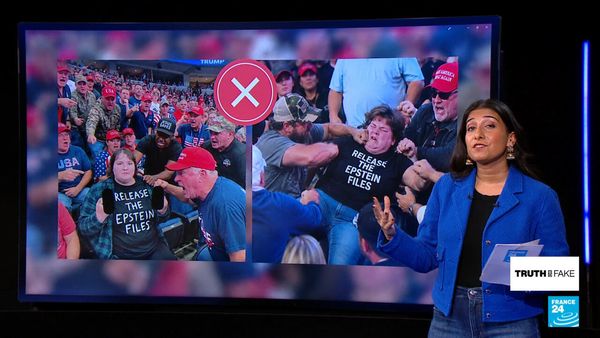
His powerful speech has resonated not only because of its frank admission of the way global power operates, but as a compelling call for things to change.

There is much Australia can take away from his speech.

‘A rupture’ in the international order

Carney is right to diagnose a “rupture” in the international rules-based order.

He said:

The multilateral institutions on which the middle powers have relied – the WTO, the UN, the COP – the architecture, the very architecture of collective problem solving are under direct challenge. And as a result, many countries are drawing the same conclusions that they must develop greater strategic autonomy, in energy, food, critical minerals, in finance and supply chains.

Certainly, the changes in how those institutions operate have been quite rapid. This doesn’t mean all the architecture will go or all the institutions, but it does mean there is a radical shift in how world power operates, who benefits, and who gets left behind. Perhaps most significant of all is the change in the normative basis of international order – liberal principles are under direct imperialist threat.

Trump has recently withdrawn the United States from 66 international agencies because they are “contrary to the interests of the United States”.

Instead, he has invited favoured countries – including Australia – to join his “Board of Peace” for the reported price of US$1 million (A$1.49 million) for three years and US$1 billion (A$1.49 billion) for a permanent seat. Such an openly transactional approach is aberrant to multilateral order and would benefit only the most powerful. And middle powers see it – as many in the Global South have for decades.

Carney’s point that middle powers that had once received protection and benefits from such global institutions can no longer rely on it, is a valid one. Australia would do well to think along the same lines, as it shares many similar concerns to Canada.

It was, in short, an unusually frank admission that the Western world has been blatantly hypocritical and dishonest for a long time in the insistence that international law applies equally. It does not. The Global South has been saying this for decades and it’s refreshing to hear a Western power such as Canada saying it.

The normative basis of the international order is rupturing.


Read more: Trump sows 'chaotic cruelty' while Canadian PM Carney reminds the world it doesn't have to play along


Should middle powers go it alone?

The way the world operates now has become so bad that any change would be welcome. It’s not working. We’re hurtling towards climate catastrophe, economic inequality is everywhere, and multilateralism is in decline – we need some form of change international order.

The potential is if the middle powers could create and lead a new, non-aligned movement, as Carney suggests, that might offer some hope. Obviously this would take some time, but it’s in our interests to work hard to make it happen and it would also promise a wider buy-in based on principles from many smaller states.

First, it means naming reality. We need to stop invoking the “rules-based international order” as though it still functions as advertised. Call it what it is – a system of intensifying great power rivalry, where the most powerful pursue their interests, using economic integration as coercion.

Second, middle powers do have a voice. They can use it if they align together rather than hitching themselves to the biggest powers. They should work together to create worthwhile and effective institutions for themselves, which are more principled and more tailored to the specific geopolitics of the region in which they operate.

What should Australia take away from the speech?

Carney’s words should be a wake-up call for Australia to shift its long-term strategic planning away from political point-scoring and short-termism towards a more meaningful, long-term investment in how we operate in our region and the world.

We need to think deeply about our region and how to reengage with it without American support. We have to stand on our own two feet, thinking about trade, demographics, and who are our long-term partners we can work well with.

A previous Australian approach to international diplomacy called “good international citizenships” provides a basis for how we can re-engage our world in this time of crisis. Amid the chaos breaking out across the world right now, it is a principled approach that would be very welcome – and sensible.

The Conversation

Shannon Brincat does not work for, consult, own shares in or receive funding from any company or organisation that would benefit from this article, and has disclosed no relevant affiliations beyond their academic appointment.

This article was originally published on The Conversation. Read the original article.

Sign up to read this article
Read news from 100’s of titles, curated specifically for you.
Already a member? Sign in here
Related Stories
Top stories on inkl right now
One subscription that gives you access to news from hundreds of sites
Already a member? Sign in here
Our Picks
Fourteen days free
Download the app
One app. One membership.
100+ trusted global sources.