Get all your news in one place.
100's of premium titles.
One app.
Start reading
The Economic Times
The Economic Times

Canada has prepared for the unthinkable: A military attack by the US

Something has cracked in Canada-US relations and the sound can be heard in a latest comment by Canadian Prime Minister Mark Carney. He believes a US military attack on Canada is indeed a risk though very small.

“I think you have a responsibility in these roles to look at extreme tail risk. That’s just risk management. That’s not a base case,” Carney said while speaking to The New York Times about the possibility of US military action against Canada.
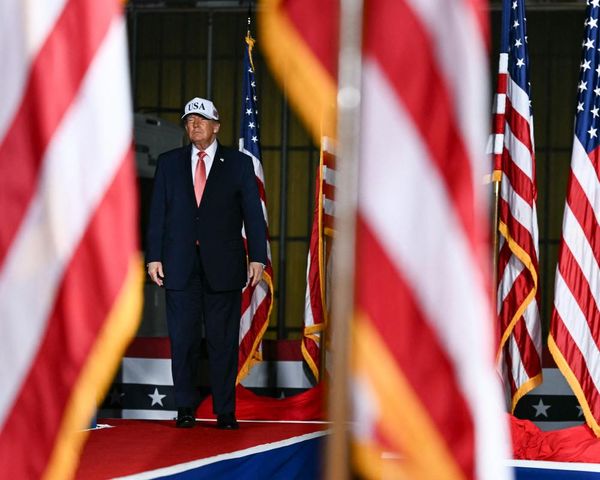
Carney meant the risk is minimal but it would nevertheless be irresponsible not to prepare for such a scenario. Even though he was not hinting at an imminent US military attack, the fact that a Canadian prime minister is now publicly acknowledging that he has examined the possibility is striking in itself.

Also Read | Trump vs Carney: The dealmaker meets his match in a central banker

The provocation is in the premise

Carney’s choice of words -- “Extreme tail risk” -- is the language of a central banker dealing with improbable events that could have enormous consequences. It is surely not a prediction of war. Yet governments do not normally acknowledge publicly that they have prepared for military action by their closest ally, particularly when that ally is also their principal defense partner.

That makes the remark politically significant even if Carney intended it strictly as risk management.

Donald Trump has repeatedly described Canada as a potential 51st state. In January 2025, when asked whether he would use military force to acquire Canada, Trump said economic force instead. He has since continued to argue that the US effectively protects Canada and has described Canadian defense spending as inadequate. In May, during his meeting with Carney, Trump again said he believed Canada could become a US state and responded to Carney’s declaration that Canada was not for sale by saying, “Never say never.”

That history gives Carney's remark an unmistakable edge. It can be read as a way of returning the strategic pressure without matching Trump’s rhetoric. Trump has repeatedly asked Canadians to imagine themselves as Americans. Carney is now effectively telling Trump he has lost trust in the US so much that he can consider an American attack a risk, even if an extremely rare one.

Also Read | US weighs more trade measures against Canada after retaliation

Carney is already preparing for a less dependent Canada

The NYT interview described a larger effort to reduce Canadian dependence on American technology and suppliers. Canada is looking at alternatives to Elon Musk’s Starlink satellite network and has reopened the question of its planned purchase of 88 American F-35 fighter jets. Canada is also seeking to diversify its economic relationships.

That does not amount to a Canadian attempt to sever ties with the US. Carney also stressed that he continues to speak frequently with Trump, including after trade negotiations collapsed. The stated objective is to make Canada less vulnerable to pressure from whichever American administration happens to be in power.

Carney has said that even under a future US president who is friendlier toward Canada, it would still be better off having diversified its dependencies. The argument is therefore becoming institutional rather than personal. Trump may have accelerated the process, but Carney is presenting it as a permanent adjustment in Canadian strategy.

Europe is becoming the other pillar

The clearest evidence of that adjustment is Canada's sudden diplomatic push toward Europe. Last week, European Commission President Ursula von der Leyen proposed creating an “associate member” status for Canada, something that does not currently exist in EU law. Carney welcomed the ambition, although he has preferred to describe the objective as a “unique alliance” rather than full EU membership. The proposed relationship could extend across defense, energy, critical minerals and artificial intelligence.

Canada has historically been economically and militarily tied to the US while maintaining close cultural and political links with Europe. Carney is now trying to give those European links a much more strategic dimension.

The EU initiative is partly about demonstrating that Canada can reduce its reliance on the US. However, given Canada's geography and existing military integration with the US, a severing of ties is unrealistic. Carney is not replacing America with Europe but is trying to create enough alternatives that Washington cannot so easily use Canadian dependence as leverage.

Carney's bigger argument is about middle powers

Carney has also begun framing this as part of a much larger change in the international system. In a speech to the European Parliament last week, he argued that Canada and Europe should work together to protect their markets, democracies and rule of law in a world increasingly dominated by major powers. His proposed “alliance for the future” was an effort to build resilience in areas such as critical minerals, energy, artificial intelligence and financial systems. The idea could eventually include other middle powers such as Britain, Australia, Japan, India and Ukraine.

This is more ambitious than a Canada-EU trade diversification exercise. Carney is effectively arguing that countries which are too small to shape the global balance individually can gain leverage by coordinating with one another.

Canada cannot match American economic or military power. Nor can it realistically detach itself from the continental system that has developed around the US. But it can try to ensure that the US is not the only source of markets, technology, capital, defense equipment or diplomatic support.

The trade war has made the idea concrete

Carney's government has also shown that diversification does not mean accepting American economic pressure quietly. After Trump imposed new 50% tariffs on a range of Canadian goods, Canada announced retaliatory tariffs on US products after trade talks broke down in August.

For Canada, this is no longer a theoretical debate about sovereignty. Economic dependence has become a source of political vulnerability.

That is why Carney's military comment fits into the same picture. The issue is not really whether the US is about to invade Canada. The issue is whether Canada should continue designing its economy, defense procurement and strategic infrastructure on the assumption that Washington will always be a reliable and benign partner. Carney's answer increasingly appears to be no.

The military balance remains overwhelmingly American

There is little ambiguity about the conventional military balance. Canada is increasing defense spending and has reached NATO's 2% GDP benchmark, with more than C$63 billion allocated to defense in 2025-26. It is also expanding capabilities and has chosen Germany's TKMS to build up to 12 submarines, in what is described as Canada's largest-ever military procurement.

But Canada's armed forces remain tiny compared with those of the US. Canada's regular force stood at roughly 67,800 personnel with another 25,100 in the primary reserve. The US has more than a million active-duty personnel. The disparity in defense spending, air power, naval capacity, logistics and industrial depth is enormous.

That reality makes Carney's diversification strategy more complicated. Canada can reduce specific dependencies but cannot quickly recreate the continental defense architecture that has developed with the US through NORAD and NATO. And that is perhaps the most revealing aspect of the “extreme tail risk” remark.

Carney is not saying that Canada expects to fight America but acknowledging that Canada's assumptions about America have changed enough that it now thinks it has to prepare for possibilities it once considered outside the realm of serious government planning.

Sign up to read this article
Read news from 100's of titles, curated specifically for you.
Already a member? Sign in here
Related Stories
Top stories on inkl right now
Our Picks
Fourteen days free
Download the app
One app. One membership.
100+ trusted global sources.