
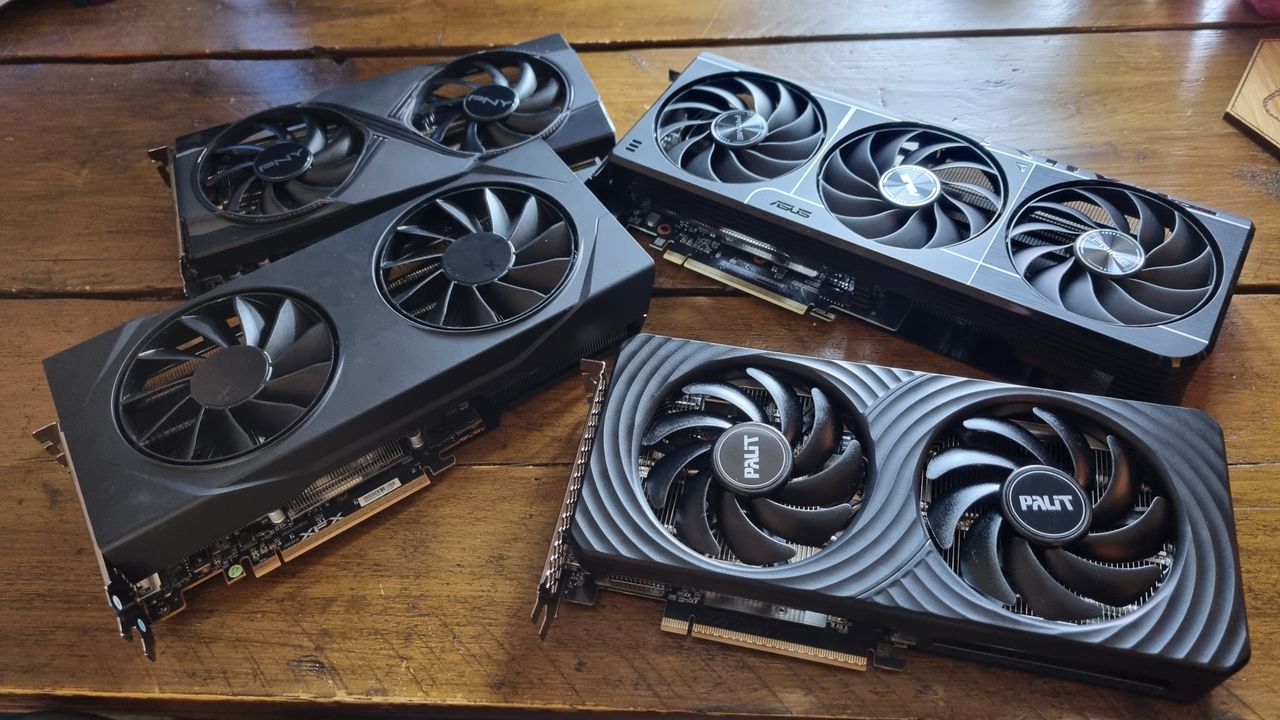
I've spent the past few weeks testing the pants off of several graphics cards. Such is the life of a hardware writer. Alongside my 8 GB vs 16 GB VRAM testing, I've also reviewed the RTX 5060 Ti 8 GB and the RX 9060 XT 8 GB, and found them to deliver reasonable gaming performance on average—although the Nvidia card definitely wins the day. And yes, the 16 GB versions are faster overall.
One question has been nagging at the back of my mind, though. While I've proven that the 8 GB variants of these semi-budget GPUs are often slower on average compared to their 16 GB equivalents, can overclocking even the odds?
To find out, I've tweaked the twangers out of my 8 GB graphics card samples, and then run them across our GPU benchmarking suite. I've then compared that data with both the stock performance and the overclocked performance of the RTX 5060 Ti 16 GB and RX 9060 XT 16 GB.
It's been a big old showdown, and I've come up with some interesting results. Yes, overclocking an 8 GB graphics card can often even the odds with its more-expensive 16 GB variant in the benchmarks. But, in some games, there's simply no replacement for VRAM—and the tests don't always tell the whole story.