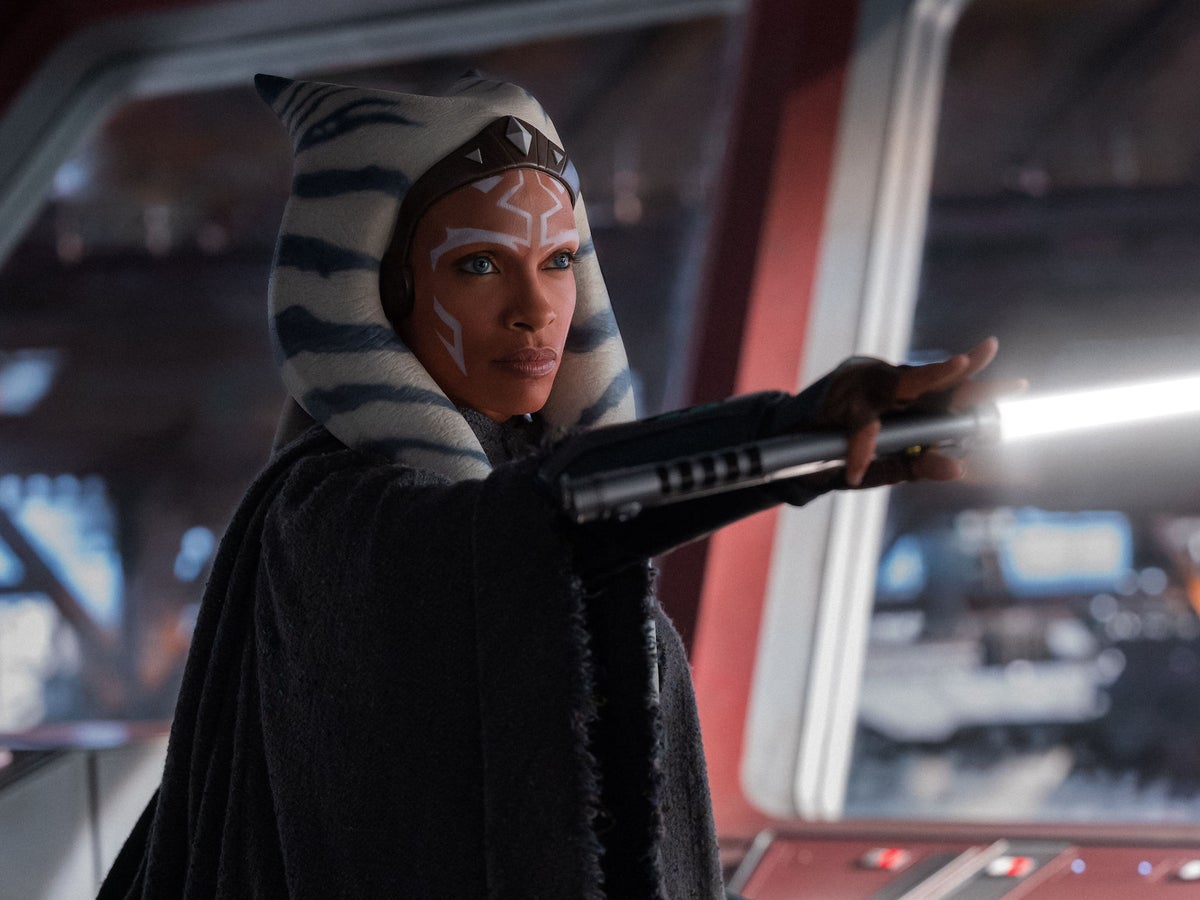
A long time ago (2012) in a galaxy far, far away (Los Angeles), a deal was struck of Death Star-ian proportions. The Walt Disney Company purchased production studio Lucasfilm – and its crowning jewel, George Lucas’s Star Wars, with it – in a deal worth $4.05bn. At the time, the amount was staggering. Just three years later, it would seem like a steal. The Force Awakens made more than $2bn at the box office alone, not counting the preposterously lucrative merchandising. A year later, the well-received spin-off Rogue One added another billion to the stack. From there, however, Star Wars’s upwards trajectory hit turbulence. The violently polarising Last Jedi (2017) was followed up by the drab, underperforming Solo, and then, finally, 2019’s messy trilogy-enderThe Rise of Skywalker. The iconic sci-fi franchise had finally hit rock bottom. But, of course, it didn’t end there. Wednesday sees the premiere of Ahsoka, the latest in a string of lavish streaming series set in the Star Wars galaxy.
After The Rise of Skywalker’s release, Star Wars fled into hiding, like Yoda into the swamps of Dagobah – or at least, that was the case when it comes to films. The multiplexes have been without a Star Wars movie for four years now, and there’s none officially on the docket until 2026. Currently, there are four “confirmed” projects in the works (from James Mangold, Taika Waititi, Dave Filoni and Ms Marvel’s Sharmeen Obaid-Chinoy), but the slate is in constant and omnidirectional flux. A prospective trilogy from Game of Thrones duo David Benioff and DB Weiss has been shelved; plans for a Solo sequel abandoned; Rogue Squadron, a project helmed by Wonder Woman’s Patty Jenkins, is in limbo. In the meantime, though, Star Wars fans have been served course after course of streaming content: The Mandalorian; The Book of Boba Fett; Andor; The Bad Batch; Visions; Tales of the Jedi; and Obi-Wan Kenobi. And now, the eight-part live-action Jedi series Ahsoka. Did I say served? More like force-fed.