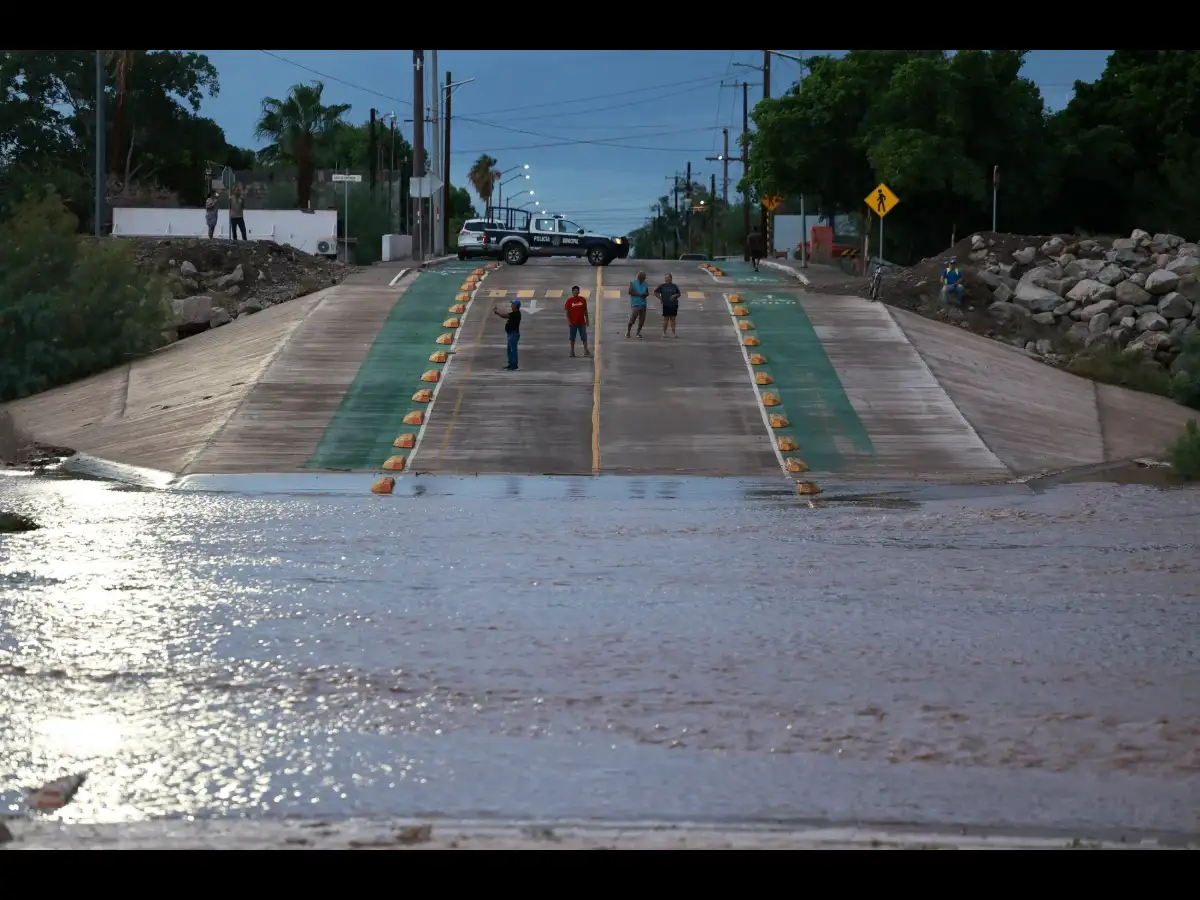
The remnants of Hurricane Polo are pushing a major flood threat farther into the United States after already causing dangerous flooding across the Southwest. A huge plume of tropical moisture is moving north through Mexico and into New Mexico, Colorado and Texas. Rainfall rates have reached up to 2 inches per hour, with more flooding expected across the Plains and Midwest, as per reports by Fox Weather, the BBC and NPR.
READ ALSO: How did Chad Lowe's daughter die? Fiona Lowe cause of death revealed

Why is the flood threat spreading?
The setup is being driven by a combination of Polo’s leftover tropical moisture and a plunging jet stream.
Forecasters say moisture levels across parts of the Southwest, Texas and Oklahoma could be near or above record levels for late September. Southern Arizona, New Mexico and far west Texas have already seen moisture amounts close to, or slightly above, historical records.
The unusual weather could also bring tropical rain to places that rarely see it.
“Looking back through history, heavy rains from the remnants of tropical systems are very rare across western Kansas,” Jonathan Finch, a meteorologist with the National Weather Service office in Dodge City, Kansas, wrote in a forecast discussion Tuesday morning.
The flood risk is now moving beyond the Southwest. Rain had reached parts of the Oklahoma and Texas panhandles by late Tuesday, while flood watches covered parts of Colorado, Kansas, Nebraska and Iowa. Flooding was possible through at least Thursday.
What happened across the Southwest?
The remnants of Polo brought heavy rain to Arizona and New Mexico after the storm made landfall in Baja California Sur with maximum sustained winds of 110 mph.
In New Mexico, flooding on Tuesday forced evacuations in several communities because of concerns about a possible dam failure. Residents in Rincon, Salem and Garfield were told to move to higher ground. Evacuation orders later expanded to Hatch and Placitas.
Arizona also saw serious flooding. A person stranded on top of an overturned vehicle west of Phoenix was rescued by helicopter. In Utah, three people were rescued from Heaps Canyon in Zion National Park after flash flooding.
READ ALSO: Chad Lowe’s Family: Inside his life with wife Kim Painter and daughters after the loss of Fiona Lowe
North of Phoenix, a truck was swept away in a wash, although the driver escaped safely.
The flooding has been especially dangerous because the region had already experienced an unusually wet September. Saturated ground leaves less room for new rainfall to soak in.
“Runoff is likely going to start much quicker and lead to those flooding impacts quicker,” Albuquerque weather service meteorologist Carter Greulich said.
In Orderville, Utah, resident Sabrina Dubay described how quickly floodwater surrounded her home.
“The river came in and swept around the entirety of our house,” she said.
She said water eventually entered through the front doors while a camper and other belongings were swept away.
The storm also battered Baja California Sur before moving north. In Puerto San Carlos, residents returned to homes damaged by floodwater and strong winds. Shopkeeper Elbia María Bachomo said she and her children had left for a shelter before the storm.
“I thought, ‘Oh no, what are we going to come back to? We will be left with nothing.’ But we were lucky,” she said.
Meanwhile, Tropical Storm Rachel was moving along Mexico’s coast and was expected to strengthen into a hurricane. In the central Pacific, Hurricane Nolo was also slowing after bringing heavy rain to parts of the Big Island.
FAQs
Where is the flood threat moving?The risk is spreading from the Southwest into Texas, Oklahoma, Colorado, Kansas, Nebraska and Iowa.
What caused the flooding?
Polo’s tropical moisture combined with a plunging jet stream and already saturated ground.