
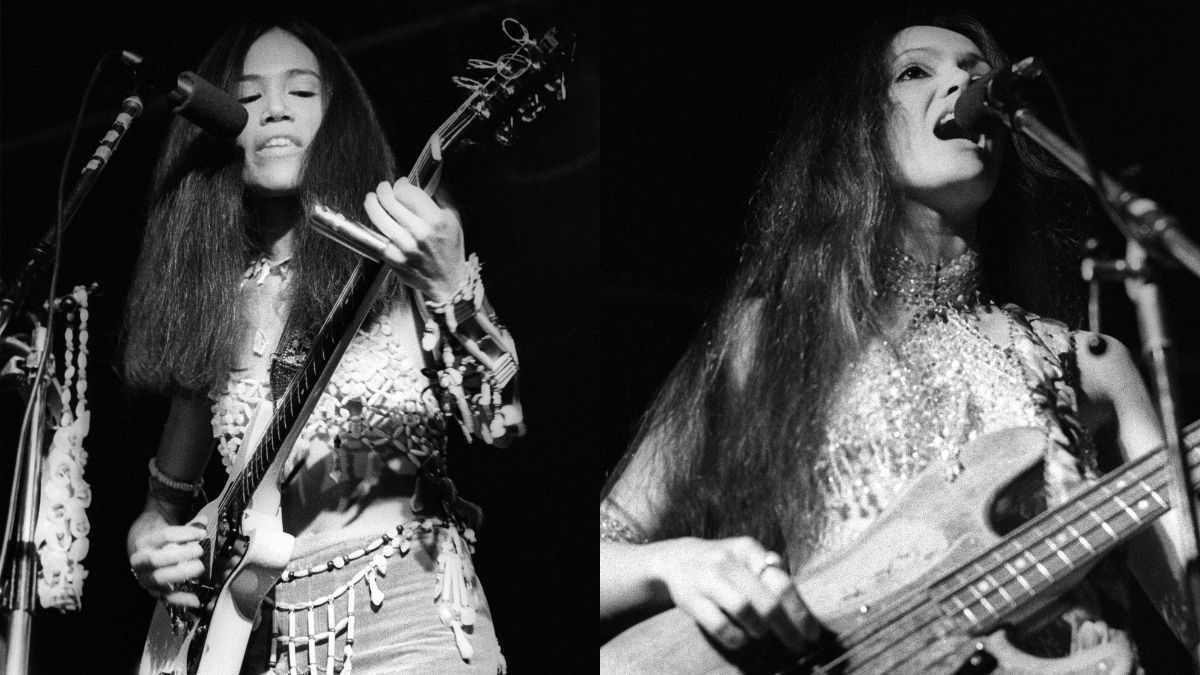
Fanny were one of the first rock bands comprised only of women to achieve both critical and commercial success during the ’70s – with two of their singles landing on the Billboard Hot 100.
The band, led by sisters June and Jean Millington, carved a unique path for themselves and a repertoire that would nowadays be referred to as “art-rock”.

They toured heavily and released five studio albums between 1970 and 1974, all while gaining the respect of their peers and challenging gatekeepers.
“For the longest time, we had first to prove that we could actually play,” bassist Jean tells Guitar World in a new interview.
“The first 10 minutes [of the shows], people were not believing [us] – after a while, they understood that we actually play. But that went on for a long time – having to prove that we could really play.”
Eventually, Fanny more than proved their worth. So much so that the biggest band on the planet were itching to pay their respects.
“By the time we met the Beatles, I think they were thrilled to meet us,” says lead guitarist June. “We didn't meet them en masse at one time, but it was clear that they really liked us. They liked us in part because we were women who could play, and we knew what we could do well.
“We recorded at the studio at Apple [Studios], and their engineer, Geoff Emerick, was ecstatic when he realized a) we could play and b) we knew how to record.”
Following up landmark Beatles records Sgt. Pepper's Lonely Hearts Club Band and Abbey Road, Emerick would end up engineering the band's third studio album, Fanny Hill – the band's most commercially successful record, and a clear sign of the four-piece's evolution as a powerhouse live band.
“We were recording every day,” June recalls. “When we had the time to, we also flew over to Germany to record Beat Club [the West German music programme that ran from 1965 to 1972]. We did the BBC.
“We were playing gigs around London, so every single day it was an intense schedule, but we did it, because, number one, we were young, but we [also] had worked so hard to get to that point, to prove to the world that we could play."
In the face of sexist skepticism, Fanny's June Millington fought hard to carve a unique six-string path – inspiring countless players, including a certain David Bowie, in the process.
Guitar World's interview with June and Jean Millington from Fanny will be published in the coming weeks.
Fanny weren't the only all-female rock band the Beatles crossed paths with back in the day. The Fab Four were also contemporaries of another pioneering group much closer to home: Merseyside’s Liverbirds.