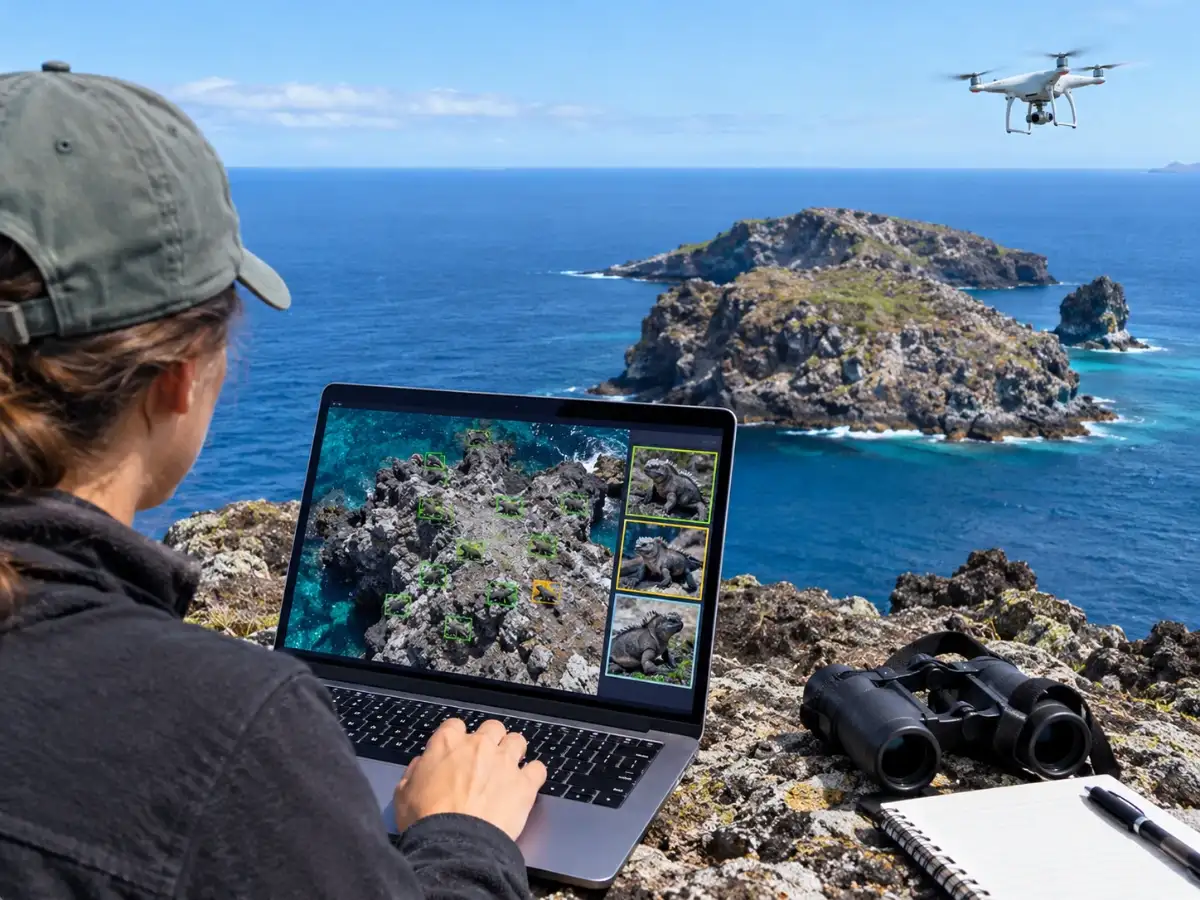
The Galápagos marine iguana spends much of its life in places that are difficult for people to reach. Against dark volcanic rocks, the reptiles can be surprisingly hard to spot, even from above. That has made counting them across the islands a demanding task for conservationists. A new approach, however, has turned thousands of ordinary internet users into wildlife surveyors, asking them to inspect drone photographs and mark the iguanas they can find.
According to a study published in Scientific Reports, by September 2023, 13,988 volunteers had contributed 1,375,201 classifications across 57,838 aerial images to help identify and count endangered Galápagos marine iguanas. Using a statistical clustering method to combine their observations, researchers achieved 91 to 92% agreement with expert counts in the project's two later phases. The findings highlight how citizen science can help conservationists monitor wildlife across remote, rocky habitats, although the tendency to undercount animals remains a challenge.