Get all your news in one place.
100's of premium titles.
One app.
Start reading
The Economic Times
The Economic Times
Trending Desk

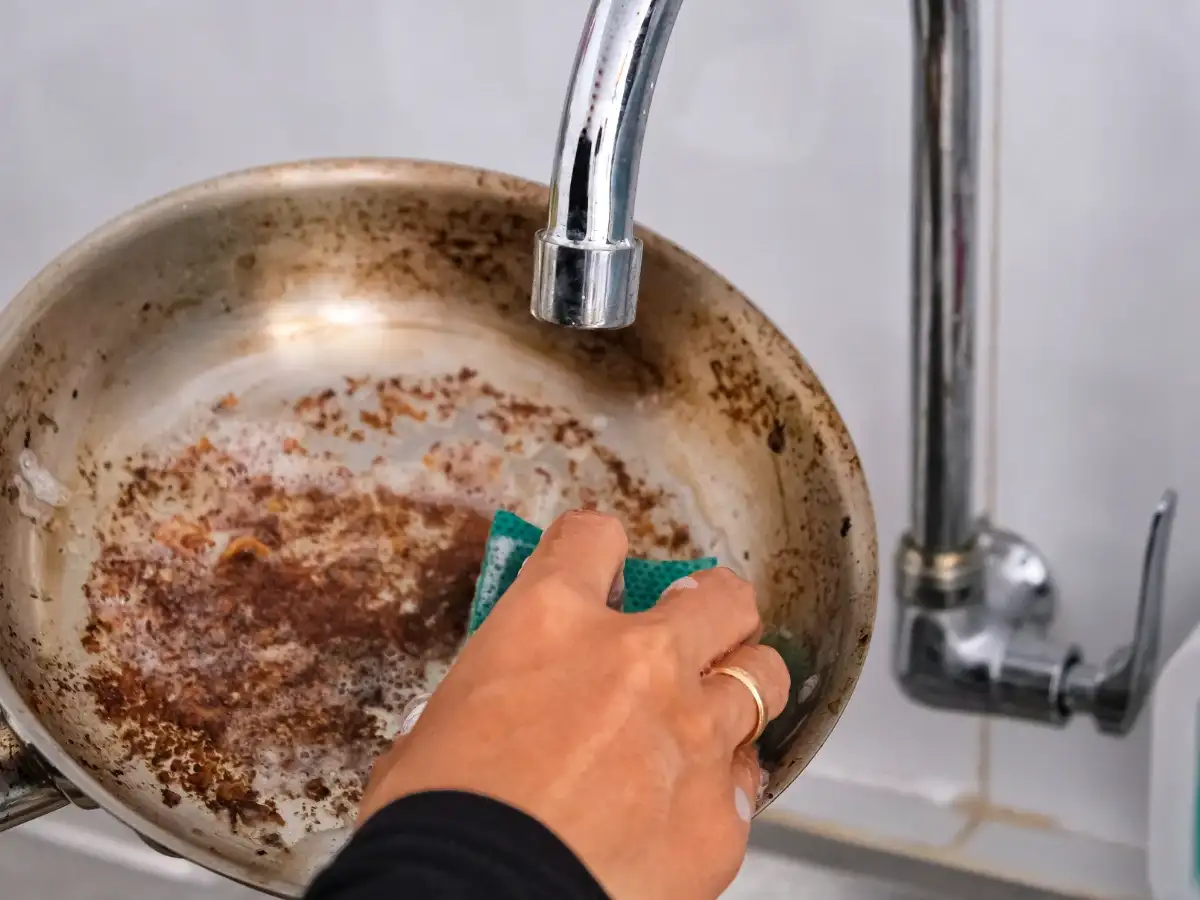
Burnt iron pan looks ruined? Try these easy cleaning hacks to remove stubborn food and restore its surface

A badly burnt cast-iron pan can look beyond saving, especially when food has formed a thick, black layer over the cooking surface. However, burnt residue does not necessarily mean the cookware is ruined. With the right cleaning method, hardened food can be loosened and removed.

Here are some ways

1. Simmer Water to Loosen Burnt Food

Trying to scrape away completely dry, hardened food can take a lot of effort and may unnecessarily wear down the surface. Using heat and water first can help soften the residue. Add enough water to cover the burnt section and bring it to a gentle simmer for three to five minutes. Turn off the heat and let the pan cool sufficiently before handling it.

Once the food has softened, use a pan scraper or suitable stiff brush to loosen the residue. For particularly stubborn patches, simmering the water for three to five minutes can make the next cleaning step easier. Avoid leaving the cast-iron pan submerged in water once the burnt food has loosened.

2. Scrape Away the Thick Burnt Layer

If large pieces of charred food remain after simmering, use a pan scraper to carefully lift them from the surface. Concentrate on the areas covered with burnt food instead of repeatedly scraping the entire pan. A scraper can be particularly helpful for removing thick, hardened patches before moving on to more detailed scrubbing.

3. Use a Scrubber for Stubborn Residue

Some burnt food may remain firmly stuck even after soaking and scraping. In such cases, use a scrubber suitable for cast iron along with warm water.

Scrub the affected areas using controlled pressure rather than aggressively cleaning the entire surface. For particularly stubborn residue, loosen it with simmering water first and then use the scrubber. The goal is to remove the burnt food while preserving as much of the existing seasoning as possible.

4. Dry the Pan Thoroughly and Apply Oil

Once the burnt residue has been removed, proper drying is essential. Any moisture left on cast iron can encourage rust formation. After rinsing the pan, dry it thoroughly with a clean cloth or kitchen towel. You can also place it over low heat briefly to evaporate any remaining moisture.

When the pan is completely dry, apply a very thin layer of cooking oil across the surface. Wipe away any excess oil so the pan does not remain greasy. This helps protect the iron and maintain its seasoned finish.

Avoid Putting Cast Iron in the Dishwasher

Cast-iron cookware should generally be cleaned by hand. Prolonged exposure to water, heat and strong detergents can weaken the seasoning and leave the iron more susceptible to rust.

Never Add Cold Water to a Very Hot Pan

Avoid taking a cast-iron pan directly from a hot stove and immediately adding cold water. The sudden change in temperature can cause thermal shock, potentially damaging the cookware. Allow the pan to cool to a safer temperature before beginning the cleaning process.

Avoid Harsh Chemical Cleaners

Strong chemical cleaners are usually unnecessary for dealing with ordinary burnt food on cast iron. They may also affect the pan's seasoning.

[With TOI inputs]

Sign up to read this article
Read news from 100's of titles, curated specifically for you.
Already a member? Sign in here
Related Stories
Top stories on inkl right now
Our Picks
Fourteen days free
Download the app
One app. One membership.
100+ trusted global sources.