A British paratrooper was killed by an explosion while helping Ukrainian troops in the war with Russia, a coroner has ruled.
Lance Corporal George Hooley, 28, died on 9 December last year after an incident that the Ministry of Defence described as a “tragic accident while observing Ukrainian forces test a new defensive capability”.
After an inquest conducted partly in secret this week, senior coroner for Oxfordshire Darren Salter revealed for the first time that the high-achieving soldier, a member of the Parachute Regiment, had died from injuries sustained in an explosion.
The location of the incident has been kept under wraps, other than that it was away from the front line.
The Ministry of Defence (MoD) has said that limited numbers of Armed Forces personnel are being deployed to Ukraine, to provide security for the British diplomatic presence and support the Ukrainian armed forces. But the presence of paratroopers in Ukraine was not publicly known prior to L/Cpl Hooley’s death.
Last week, the coroner rejected a media request for a public hearing of the inquest, and on Tuesday this week he reached his conclusion on his own in private.
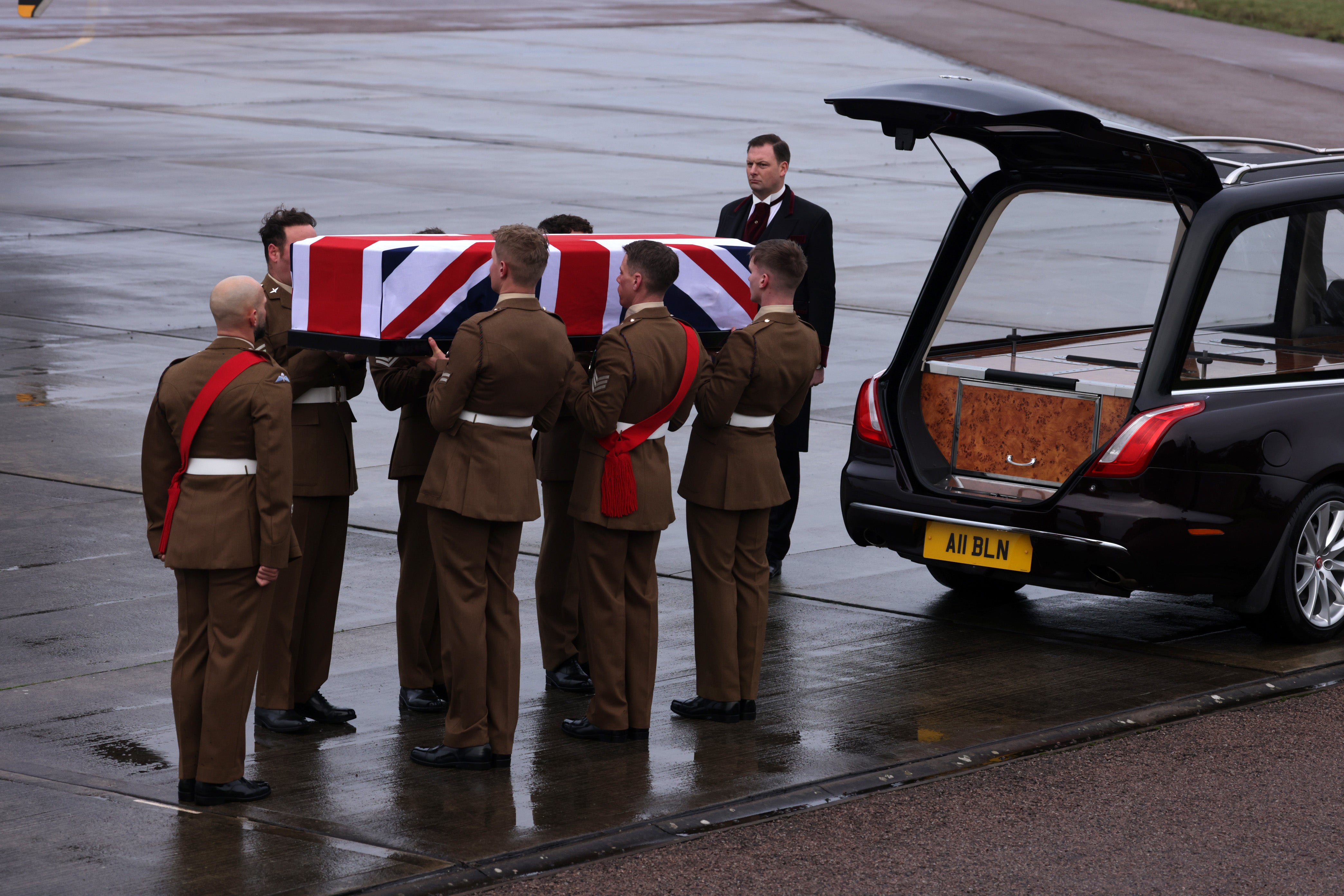
“L/Cpl George Hooley was a soldier in the British Army serving in the Parachute Regiment in Ukraine,” he recorded in the Record of Inquest supplied to the Press Association.
“On the early morning of 6/12/25 he sustained multiple injuries from an explosion while observing Ukrainian Forces test a new defensive capability away from the front line.
“He received prompt emergency medical treatment at the scene and subsequently underwent surgery but died from his injuries in hospital in Kiev on 9/12/25.”
In correspondence with PA, the coroner said he had been provided with only “limited evidence” about the circumstances and cause of the explosion, but did not elaborate on what that evidence was.
The MoD did not respond to questions about the fatal explosion, including whether the cause had been determined and if anyone had been held responsible.
Mr Salter said he received statements from L/Cpl Hooley’s Army colleagues and British Army doctors, and had also been provided with “Ukrainian documents” which set out that soldier had been treated in at least two hospital, including one in Kyiv.
He added that he found there were “no suspicious circumstances”.
When rejecting a request for a public hearing, the coroner said L/Cpl Hooley’s family “made a specific request for his inquest to be conducted in writing” which he agreed to.
He added that unnamed interested parties had also been consulted and agreed to an inquest behind closed doors.
“Adequate information has been obtained to answer the four statutory questions,” he said.
“Information about the precise nature of the defensive capability being tested is sensitive and would not be disclosed during an inquest.”
He called the death “sadly straightforward”, and insisted that the public interest would be served by the provision of documents after the hearing had taken place.
After his death, the MoD issued tributes for L/Cpl Hooley who had joined the Army in November 2015, joined the Parachute Regiment after being identified as a high achiever, and was an “exceptional soldier” on the verge of being promoted to Corporal.
His company commander called him “model of professionalism”, adding: “George didn’t just do his job, he excelled at it.
“A born soldier, he set the standard – the other soldiers watched to learn how things should be done, he made us all better, individually and collectively.
“He approached every task with dedication, integrity and pride.
“His colleagues will tell you that he wasn’t just part of the team, he was the character within it. The glue. The laughter. The calm voice of sense. The soldier who made the hard days easy and the good days memorable.”
The inquest was conducted “in writing” under a process which was introduced in 2022.
The MoD indicated that unanswered questions from the inquest should be directed to the coroner.