
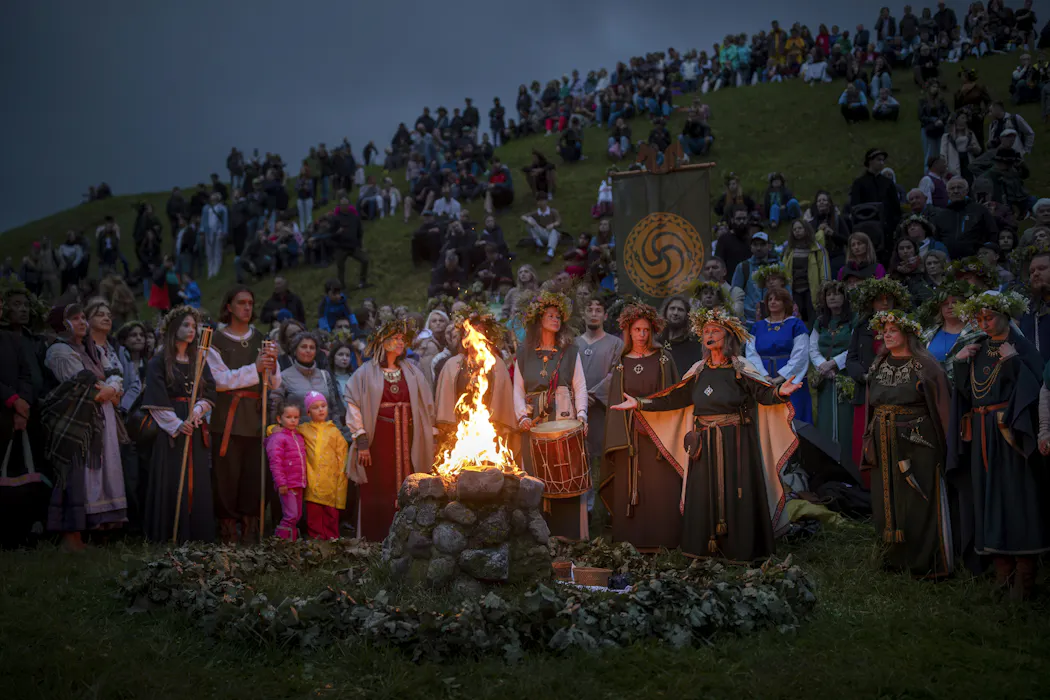
Whether cities or villages, many communities across Europe spend the day and night of June 24 celebrating Midsummer. Congregating around bonfires, or sometimes maypoles, sporting handwoven wreaths of wildflowers or oak leaves, they’ll sing, jump, dance, eat, drink, catch up and celebrate the arrival of the longest day of the year. As a scholar of folklore, I have been to Midsummer celebrations in Finland, Sweden, Norway, Denmark, Estonia and Lithuania, and I am endlessly in awe of people’s fervent commitment to the holiday and evident enjoyment of it.
From the Mediterranean to Scandinavia and from France to Poland and beyond, Midsummer goes by many names, including the Italian “Festa di San Giovanni Battista” and the Swedish “Midsommar.” It’s “Leedopäev” in Estonia, “Juhannus” in Finland, and “Mihcamárat” for the Sami, the Indigenous people of Scandinavia. Celebrations mark the summer solstice, which takes place in the Northern Hemisphere around June 21.













