
Get all your news in one place.
100’s of premium titles.
One app.
Start reading
Homes & Gardens
Homes & Gardens
Edward Bowring

Black Garden Accents Are Fading – And Designers say Warm Minimalism Is the 2026 Outdoor Trend Replacing Them

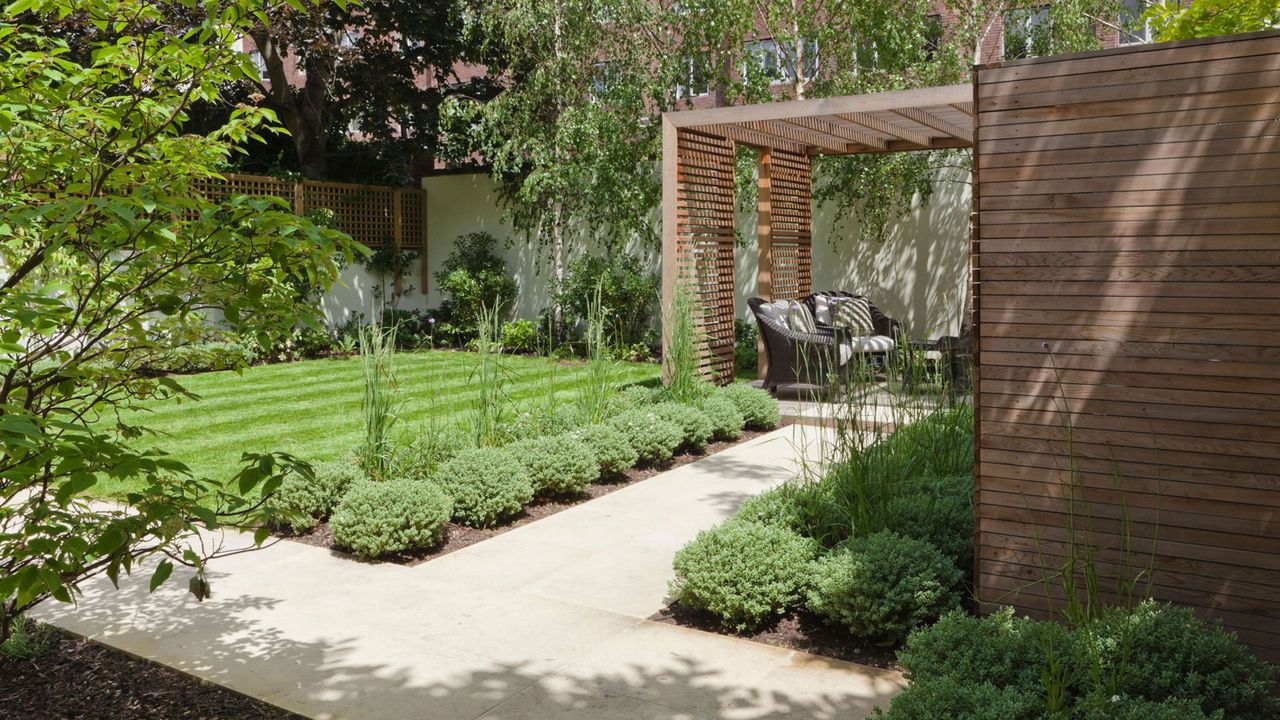
L-shaped garden design with lawn, path, trees and pergola.

Minimalist garden design is ideal for creating a calm and uncluttered look. However, the long-running Scandi-black look, often paired with bold lines and simple planting, is being replaced by a warmer style.

Instead of stark black, warm minimalism encompasses more earthy, sun-bleached and natural finishes, leading to a clean, yet more inviting feel.

Whether you are refreshing a patio or going for a complete redesign of your backyard ideas and minimalist garden, we have all the inspiration you need to create a modern and composed outdoor space. Read on to discover our expert tips on how to achieve this look and what hardscaping materials are best suited to the warm minimalism vibe.

(Image credit: Future/Jacky Hobbs)

How to Create Warm Minimalism Outdoors

Shifting away from black accents, such as planters, furniture and fences, homeowners and garden designers are now embracing warmer and softer tones.

From the naturally welcoming hues of raw wood to honey-colored stone, these natural finishes are ideal for creating a warm minimalist garden style.

Raw Cedar

(Image credit: Jacky Hobbs)

Starting off reddish-brown, raw cedar ages gracefully over time. Even though a softwood, raw cedar is known for its resistance to rot and thus makes for an excellent outdoor choice.

Commonly used for constructing raised beds or decking, raw cedar is also ideal for a trellis.

When asked how it can be used to create a warm minimalist look, Amy Martin, landscape designer and the founder of Plant and Bloom Design Studio, reported that ‘raw cedar fencing, pergolas, and edging bring an organic warmth to outdoor spaces and age gracefully into soft, silvery-gray tones.

'Cedar’s warm hues create striking contrast when paired with dark, textural evergreens such as dwarf mugo pine (Pinus mugo var. pumilio) or low-growing ‘Green Mound’ juniper (Juniperus procumbens ‘Green Mound’).’

Style Selections natural cedar garden trellis is available to purchase from Lowes.

Limewashed Finishes

(Image credit: Future)

Forming a natural and breathable finish, limewash is suitable for porous, natural materials and is available in a wide array of colors. Off-white colors are perfect for a clean Mediterranean look and being light-reflective helps brighten up any shaded areas.

Amy says that, ‘Limewashed brick and stone offer a chalky, matte texture evocative of the French countryside. These finishes bring a timeless, understated beauty to retaining walls, walkways, and home exteriors.’

She suggests pairing them ‘with mass plantings of long-blooming ‘Phenomenal' lavender (Lavandula × intermedia ‘Niko’), boxwoods, fragrant rosemary, and climbing roses like the blush-pink ‘New Dawn’ scrambling over limewashed walls.’

When planning a warm minimalist design, Amy stresses the importance of ‘sticking with a restrained plant palette rather than the abundant layering typical of cottage or chaos gardens.

Simple massing techniques (such as planting a long garden bed with a single row of the same plant) create calm repetition and visual cohesion, instead of trying to include a bit of everything.’

Limewash paint is available from Farrow & Ball.

Sand-Tones Stone

(Image credit: Jacky Hobbs/Future)

Durable and easily maintained, limestone and sandstone are widely used for garden hardscaping.

Available in textured or smooth finishes, these natural materials can be used for both traditional and modern designs, including warm minimalist looks.

Mintee Kalra, founder of landscape design studio Peruse, suggests that, ‘Sand-toned stone works beautifully for paving, retaining walls, and garden steps, especially when its edges are hand-chipped or lightly distressed to reveal its natural character.

'Allowing limestone or sandstone to show tool marks, irregularity, and patina brings out its best self; warmer, quieter, and more integrated into the landscape than perfectly machined stone ever could’.

Sun-Soaked Desert Neutrals

(Image credit: Assembledge+ / Lisa Romerein)

A far cry from bold black accents, desert-neutral hues are softer and tend to help produce a calmer and more tranquil outdoor space. But how can they contribute towards a warm minimalist style?

Amy proposes that, ‘Terracotta, sandy beige, and warm gray containers with smooth lines and clean edges channel effortless warm minimalism.

'They look especially striking when planted with an airy Arbequina olive tree (Olea europaea ‘Arbequina’) or strong, architectural, desert-inspired plants like ‘Color Guard’ yucca (Yucca filamentosa ‘Color Guard’).

You can purchase a large planter in terracotta from Amazon.

Corten Steel

(Image credit: Jacky Hobbs)

Corten steel, or weathered steel as it is sometimes called, is a popular material for hardscaping and architectural elements in garden design.

Valued for its warm rusted tones, Corten steel is incredibly tough and requires minimal aftercare or maintenance.

Used for creating, edging, walls, and planters, Corten steel is ideal for many modern garden design styles. Its brown-orange tones and textured appearance combine especially well with green and bronze foliage.

When asked how it can be used in the context of warm minimalism, Mintee advised that, ‘Corten introduces warmth through oxidation rather than pigment. Used for planters, edging, fire features, or low retaining walls, its patina evolves over time, creating depth and softness that blackened metals can’t achieve.’

When it comes to plant choice, Amy advises ‘pairing Corten steel with airy plants that contrast with its hard edges and smooth surfaces, such as ‘Lollipop’ verbena (Verbena bonariensis ‘Lollipop’) or purple coneflower (Echinacea purpurea)’.

You can purchase this Corten steel large square planter from Amazon.

Other Ways to Achieve a Warm Minimalist Style

(Image credit: Jacky Hobbs Photography/Future)

Warm minimalism generally embraces softer tones and natural finishes, but these aren’t hard and fast rules.

‘Warm minimalism isn’t about avoiding contrast entirely; it’s about choosing it wisely. Occasionally, a space benefits from a grounding note in a deeper hue like mulberry, navy, or deep juniper – tones that sit a few steps away from black but feel softer and more integrated. These shades provide visual weight without breaking the natural, sun-washed palette, allowing the space to feel anchored rather than stark’, says Mintee.

Sticking to a limited planting list is key to creating a warm, minimalist feel. Along with those previously mentioned, ornamental grasses can be very effective at softening harsh edging and other bold lines, but what else can be used?

These best plants for a minimalist garden are a great starting point and will help ensure your backyard remains a calm and peaceful space for you to enjoy.

Sign up to read this article
Read news from 100’s of titles, curated specifically for you.
Already a member? Sign in here
Related Stories
Top stories on inkl right now
One subscription that gives you access to news from hundreds of sites
Already a member? Sign in here
Our Picks
Fourteen days free
Download the app
One app. One membership.
100+ trusted global sources.