Get all your news in one place.
100's of premium titles.
One app.
Start reading
The Conversation
The Conversation
Andrea Merchak, Ph.D. Candidate in Neuroscience, University of Virginia

Bile acids and gut microbes could potentially treat multiple sclerosis, according to new research in mice

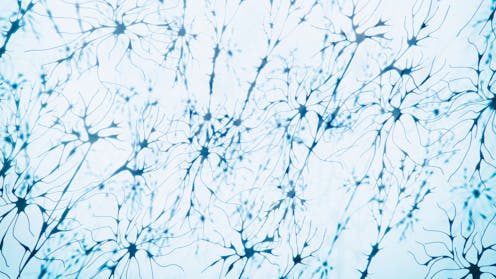
Multiple sclerosis involves the immune system attacking the protective myelin sheath of neurons. koto_feja/iStock via Getty Images Plus

Multiple sclerosis is characterized by an immune system gone haywire. A patient’s immune system starts treating the protective coating of the nerves – called myelin – as dangerous. The subsequent nerve damage can cause a variety of symptoms, including muscle weakness, pain and vision loss. MS currently has no cure, and doctors still don’t completely understand what causes it.

While there is a genetic component to MS, environmental factors also play a big role in determining whether someone will develop the disease. Recent evidence suggests that what’s in your digestive tract may also be a meaningful contributor to disease risk.

Sign up to read this article
Read news from 100's of titles, curated specifically for you.
Already a member? Sign in here
Related Stories
Top stories on inkl right now
One subscription that gives you access to news from hundreds of sites
Already a member? Sign in here
Our Picks
Fourteen days free
Download the app
One app. One membership.
100+ trusted global sources.