
Weeding can feel relentless during the growing season. Leave the garden unattended for even a few days in spring or summer, and you'll likely return to find dandelions, docks and other self-seeding weeds taking hold in your borders.
Rather than relying on chemical weed killers, which can harm wildlife and the wider ecosystem, a more sustainable solution is to grow plants that naturally suppress unwanted growth. By forming a dense canopy over the soil, these varieties limit the space and light that weeds need to germinate and thrive.

As a professional gardener, I have grown many of the following plants, selecting them for their ability to crowd out weeds while adding ornamental value. Much like the best ground cover plants to stop weeds, these evergreen and perennial picks are proven to keep borders looking fuller, healthier and largely weed-free. Here, I share six of the best plants to stop weeds.
1. Monkey Grass
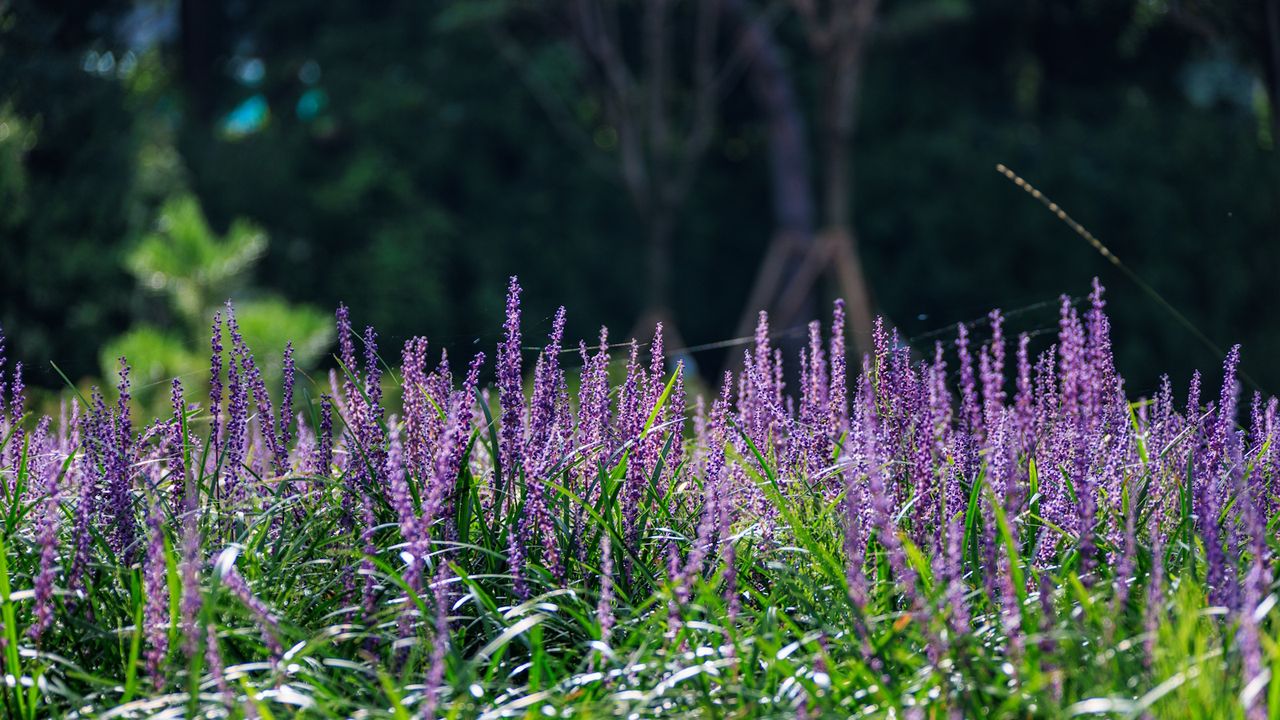
When considering how to grow monkey grass, or Liriope muscari, this tough and versatile ground cover can be grown from US hardiness zone 4 to zone 10, tolerating a wide range of climates and conditions.
Over time, this part-shade perennial forms a lush carpet of evergreen foliage that covers bare soil and naturally crowds out weeds, helping to reduce maintenance while keeping borders looking full and tidy throughout the year.
'If you are looking for a plant that will form a dense carpet and keep weeds at bay, monkey grass is a superb option,' says Mike Murphy, garden expert and owner at You Had Me At Gardening.
'While this low-growing plant might take a year or two to establish, once it is settled and happy, it does not require much attention, easily tolerating dry periods in summer.'
You can find great value 'big blue' liriope plants at Nature Hills.
2. Juniper
If you are looking for low-growing evergreen ground cover plants to choke out weeds, juniper should be at the top of your wish list.
Juniperus horizontalis, commonly known as the creeping juniper, is an attractive foliage shrub that will provide year-round greenery, useful in challenging areas under large trees.
One of the best native plants to stop weeds, juniper can be grown in US hardiness zone 3 to US hardiness zone 9, doing best in a sunny spot. If you are wondering how to get rid of weeds without using sprays or chemicals, then planting juniper is a good option.
The 'blue rug' groundcover juniper from Fast Growing Trees is a great option.
3. Carex
If you are looking for a low-maintenance plant that will naturally crowd out weeds, carex is hard to beat. Considered one of the best native grasses, many carex species spread steadily to form dense clumps that cover bare soil and leave little room for unwanted growth.
One attractive option is Pennsylvania sedge (Carex pennsylvanica), a fast-growing native with fine-textured foliage that turns warm shades of orange and copper in fall. It can be grown from US hardiness zone 3 to US hardiness zone 8, and thrives in partially shaded locations.
Many carex species spread via rhizomes, producing underground stems that send up new shoots and gradually knit together into a weed-suppressing carpet. For the best results, avoid one common weeding mistake and plant carex in generous drifts rather than as isolated specimens, allowing the foliage to quickly fill gaps and shade the soil.
You can find Carex 'feather falls' plants at Burpee.
4. Ground Cover Roses
If you are looking for the best course of action to keep weeds out of flowerbeds, growing resilient plants with dense canopies is a good option.
Ground cover roses, otherwise known as procumbent roses, can be very useful for gardeners seeking to suppress weeds. 'Ground cover roses are low-growing, typically reaching 1 to 2 feet tall,' says garden expert Katie Sunderlage.
'These roses, when planted close together, can form a dense and thick rose carpet,' Katie adds. 'Not only will this mean a sea of blooms, but it will help to keep weeds out of the yard, unable to compete with the canopy and root networks of your roses.
There is a wide selection of groundcover roses, including this beautiful Peach Drift® Groundcover Rose at Nature Hills.
As with all roses, when considering how to grow ground cover roses, it is optimal to select a sunny site with well-draining soil. Fertilize your plants during the growing season using a rose feed, available from Walmart.
What To Shop

This lightweight and nimble tool is perfect for gardeners looking to attack weeds in their yard, making weed removal an easy task.

These attractive leather gloves are heavy-duty, making them perfect for gardening. They are puncture-resistant, flexible and comfortable.

This weeding tool is the perfect length removing tricky weeds. Customers absolutely love it; it's a best-seller for a reason.
5. Pinus Mugo
Often considered one of the best pine trees, Pinus mugo, commonly known as the dwarf pine, is notable for its compact and dense habit.
When planted in groups, small mounded shrubs will eventually connect, forming a cloud-like structure. However, the dwarf pine is a slow-growing shrub, so be warned, it might take several years to fill a border.
You can find dwarf mugo pine shrubs at Fast Growing Trees.
Growing best in US hardiness zone 3 to US hardiness zone 7, this low-growing shrub is ideal for those cooler yards in northerly locations.
Helpfully, fallen pine needles form a mulch layer on the surface of the soil which can prevent weeds from germinating. So, while these diminutive shrubs might be slow-growing, they will eventually prove very useful in your fight against weeds.
6. Hellebores
Hellebores are usually grown for their elegant winter and early spring flowers, but they can also be surprisingly effective at keeping weeds at bay. These shade-loving perennials produce large, leathery evergreen leaves that cover the soil for much of the year, helping to block light and reduce opportunities for weed seeds to germinate.
If weed suppression is your goal, plant hellebores in generous drifts rather than as individual specimens. As the plants mature, their foliage will knit together to form a canopy that shades the ground and limits unwanted growth, particularly in woodland-style borders and other shady corners.
There are many hellebore varieties and species to choose from, offering flowers in shades of white, pink, purple and near-black. Most perform best in US hardiness zones 4 to 8, often blooming through frost and snow when little else is in flower.
Why not consider learning how to propagate hellebores, increasing your plant collection for free by dividing established clumps?
Alternatively, hellebore plants are available to buy online from Amazon.
Preventing weeds from germinating is the best course of action in any yard, and all of these weed-suppressing plants will help to stop weeds from taking hold in your borders.
While weeds can be troublesome in any yard, remember that these plants are a valuable food source for pollinators such as birds and bees. If you can, consider leaving a small patch of ground where weeds can grow to attract hungry pollinators to your plot. For more information, see our guide on flowering weeds for pollinators.
And if you love inspiring garden ideas, outdoor advice, and the latest news, sign up for our newsletter and get the latest features delivered straight to your inbox.