
Get all your news in one place.
100’s of premium titles.
One app.
Start reading
What Hi-Fi?
What Hi-Fi?
Technology
Daniel Furn

BenQ W5850 vs Sony VPL-XW5000ES: which five-star projector should you buy?

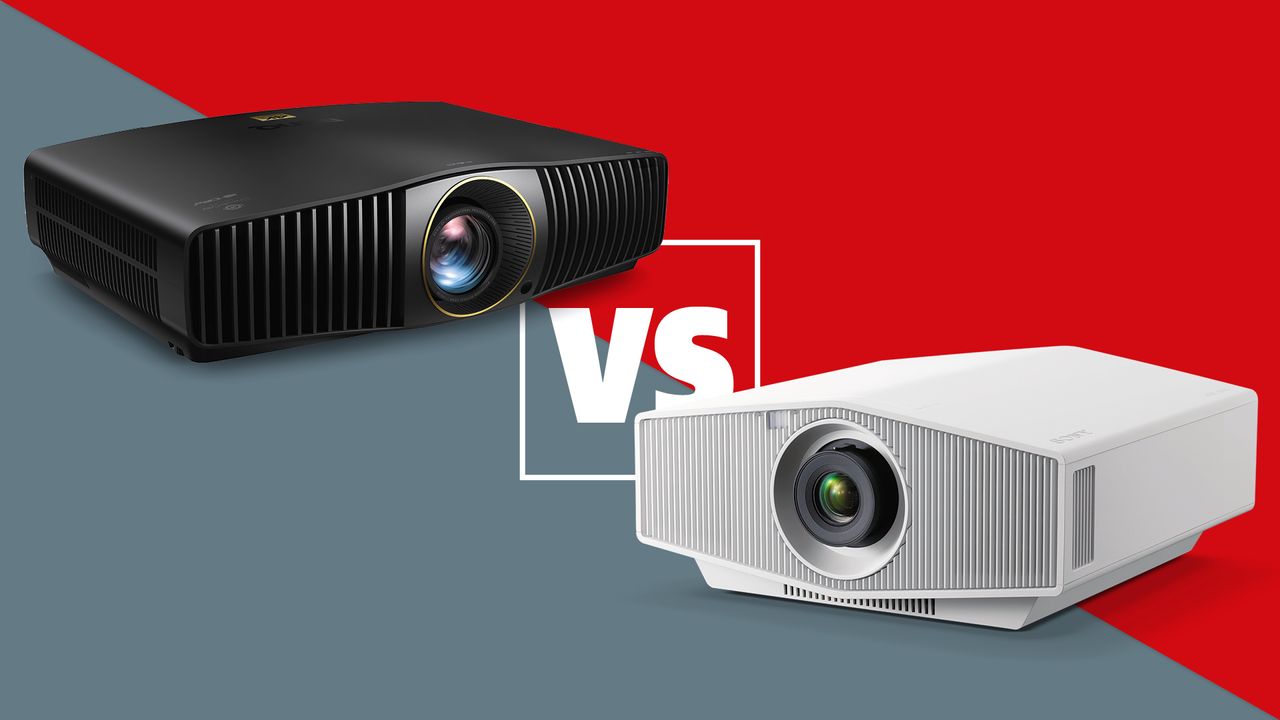
A graphic showing the BenQ W5850 projector and Sony vpl-XW5000ES projector next to each other.

The Sony VPL-XW5000ES has been the projector to beat in this price range since 2022. Thanks to its native 4K pictures, impressive black levels and overall excellent processing, the VPL-XW5000ES has proudly worn its crown unrivalled.

Until now. The BenQ W5850 is one of the contenders to the throne, offering plenty of benefits such as a short-throw lens and perfectly judged colours.

Both projectors have a similar price, and after some rigorous testing the What Hi-Fi? team awarded each projector the full five stars.

The question now is: which of these projectors is a better buy for your hard-earned cash? There’s only one way to find out… a What Hi-Fi? versus! We put the two head to head to find out which one comes on top.

BenQ W5850 vs Sony VPL-XW5000ES: price

(Image credit: Sony)

The Sony XW5000ES is officially priced at £5999 / $5998 / AUS$9990, which at the time of its launch made it the world’s cheapest truly native 4K laser projector.

The Sony projector, however, can now often be found on sale for as low as £3999 / $4998 / AU$8990.

The BenQ W5850 is much newer than the Sony, so it still generally costs its full price of £4599 / $4999 / AU$8499.

In other words, on current pricing, the Sony is cheaper in the UK, the BenQ is cheaper in Australia, and the two models are essentially the same price in the US. It feels only right, then, that this round goes down as a draw.

** Winner: Draw **

BenQ W5850 vs Sony VPL-XW5000ES: build & design

(Image credit: What Hi-Fi?)

The BenQ W5850 is a fair bit wider than the Sony VPL-XW5000ES, coming in at 53cm compared with the VPL-XW5000ES’ 46cm. However, the BenQ projector is also a lot slimmer (15cm vs 20cm) and a lot less deep (39cm vs 47cm).

The XW5000ES has a more pronounced roof-like angled top edge, while the W5850 has a smoother, angled top.

It should also be noted that the W5850 comes with the lens packaged separately, requiring you to insert it yourself. This may put some off, but could be an exciting experience for home cinema fans. Those fans will also likely appreciate the BenQ’s included ‘Individual Calibration Report’, which features graphs and measurements produced in the factory after manual calibration by a BenQ technician.

It’s a close one, but these extra touches and the swoopier design swing things in the BenQ’s favour.

** Winner: BenQ W5850 **

BenQ W5850 vs Sony VPL-XW5000ES: Features

(Image credit: Sony)

The most notable feature of the BenQ W5850 (given it’s the way in which it differs from the preceding W5800) is its 16-element lens with a throw ratio of 1.0-1.6.

Essentially, this means the W5850 can produce a 180-inch image from a distance of roughly four metres – an exceptionally short distance for a dedicated home cinema projector.

For comparison, the Sony VPL-XW5000ES has a throw ratio of 1:1.38-2.21 and would need around 6.7m for a 180-inch image. The W5850, then, will probably be the better choice for smaller rooms.

The W5850 is also easier to set up, thanks to motorised focus, zoom and shift controls. The XW5000ES’s manual lens adjustments requires physical rotations around the lens, which is a little imprecise for a premium projector.

The W5850 boasts a higher brightness, with a rating of 2700 lumens compared with the 2000-lumen peak brightness rating of the VPL-XW5000ES. Neither projector will struggle when used in a dark room as intended, but the W5850 should, in theory, be brighter and punchier – and potentially better-suited to a mixed-use room with some ambient lighting.

When we get to resolution, the VPL-XW5000ES starts to score some major brownie points. Both projectors boast a 4K resolution, but the W5850 uses DLP XPR technology to achieve the 8.3million pixels the Consumer Technology Association requires to certify a projector as 4K. The VPL-XW5000ES, on the other hand, is full-on native 4K.

BenQ claims that the W5850 can reproduce 100 per cent of the digital cinema world’s DCI-P3 colour spectrum, just pipping Sony’s claim that the VPL-XW5000ES can reach 95 per cent.

The W5850 also wins on HDR support with HDR10+ dynamic tone mapping alongside standard HDR10 and HLG, while the VPL-XW5000ES is restricted to only the last two.

(Image credit: What Hi-Fi?)

When it comes to connections, however, both are similarly middling, with two HDMI sockets each. Neither projector supports the 4K/120Hz signals now available from the PS5, Xbox Series X and top-end PCs, so serious gamers might want to consider the Epson EH-LS9000 instead.

Other than the native 4K picture, however, one of the big selling points of the VPL-XW5000ES is Sony’s X1 Ultimate processing.

The X1 Ultimate platform adds a whole host of features. In addition to the enhanced upscaling, clarity-boosting Reality Creation, and key Dynamic HDR Enhancer features inherited from the older X1 for Projector processor in the 2021 VW290ES, it introduces digital contrast optimisation, object-based HDR remastering, and object-based resolution enhancement.

Altogether, this processor can break images down into different elements rather than treat the whole image the same way, which should result in pictures looking more three-dimensional and natural. Perhaps the most important part of this processing is the Dynamic HDR Enhancer, which can pick out bright highlights and increase their intensity without changing other elements of the picture.

Other exciting features of the VPL-XW5000ES include an IMAX Enhanced mode and 0.61-inch SXRD chips that should enhance contrast, colour accuracy and colour graduations.

The BenQ W5850 has a number of notable wins over the Sony VPL-XW5000ES when it comes to features, such as a higher brightness rating, HDR10+ support and a throw ratio that can work in smaller rooms.

But the Sony projector’s native 4K support, along with myriad benefits that come as part of the brand’s processing, give the XW5000ES an edge that is hard to overcome in this price range. The BenQ W5850’s features will surely appeal to certain setups, but we’ve got to give this win to the XW5000ES.

** Winner: Sony VPL-XW5000ES**

BenQ W5850 vs Sony VPL-XW5000ES: picture

(Image credit: Sony)

Any set-up and feature shortcomings, however, are quickly forgotten when you actually watch these projectors.

As long as you stay in Filmmaker Mode for the most natural performance, we find the BenQ W850 to be a beautifully authentic, true to the cinema experience. The picture is still crisp and punchy, with a winning combination of three-dimensional depth and contrasty pop.

As you’d hope from the bespoke calibration, colours are beautifully judged. A screening of No Time To Die shows Matera’s dusty ground to be baked by the sun but never oversaturated, while Bond’s skin is warm and vibrant without veering into a nuclear colour territory. It’s the W850’s greatest strength, though the VPL-XW5000ES isn’t exactly lacking with its Triluminos colour system delivering beautifully balanced, exceptionally nuanced and totally natural colours across the board.

Moving to sci-fi, though, and we can start to see areas where the Sony VPL-XW5000ES has a clear advantage. The deep space opening of Alien: Romulus is clearly far more black on the Sony, leaving the W5850 looking a bit grey in comparison. While the black depth can be improved by reducing the BenQ’s laser brightness, this dulls the image a bit too much for our taste, whereas the Sony blends the contrast extremes more effectively.

Motion is also better on the Sony, with the BenQ producing undeniably more blur and judder. Even the Low setting in BenQ's motion processing makes everything look unnaturally sharp and smooth, so it’s a shame that a more subtle option is not available.

The VPL-XW5000ES, on the other hand, benefits immensely from the X1 Ultimate processor. The default True Cinema mode was described in our Sony VPL-XW5000ES review as “hands down the most effective, cinematic out of the box motion setting you’ll find on any projector”, massaging away distractions without the dreaded soap opera effect.

We also found that it took some tinkering to get HD SDR content looking right on the W5850. We were, though, eventually rewarded with a lovely picture that was the right mix between warm and dynamic.

(Image credit: What Hi-Fi?)

The Sony XW5000ES’s picture quality, however, is apparent straight out of the box. Indeed, it redefined projector expectations at its price when released.

The X1 Ultimate processor also proves to be phenomenally effective. The Dynamic HDR Enhancer, as long as it’s set to medium, adds extra oomph to bright highlights in HDR images, giving them a boost without messing up the rest of the picture. It’s one of the biggest advantages of the XW5000ES.

Any major shifts in the laser output also take place ‘between cuts’ rather than mid-shot, so you shouldn’t be distracted by any sudden brightness ‘jumps’ or flickering.

As a native 4K projector, the XW5000ES also has the BenQ beat when it comes to sharpness. Images are detailed, dense, three-dimensional and crisp, and provide a solidity that the BenQ and other rivals simply can’t match.

The biggest weakness of the XW5000ES, however is very dark shots/scenes that contain extremely bright highlights. In these scenes, a little black crush can occur, and the Sony projectors’ usually excellent black levels become noticeably more raised – though these scenes are admittedly extremely rare.

The BenQ W5850 has some of the most beautifully judged colours you’ll find at this price, as well as a punchy Filmmaker mode and a lovely SDR image, after some tweaking. However, it simply can’t compete with the Sony VPL-XW5000ES, which outclasses the W5850 in black depth, sharpnes and motion handling.

Quite simply, the VPL-XW5000ES does the fundamentals better than the W5850 and any other projectors at this price, with the one-two punch of native 4K projection technology and Sony’s processing setting a barrier that is proving insurmountable to overcome.

** Winner: Sony VPL-XW5000ES**

BenQ W5850 vs Sony VPL-XW5000ES: verdict

(Image credit: Sony)

The BenQ W5850 is a very worthy five-star projector and has finally provided the Sony VPL-XW5000ES with some meaningful competition. That short-throw lens could be a game-changer for those lacking in space, and we are big fans of the manual lens attachment and Individual Calibration Report.

This factory calibration has paid off, with warm, rich and authentically cinematic colours. HDR performance is punchy without sacrificing realism, and, after a little tweaking, SDR content is dynamic, natural and satisfyingly warm.

However, the W5850 struggles with black levels and motion handling – two areas where the Sony VPL-XW5000ES excels.

Ultimately, the W5850 is one of the many projectors to stumble at the hurdle that is the Sony VPL-XW5000ES.

Despite launching back in 2022, the Sony remains the class leader in this price range. And, of course, it’s now even better value thanks to several price drops.

It may well remain the class leader for several more years, thanks to its winning combination of native 4K projection technology and Sony’s X1 Ultimate Processing.

The end result is an image that looks cleaner, deeper and more three-dimensional than that from the W5850, and despite the Sony having a lower brightness, HDR movies look wonderfully natural and effortlessly cinematic thanks to impeccable contrast.

It might have had a worthy challenger, but the Sony VPL-XW5000ES retains its crown.

** Overall winner: Sony VPL-XW5000ES**

MORE:

Also consider the Epson EH-QB1000

Read our BenQ W5800 review

Best projectors: budget, 4K and ultra-short-throw

Sign up to read this article
Read news from 100’s of titles, curated specifically for you.
Already a member? Sign in here
Related Stories
Top stories on inkl right now
One subscription that gives you access to news from hundreds of sites
Already a member? Sign in here
Our Picks
Fourteen days free
Download the app
One app. One membership.
100+ trusted global sources.